




Over the past decade, fintech has quickly evolved from a niche tech curiosity into a powerhouse within the financial sector—and it’s only gaining momentum.
Its market value is expected to reach $324 billion by 2026, driven by the growing demand for faster, more affordable, and more efficient financial services.
What’s fueling this transformation?
Artificial Intelligence (AI).
It isn’t just an exciting trend; it’s becoming the core engine behind fintech’s rapid innovation. From boosting customer service with smart chatbots to leveraging big data for fraud detection, AI is pivotal in reshaping financial institutions’ operations.
In this guide, we’ll discuss how AI is making a splash in the fintech world, explore the cutting-edge technologies driving these changes, and see real-world examples of this technology in action.
We’ll also share practical tips for implementing AI within your fintech organization.
Let’s get started.
Show
- AI in fintech market is projected to reach $324 billion by 2026, driven by demand for faster and more efficient financial services.
- AI-powered chatbots now manage up to 80% of customer service requests, freeing human agents for complex inquiries.
- Core AI technologies reshaping fintech include Machine Learning, NLP, Computer Vision, RPA, Blockchain-AI integration, and Predictive Analytics — each serving distinct operational roles.
- AI enables real-time fraud detection by continuously monitoring transactions and using behavioral biometrics as a unique user fingerprint that’s nearly impossible for fraudsters to replicate.
- Companies like Wealthfront, PayPal, Zest AI, Upstart, and Lemonade are already deploying AI to personalize services, detect fraud, improve credit decisions, and automate claims at scale.
Understanding AI in Fintech: Definition and Impact
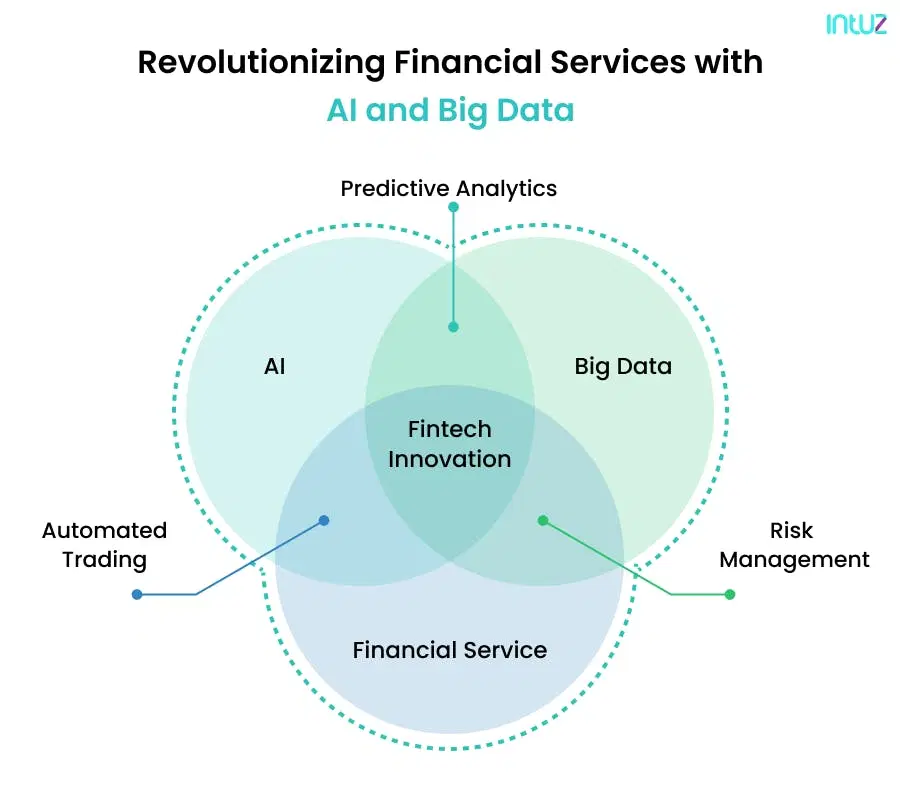
AI in fintech refers to using Machine Learning (ML), Natural Language Processing (NLP), and other AI technologies to automate, enhance, and personalize financial services, such as product & service recommendations, fraud detection, risk management, customer support, and trading.
Unlike traditional financial technologies, which rely on static rules and manual processes, AI-driven fintech continuously adapts and learns from vast datasets, enabling more accurate predictions, faster decision-making, and tailored services.
And the benefits go beyond just automating tasks.
Fintech companies can significantly reduce costs by integrating AI while offering innovative, customized services. For example, according to IBM, AI-powered chatbots now manage up to 80% of customer requests, freeing up human agents to focus on more complex inquiries.
You’ll learn more about such use cases in the following sections.
Ready to Transform Your Financial Services with AI-powered Automation?
Critical AI Technologies Driving Innovation in FinTech
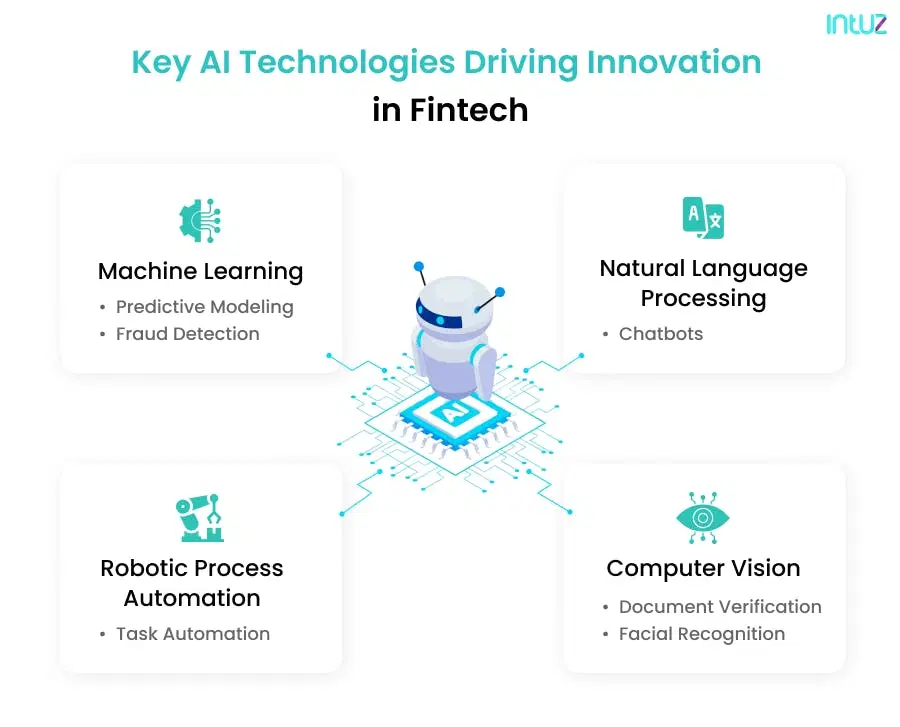
1. Machine Learning (ML)
Machine Learning is at the heart of AI’s impact on fintech. It involves using algorithms to analyze data, uncover patterns, and make decisions without explicit instructions. Did you know that nearly 43% of businesses already use ML to create operational efficiencies?
It isn’t surprising, though—let’s break down how different types of ML drive these innovations in fintech:
- Supervised learning: Here, algorithms are trained on labeled data—meaning the outcome for each input is known. This is key in fintech tasks like credit scoring, where models predict a borrower’s likelihood of default based on historical data.
- Unsupervised learning: This approach works with unlabeled data, identifying hidden patterns or clusters. Fintech companies use it for customer segmentation and fraud detection, where anomalies in transaction data can flag potential fraud.
- Reinforcement learning: It relies on a reward-and-penalty system to learn optimal behaviors through trial and error. In fintech, it’s often applied in algorithmic trading, allowing models to learn and refine the best trading strategies by interacting with actual market data.
2. Natural Language Processing (NLP)
In fintech, this technology powers chatbots and virtual assistants, enabling them to handle various customer service tasks.
From answering frequently asked questions to assisting with transactions and helping users navigate financial platforms, these tools are designed to interact just like a human agent would.
You’ve likely encountered NLP in action through virtual assistants like Siri or Google Assistant. They let customers manage their finances with simple voice commands—whether it’s checking account balances, making payments, or even receiving personalized investment advice.
NLP also plays a crucial role in sentiment analysis. By analyzing the tone behind the text, such as social media posts, customer reviews, or news articles, NLP helps fintech companies gauge customer satisfaction, identify frustration, and better understand market sentiment.
3. Computer vision
Computer vision is a branch of AI that focuses on interpreting and making sense of visual data, such as images and videos. In fintech, this technology performs tasks that rely on visual recognition and processing.
A common use case is facial recognition, where computer vision verifies user identities during account logins, transaction authorizations, or access to sensitive information. This adds an extra layer of security, making it harder for fraudsters to gain unauthorized access.
Another powerful computer vision application in fintech is document verification through Optical Character Recognition (OCR).
By instantly scanning and extracting text from documents such as passports, IDs, or financial statements, you can speed up processes like customer onboarding, improving both security and user experience.
4. Robotic Process Automation (RPA)
RPA technology uses software robots (or “bots”) to automate repetitive, rule-based tasks that humans would typically perform.
Banks and financial institutions use RPA to streamline processes like transaction approvals, transfers, and account updates. These bots work around the clock, ensuring faster transaction processing and minimizing the need for human intervention.
Take loan applications, for example. When a customer submits one, RPA bots can automatically collect necessary documents, verify the information, and process the application in record time—significantly speeding up approval times.
5. Blockchain and AI integration
The combination of Blockchain and AI in fintech creates powerful synergies that drive transparency, security, and automation to new heights. These two technologies complement each other, addressing limitations that neither can solve alone.
For example, Blockchain provides a secure, decentralized ledger with transparency and immutability, while AI adds intelligence to the data, enabling predictive analytics, fraud detection, and more advanced automation.
One exciting area of this integration is smart contracts—self-executing contracts in which terms are automatically enforced once conditions are met.
AI analyzes vast amounts of data to trigger these conditions, such as supply chain milestones or market fluctuations. This, in turn, creates smarter, more responsive agreements that can adapt to real-time changes, ensuring efficiency and precision.
6. AI predictive analytics
This technology helps fintech companies anticipate market trends and client behavior. ML models can forecast risky events and identify emerging patterns by processing vast amounts of structured data, like balance sheets, and unstructured data, such as social media posts.
One key application is portfolio management, where smart systems analyze historical data to predict which stocks or assets will perform well in the future. This enables investors to make informed decisions with greater confidence.
Additionally, AI can be instrumental in customer retention, helping fintech companies detect early signs that a client may leave and allowing them to take proactive steps to retain them.
6 Most Practical Use Cases of AI in Fintech
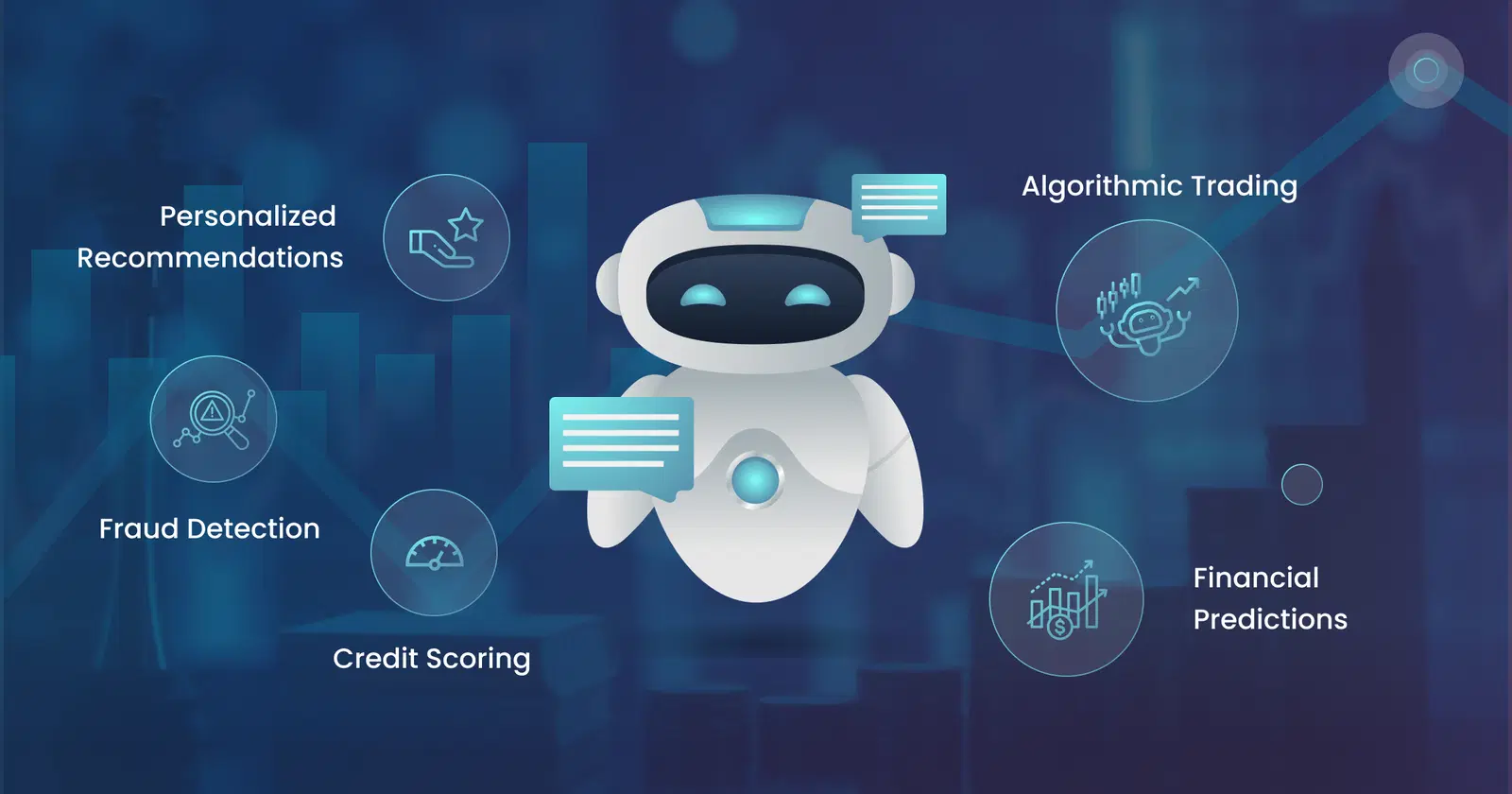
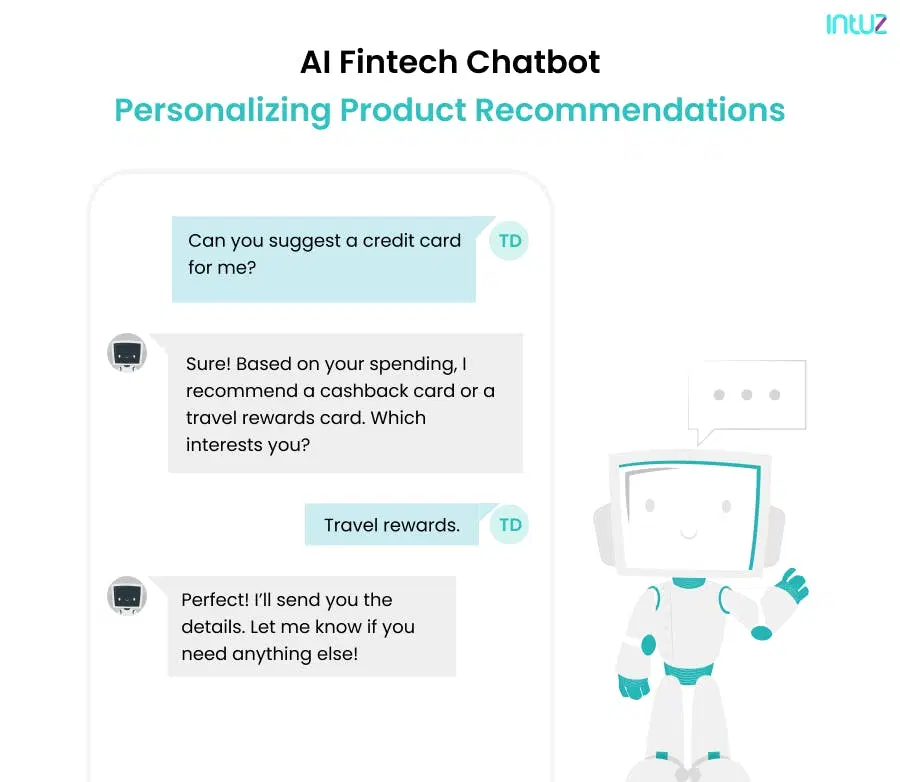
1. AI-driven personalized financial product recommendations
Imagine a scenario where every financial product you encounter is custom-tailored to fit your unique financial situation and goals. AI-driven personalization brings this to the table, with the power lying in the variety of products that can be recommended.
For example, AI can guide you on whether a long-term investment is better than a quick-return strategy or help you select the best insurance coverage based on your customer’s risk profile.
It can even offer you financial education content that you can, in turn, share with your customers, explaining why specific options work best for them. This way, you can dramatically improve customer satisfaction and loyalty by delivering highly personalized recommendations.
2. Data analysis and prediction
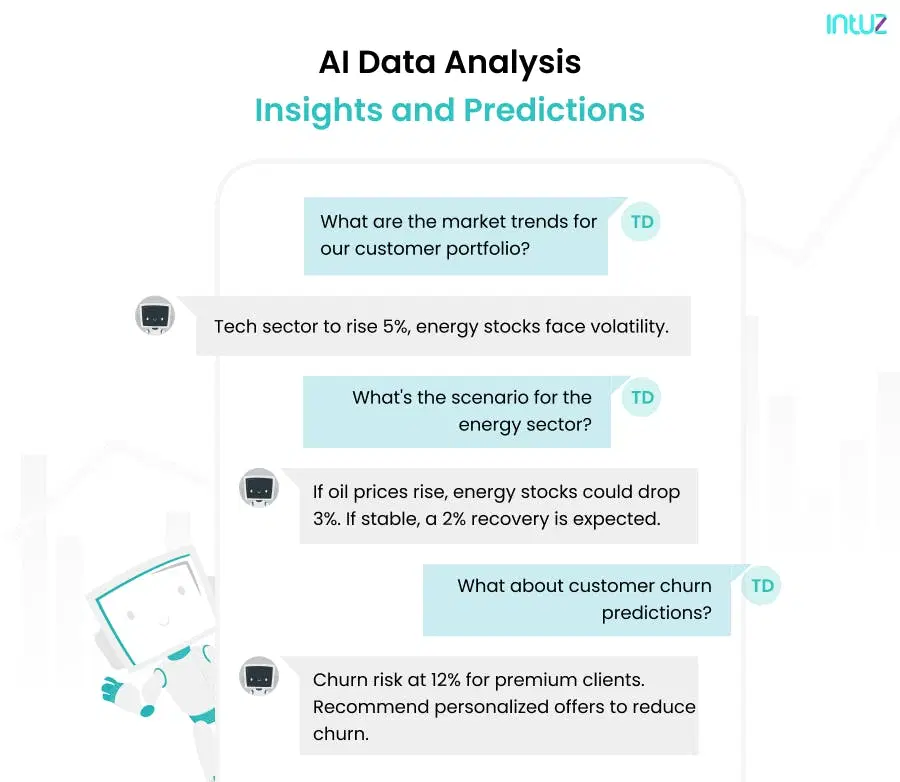
It’s a boon to have a system that can analyze historical data, current market conditions, and macroeconomic trends to forecast the market’s direction!
The good news is that AI-powered market trend analysis allows fintech companies to predict shifts before they happen, providing a competitive edge.
AI can also analyze customer behavior in depth, detecting patterns that signal churn or identifying customers who might be ready for an upsell. AI-based churn prediction helps preemptively address concerns, keeping customers engaged before they decide to leave.
Risk modeling is another area where AI shines. By running countless scenario analyses, AI can predict potential risks across portfolios, lending decisions, and market moves.
This prepares your business for different financial outcomes, ensuring better resilience in unpredictable markets and improved customer retention.
3. Fraud detection and prevention
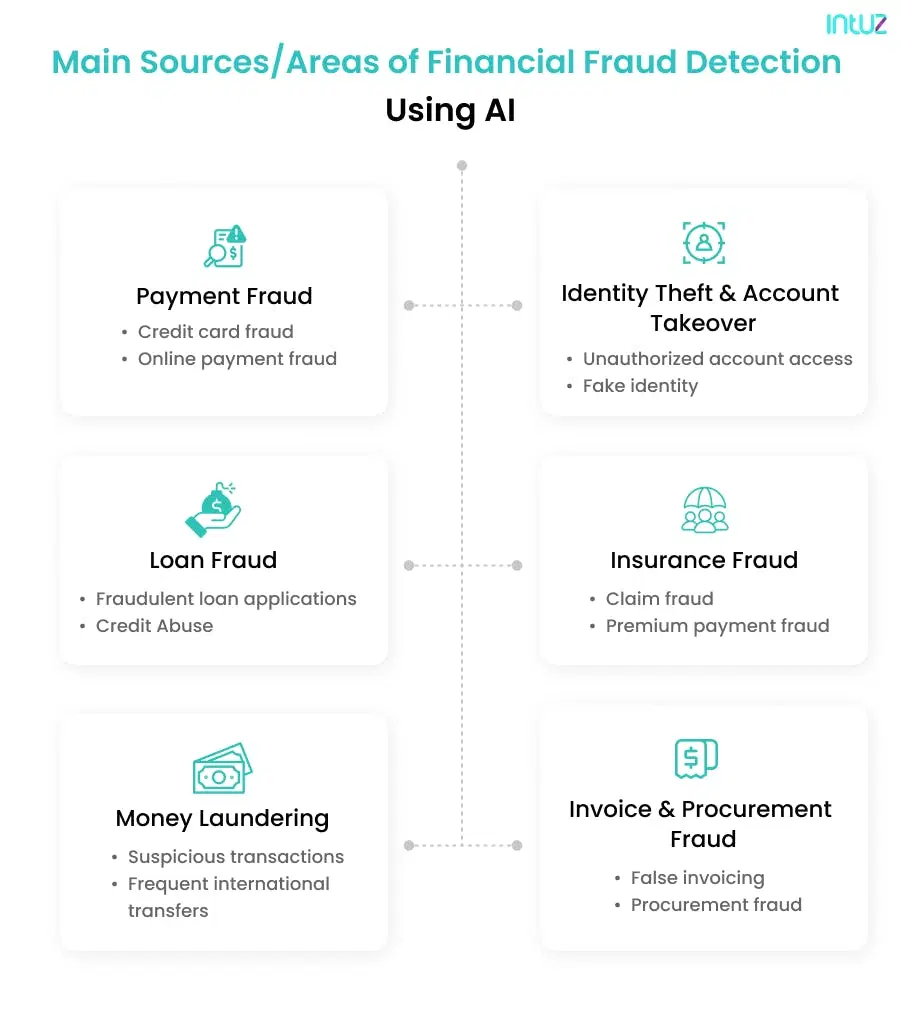
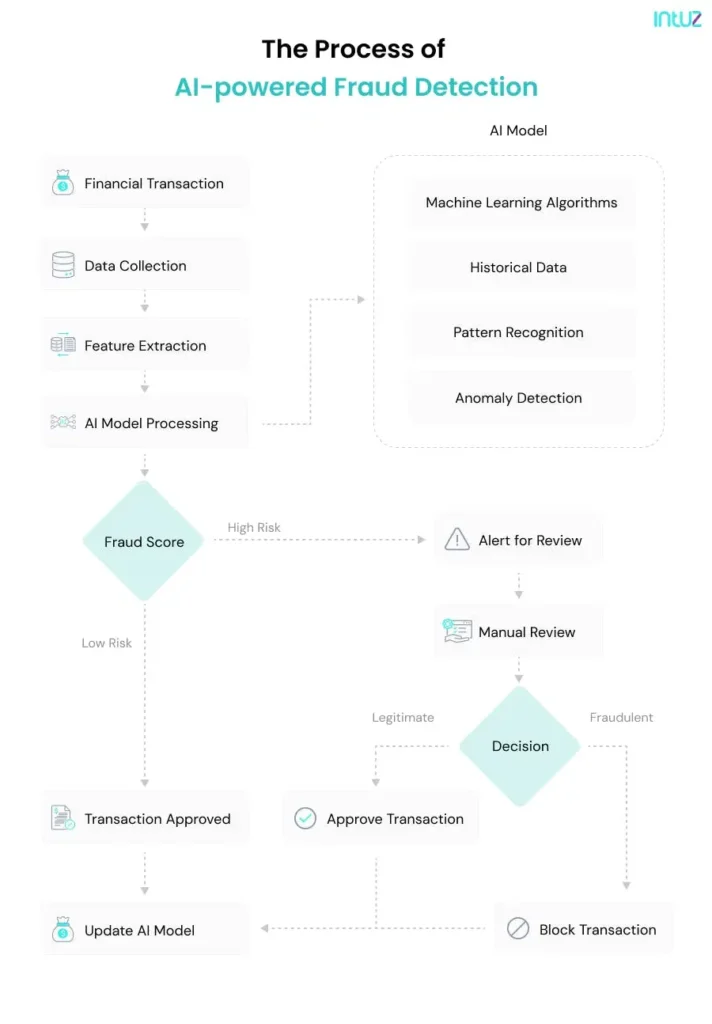
Picture this: every transaction, login attempt, and financial interaction within your platform is being monitored by AI in real time. It’s constantly scanning for unusual patterns and flagging any anomalies that might indicate financial fraud.
Whether it’s a suspicious transaction on a customer’s account or unusual spending behavior—for example, a transfer from a new device at an odd time or a sudden large withdrawal, AI’s ability to spot irregularities can prevent fraudulent activity before it causes significant damage.
It can literally trigger an alert, allowing you to take immediate action!
AI also enhances security through behavioral biometrics. Instead of relying solely on passwords or PINs, it analyzes how users interact with their devices—typing speed, mouse movement, or even holding their phones.
These patterns become a unique “fingerprint” for each user, boosting protection that’s nearly impossible for fraudsters to replicate.
4. Credit scoring and risk assessment
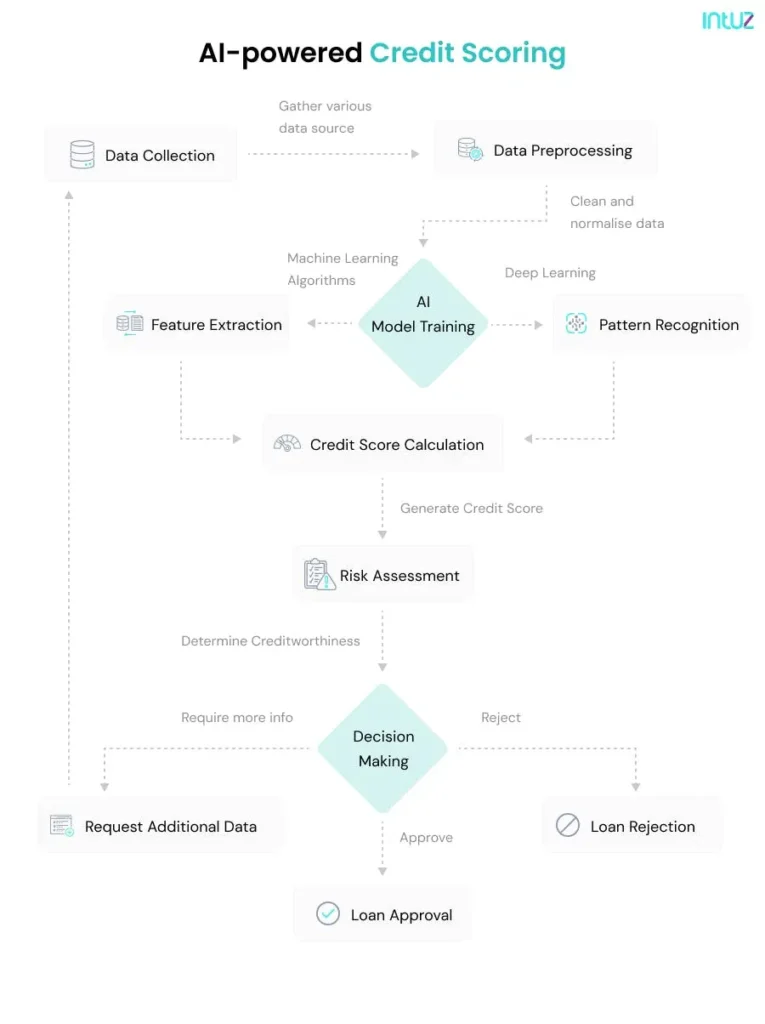
Traditional credit scoring models often rely on narrow data points, like credit history or income. AI-powered credit scoring, however, taps into alternative data sources—things like social media activity, payment histories for utilities or rent, and even behavioral data from financial habits.
Analyzing this vast pool of information offers a more holistic view of a person’s financial reliability, providing access to credit for individuals who traditional systems may have overlooked.
ML models further enhance this by building more accurate risk profiles. They can learn from historical lending data and can more effectively predict the likelihood of default than older methods.
This means fintech companies can better assess who is a safe bet for lending and who might present a higher risk, all while providing fairer and more personalized lending terms. Fintech companies can approve or deny credit applications in minutes if not seconds.
5. Algorithmic trading
What if you had a system that could execute trades within milliseconds, reacting to minute price changes across global markets? You’d then have the power to capitalize on market inefficiencies before others even can respond. With AI, that’s possible.
The technology can analyze financial news, social media, and sentiment from major financial events to inform trading decisions.
For example, it can detect a sudden shift in investor sentiment around a specific stock, helping traders make informed buy or sell decisions before the market reacts.
This means you’re not just relying on historical price data or technical indicators but also real-time shifts in market psychology—something that can make or break a trading strategy in today’s volatile markets.
6. Regulatory compliance and Anti-Money Laundering (AML)
Staying compliant with ever-evolving financial regulations is a monumental task for fintech companies, but AI makes it much more manageable.
Regulatory reporting, for instance, can be tedious and resource-heavy, requiring meticulous accuracy and up-to-date knowledge of the latest rules. AI streamlines this by automating regulatory reporting tasks, analyzing transactions, and ensuring that all activities align with the latest compliance standards.
AI is also critical in detecting suspicious activity indicating money laundering or other illicit financial practices. It continuously scans for red flags, such as unusual transaction volumes or patterns that deviate from a customer’s normal behavior.
The technology also optimizes the Know Your Customer (KYC) process. Onboarding a new customer usually involves time-consuming identity verification checks and document reviews.
With AI, this process is quick and smooth—ML models can instantly verify identities, scan for potential risks, and approve new accounts faster than ever.
By automating AML and KYC processes, fintech companies can focus on growth without being bogged down by regulatory frameworks’ complexities.
Real-World Examples of AI-Driven Fintech Companies
1. Wealthfront
Wealthfront uses AI to deliver personalized financial planning and investment advice. Its algorithms automatically assess users’ financial goals, risk tolerance, and market conditions to manage portfolios.
The AI-driven platform adapts to changes in users’ lives, like income increases or new financial goals, offering dynamic, customized advice without the need for a human advisor.
2. PayPal
PayPal uses AI to detect and prevent fraudulent transactions in real-time. Its AI models analyze vast amounts of transaction data to identify patterns and anomalies that indicate fraudulent activity.
By continuously learning from new data, the AI system evolves, making PayPal’s fraud detection more accurate and faster. This allows legitimate transactions to proceed while blocking suspicious ones before they cause harm.
3. Zest AI
Zest AI applies ML to credit scoring and underwriting processes, enabling lenders to make smarter, faster, and more accurate credit decisions. Traditional credit scores rely heavily on limited data points, but Zest AI’s models analyze thousands of data signals.
This broader analysis helps lenders assess creditworthiness more inclusively, especially for individuals who might not qualify under traditional credit scoring methods.
4. Upstart
Upstart uses AI to optimize personal loan approval and pricing decisions. Its algorithms go beyond traditional credit scoring models, analyzing over 1,000 factors like education, employment history, and financial behavior to determine a borrower’s creditworthiness.
This AI-driven approach allows Upstart to offer loans to a broader pool of borrowers while keeping default rates low. It also automates much of the lending process to ensure speed and efficiency.
5. Lemonade
Lemonade uses AI to streamline the insurance process, from underwriting to claims. Its AI chatbot, Maya, handles customer interactions, such as generating quotes and signing up new customers.
For claims, Lemonade’s AI Jim processes them almost instantly by verifying details and cross-referencing data to detect fraud. This allows the company to offer quick, affordable, and user-friendly insurance services with minimal human intervention.
Future Trends in AI for Fintech
1. Explainable AI (XAI)
As AI becomes more ingrained in decision-making, transparency is critical, especially in lending and credit scoring areas.
XAI ensures that the decisions made by AI systems can be understood and justified. This is increasingly important due to regulatory requirements, which demand that AI models be interpretable to ensure fairness and accountability.
Techniques such as feature attribution and local interpretable model-agnostic explanations (LIME) help make AI decisions transparent, ensuring trust between fintech companies and customers.
2. Quantum computing
This technology has the power to disrupt cryptography, improving security protocols that safeguard financial transactions. Quantum computing can solve highly complex financial models faster than traditional computers, such as portfolio optimization or risk simulations.
Quantum ML could also advance analytics, offering insights currently out of reach and providing fintech companies with a powerful edge in decision-making.
3. AI-powered autonomous finance
The concept of self-driving finance is emerging, where AI automatically manages a person’s finances without ongoing user input.
Autonomous finance includes AI systems that can perform automated financial planning, such as reallocating assets, paying bills, or investing in real time based on pre-set goals.
When integrated with the Internet of Things (IoT), financial services could be embedded into daily life, from automated home payments to on-the-go investment opportunities, creating seamless financial experiences.
How to Implement AI in Your Fintech Business
Are you struggling with manual processes slowing down your operations or dealing with customer support bottlenecks?
Implementing AI in your fintech company can drive higher efficiency and dramatically improve how you do business. However, following a strategic approach is essential to ensure a smooth and successful rollout. Don’t worry—we’ve got you covered.
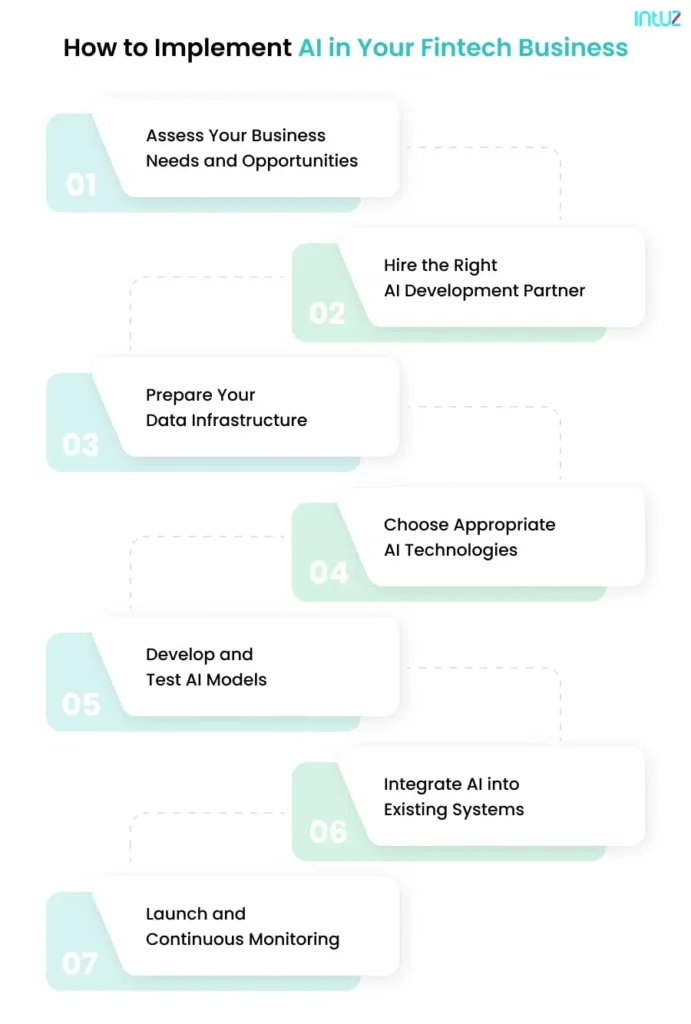
- Start by identifying key areas where AI can significantly impact your operations. Whether it’s enhancing customer relations, improving the underwriting process, or optimizing investment management, pinpoint the areas where AI will bring the most value.
- Partner with an experienced AI development company that understands the fintech landscape. A knowledgeable AI development partner ensures your solutions are tailored to your industry’s specific challenges. From developing smart AI-powered financial apps to automating financial analysis, Intuz, for instance, can equip you with personalized finance recommendations and predictive analysis.
- Data is the fuel that powers AI, so having a robust data architecture is essential. Ensure your company can capture, store, and manage large volumes of structured and unstructured data. High-quality data leads to high-quality AI outputs, so prioritize building a solid data foundation.
- Your choice of AI technologies should align with your strategic goals. Whether ML for credit scoring, predictive analytics for understanding customer behavior, or RPA for streamlining back-end processes, selecting the right tools is critical to maximizing AI’s potential.
- We should start small by developing proof-of-concept models that address specific fintech use cases. Test these models over days, weeks, or months to ensure they perform as expected. You can gradually scale AI efforts across your organization by validating smaller models first.
- When implementing AI, ensure it integrates seamlessly with your current systems to avoid disrupting workflows. This step requires close collaboration with internal teams to ensure the changes are effectively adopted and supported.
- Once your AI system is live, continuous monitoring is essential. Regularly assess its efficiency, compliance with regulations, and data accuracy. AI models should be fine-tuned based on real-world outcomes to ensure they remain reliable and deliver optimal results.
Explore Solutions
Custom AI Development Services – IntuzTo Wrap Up
AI delivers immense value to the fintech industry, boosting performance, enhancing security, and elevating customer satisfaction. As the technology’s disruptive potential grows, fintech companies must integrate it into their business models.
Doing so will meet your customers’ evolving expectations, drive innovation, and improve efficiency. AI is shaping the future of fintech—are you ready to take the leap?
If so, book a free consultation with Intuz.
You won’t just get solid advice on how AI can improve your operations—you’ll also walk away with a free roadmap for seamless AI development solutions integration. It’s an insightful, no-strings-attached session that will leave you feeling clear and confident about your next steps.
Don’t miss out.
Talk soon!
FAQs
Which AI technology is most impactful for fraud detection in financial platforms?
Machine Learning — specifically unsupervised learning — is the most effective for fraud detection because it identifies anomalies in transaction data without needing labeled examples of every fraud type. Combined with behavioral biometrics (analyzing how users type, move their mouse, or hold their phone), ML creates a dynamic “fingerprint” per user that’s nearly impossible to replicate. PayPal uses this layered approach to scan billions of transactions in real time. For fintech platforms processing high transaction volumes, this combination significantly reduces both false positives and undetected fraud compared to rule-based filtering alone.
How does AI-based credit scoring differ from traditional credit scoring models?
Traditional credit scoring relies on a narrow set of data points — primarily credit history and income. AI-powered models analyze thousands of alternative signals, including utility payment histories, behavioral data, and financial habits, to build a far more complete picture of creditworthiness. This is particularly valuable for underbanked individuals who may not have a strong credit history but are financially reliable. Companies like Zest AI and Upstart use this approach to approve loans in minutes while maintaining lower default rates — something that previously took days and required manual review.
How does AI help fintech companies stay compliant with AML and KYC regulations?
Regulatory compliance is one of the highest-cost operations in financial services, and AI directly reduces that burden. For AML, AI continuously scans transactions for suspicious patterns — unusual volumes, deviations from normal behavior, or activity that matches known money laundering signals. For KYC, ML models verify identities, scan documents, and approve new accounts in seconds instead of days. This doesn’t just save time — it reduces the risk of human error in compliance reviews and keeps pace with evolving regulatory requirements. AI-driven AML and KYC let fintech teams focus on growth rather than getting buried in compliance overhead.
How does AI improve credit scoring and lending?
AI credit scoring evaluates hundreds of data signals beyond traditional credit history — including behavioral and transactional patterns — to assess creditworthiness more accurately. AI-powered lenders now approve over 80% of loans instantly, a process that previously took days. This enables fairer access to credit while reducing default risk for financial institutions.
What role do AI chatbots play in fintech customer service?
AI chatbots in fintech handle account inquiries, loan eligibility checks, KYC verification, fraud alerts, and investment tracking — available 24/7. Using NLP, they provide contextual, human-like responses and proactively recommend financial products. This reduces human workload significantly, improves response times, and boosts customer satisfaction and retention rates.
How can a fintech company start implementing AI?
Start by building a robust data architecture to capture and manage large volumes of structured and unstructured data. Then partner with an experienced AI development company that understands the fintech landscape. Choose technologies — ML, predictive analytics, or RPA — aligned with your strategic goals. A phased implementation approach reduces risk and enables faster time-to-value.
Work with Intuz
Want to Integrate AI In Your Fintech Workflow?
Book 45-minute free consultation call, We'll map out where AI fits into your financial processes.
Let's Get Started
Share this article