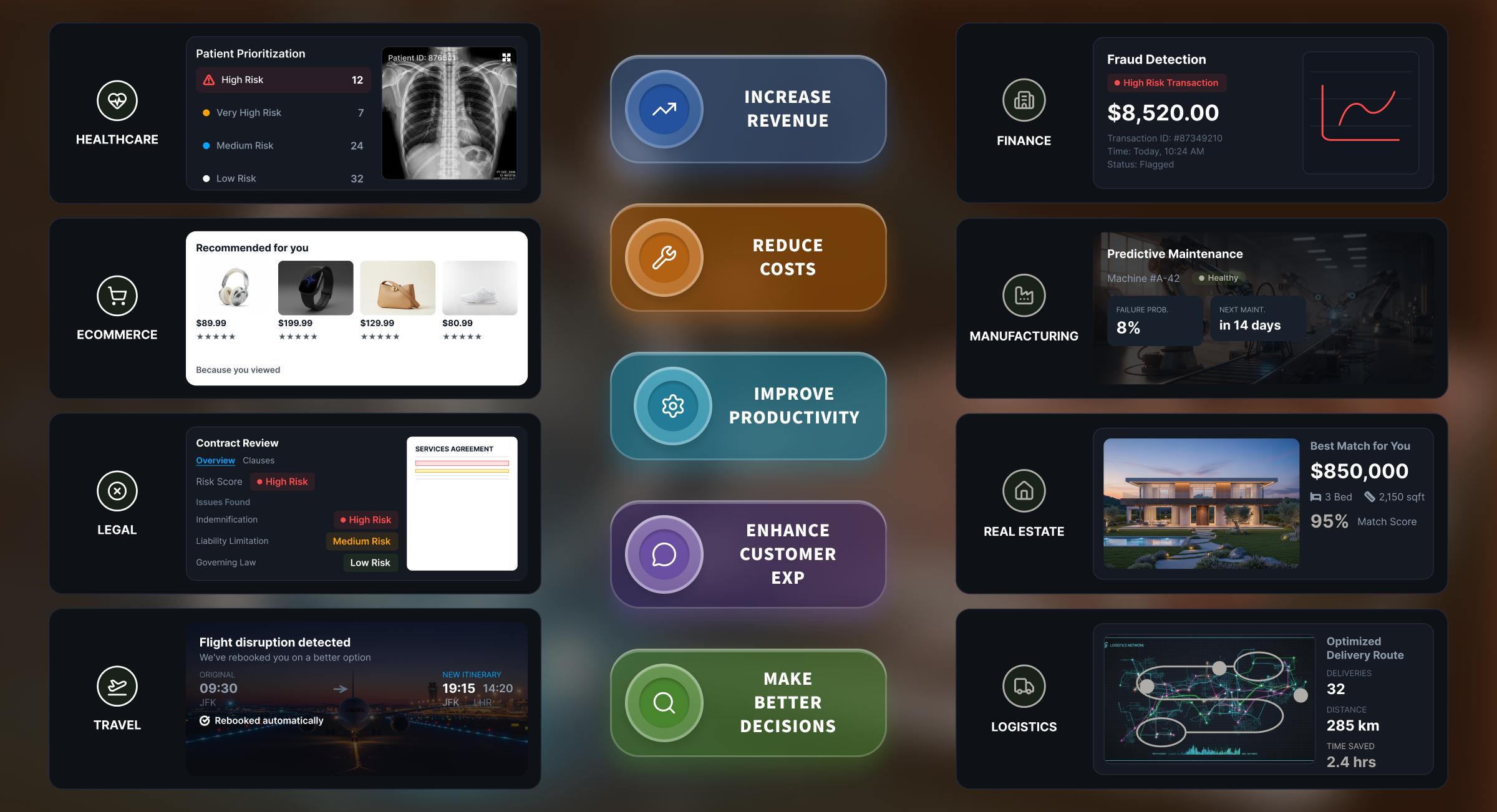






What seems like a long time ago, in a galaxy far, far away, is now a reality: Artificial Intelligence (AI), particularly Generative AI, has become mainstream.
From sales and HR to marketing and IT, the technology shows great potential to impact every aspect of business, disrupting how companies interact with customers and driving operational efficiency.
No wonder the Generative AI market has been projected to grow at a CAGR of 47.5% between 2023 and 2030, increasing its value from $43.87 billion to $667.96 billion, as more companies adopt AI development services to stay competitive.
Moreover, a Salesforce study shows that 67% of senior IT leaders plan to prioritize this advanced AI technology within the next 18 months.
Of course, ChatGPT has now entered the general vocabulary, and many companies are developing new AI tools on ChatGPT’s infrastructure (or their own) to work alongside humans as creators and executors.
Let’s dive deep and explore more!
Show
- Generative AI creates new content — text, images, code, audio, and video — by learning statistical patterns from large datasets, unlike discriminative AI which only classifies or predicts based on existing data.
- The technology operates through a multi-layered architecture combining language models, data pipelines, machine learning methods (supervised, unsupervised, reinforcement learning), and generative model types such as GANs, VAEs, and Autoencoders.
- Generative AI has industry-specific use cases spanning travel, healthcare, education, retail, finance, advertising, architecture, and legal services — each with measurable efficiency and revenue impact already being documented.
- Implementing generative AI in a business follows five defined stages: use case identification, data preparation, model selection, pilot deployment, and scaled integration with ongoing monitoring.
- Ethical guardrails are essential — the technology carries risks around harmful content distribution, data privacy violations, copyright exposure, and amplification of existing bias, all of which require proactive governance.
What is Generative AI?
Generative AI is a category of artificial intelligence that learns statistical patterns from large datasets and generates new, original content — including text, images, code, audio, and video — in response to a user prompt.
It recognizes and assimilates the structures and patterns in its existing training data to create new content similar to but not identical to the original data.
From code and text generation to video enhancement and Virtual Reality (VR) simulations, the applications of AI are endless.
Unlike discriminative AI that classifies or predicts based on existing data, generative AI creates. A discriminative model answers “Is this a cat?” — a generative model creates an image of a cat that didn’t exist before.
Generative AI timeline: How the technology came to be
The modern-day Generative AI development journey kicked off with BLOOM, a BigScience large open-science, open-access multilingual language model, entered the picture in July 2022.
However, it was the launch of ChatGPT by OpenAI in November 2022 that truly brought Generative AI to the masses, with one million users signing up for the tool in five days.
Llama from Meta and PaLM 2 and Gemini from Google followed this in quick succession.
The introduction of generative text-to-image tools like DALL-E, Midjourney, and Stable Diffusion between 2022 and 2023 further cemented the popularity of Generative AI.
In February 2024, OpenAI elevated the concept of video generation and launched Sora, an AI text-to-video model with a wide range of Sora use cases, capable of creating realistic and imaginative scenes from mere prompts.
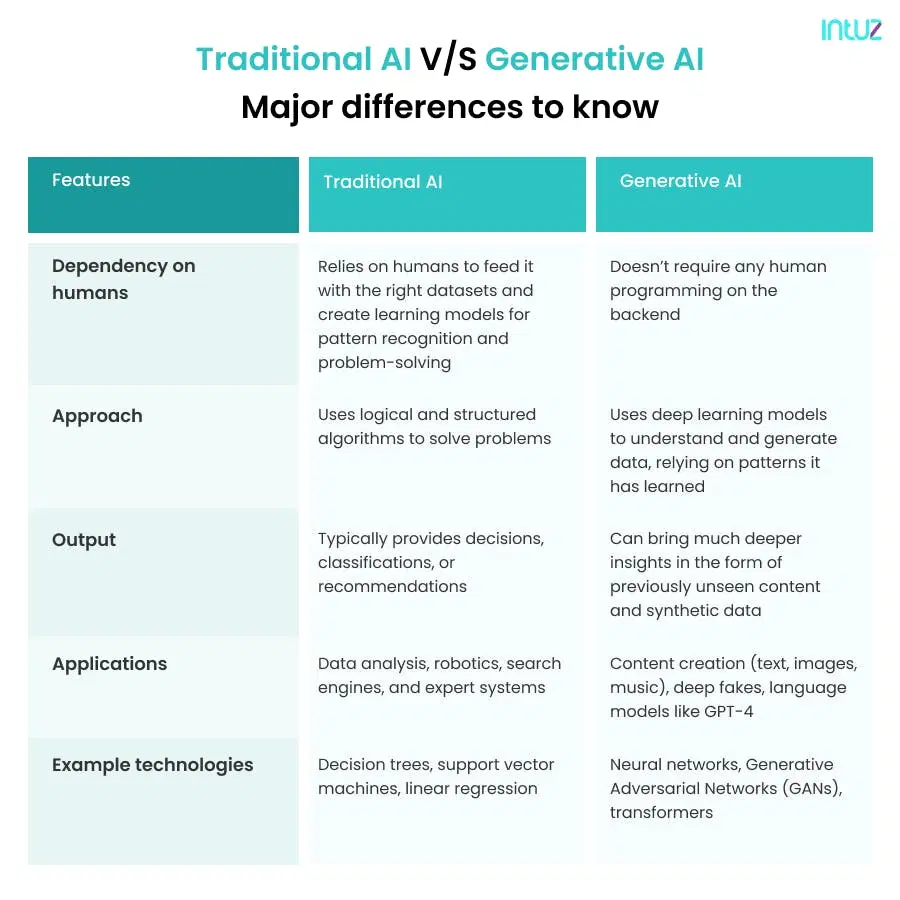
Traditional AI vs Generative AI: Major differences to know
Generative AI Key Concepts Defined
LLM (Large Language Model)
A neural network trained on billions of text examples to understand and generate human language. Examples: GPT-4 (OpenAI), Claude 3 (Anthropic), Gemini 1.5 (Google).
GAN (Generative Adversarial Network)
A model architecture where two networks — a generator and a discriminator — compete to produce increasingly realistic synthetic content. Used heavily in image generation.
Transformer
The architecture, introduced by Google in 2017, that uses self-attention mechanisms to process entire text sequences simultaneously. It is the foundation of modern LLMs.
RAG (Retrieval-Augmented Generation)
A technique that combines a generative model with real-time document retrieval to produce grounded, factually accurate responses — reducing hallucination.
How Generative AI Works: Step-by-Step
This AI technology can produce new content in seconds in response to a prompt. But how does it do that? What key components kick in? Let us find out:
1. Language models
Language models are probability distributions over words or word sequences based on the statistical properties of language. Once trained, they can predict the next word in a sentence, complete paragraphs, and generate entire articles based on a given prompt.
Under the broader umbrella of language models fall:
Natural Language Processing (NLP)
It is a subfield of AI that focuses on enabling machines to understand, interpret, and generate valuable and meaningful human language and perform various language-based tasks, including translation, sentiment analysis, and question-answering.
Language representations and embeddings
Processing and understanding language involves converting words and phrases into a numerical form. This is achieved through language representations and embeddings, where words, phrases, or entire sentences are mapped to vectors of real numbers.
These embeddings use models like BERT to capture semantic and syntactic meanings of the language elements, identifying similarities and relationships between different words or phrases.
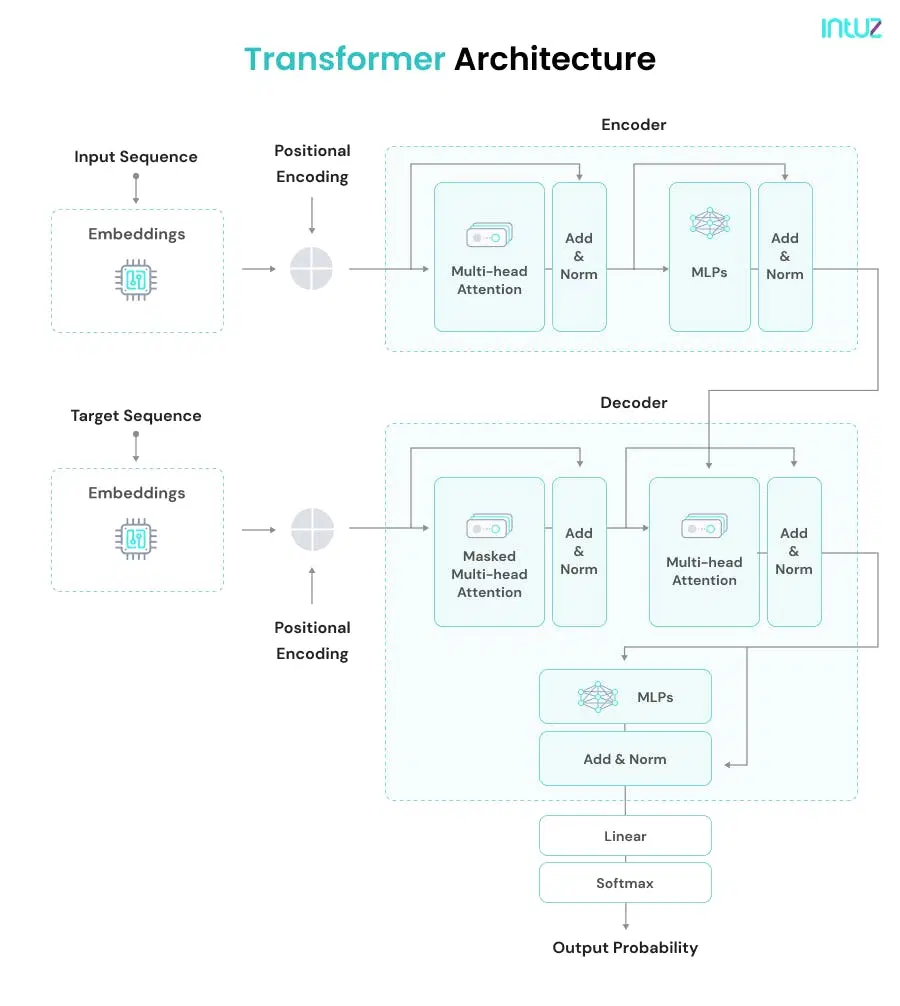
Transformer architecture
It is a deep learning architecture that uses an encoder-decoder structure to process input sequences and generate output parallelly.
It leverages self-attention to dynamically weigh the relevance of different words within a sentence or document, enabling a deeper understanding of context and relationships between words.
Large Language Models (LLMs)
LLMs are an AI program built on a kind of neural network called a transformer model. They are trained on data fetched and gathered from the Internet – thousands or millions of gigabytes’ worth of text – to generate coherent, contextually relevant, and remarkably human-like content.
2. Data
Data is the cornerstone of any AI model, including Generative AI. The quantity, quality, and diversity of the data sets used for training directly influence the generative model’s accuracy. That is why it is vital to note how data is collected, cleaned, and processed.
Data collection methods
Generative AI tools typically have access to data from different places, including:
- Web scraping: It is an efficient method for gathering large amounts of public data, such as text for NLP models or images for computer vision models, from the Internet. It is used in sentiment analysis, trend spotting, and training datasets for various AI applications.
- Social media: Platforms like X, Facebook, Instagram, and LinkedIn offer a continuous stream of data in the form of text, images, videos, and user interactions. By studying this data, AI models can learn about current trends, language usage, sentiment, and even cultural nuances.
- Crowdsourcing: A lesser-known technique for cultivating data for AI, it requires you to develop your online platform where you can hire and manage your “crowd” to gather data. This method offers diverse, high-quality data from a firsthand source.
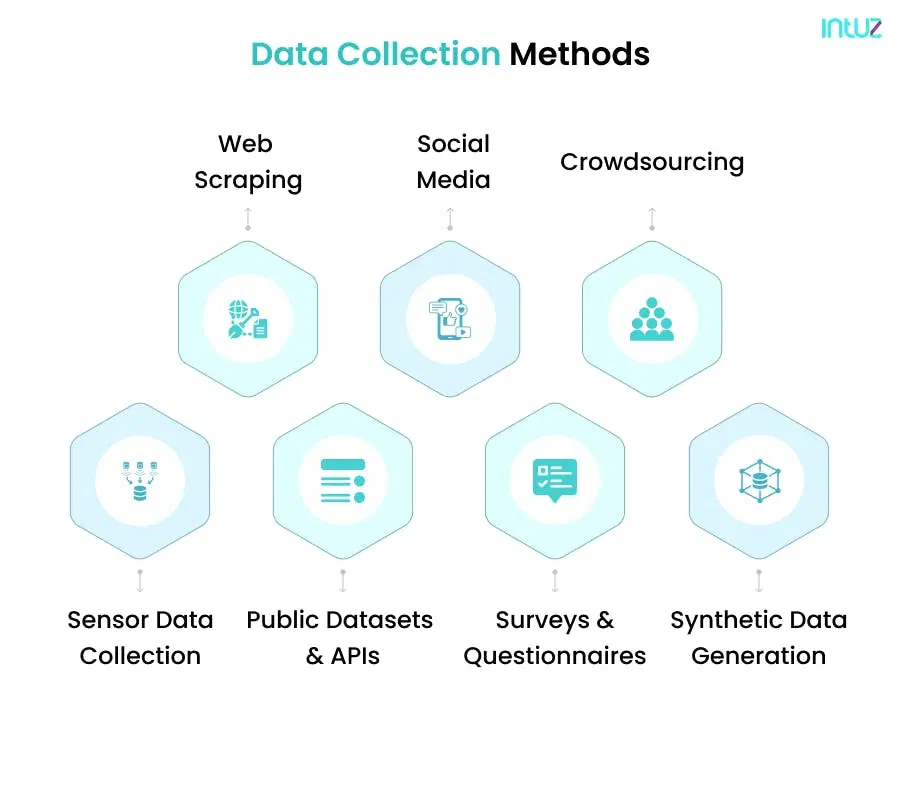
- Sensor data collection: This involves collecting environmental data, user interactions, biometrics, and much more through various sensors embedded in devices all around us. This data helps build AI models that interact with the real world, such as those used in smart homes, health monitoring devices, and autonomous vehicles.
- Public datasets and APIs: A lot of data belongs to the public domain, which means anyone can access and use it for any purpose. Scientific journals, free image libraries, Wikipedia pages, and news articles are just a few examples of public data sets.
- Surveys and questionnaires: These methods are particularly useful for gathering opinions, preferences, and feedback directly from users. The collected data can then be analyzed to identify trends, user needs, and areas for improvement in products or services.
- Synthetic data generation: This involves using Generative AI to create synthetic data, which is then used to train another generative model. For example, if you are building a customer service AI model, you could apply this technique to create fictional customer situations and interactions.
Data cleansing and pre-processing
Key techniques include:
- Noise removal: In text data, this might involve removing stop words or correcting spelling errors, while in image data, it could involve reducing background noise. Duplicate data is also a form of “noise” because it doesn’t add new information to the dataset. Instead, it skews analysis and model training by over-representing certain observations, making duplicate content important.
- Feature engineering: This includes transforming raw data into a format that better represents the underlying problem to the model, such as creating new features or modifying existing ones to enhance model performance.
- Handling missing values: Techniques such as imputation (filling missing values with statistical measures) or omitting rows/columns ensure the model receives complete information for training.
- Standardization: This involves adjusting the scale or distribution of features so that they contribute equally to the Generative AI model’s performance.
3. Machine Learning (ML)
ML is a subset of AI that focuses on developing algorithms to learn from and make predictions or decisions based on data. It is the principle upon which Generative AI models are built. Let us review the various approaches within ML:
Supervised vs unsupervised learning
Supervised learning is a type of ML where the model is trained on a labeled dataset. This means that each training example is paired with an output label. The model learns to predict the output from the input data.
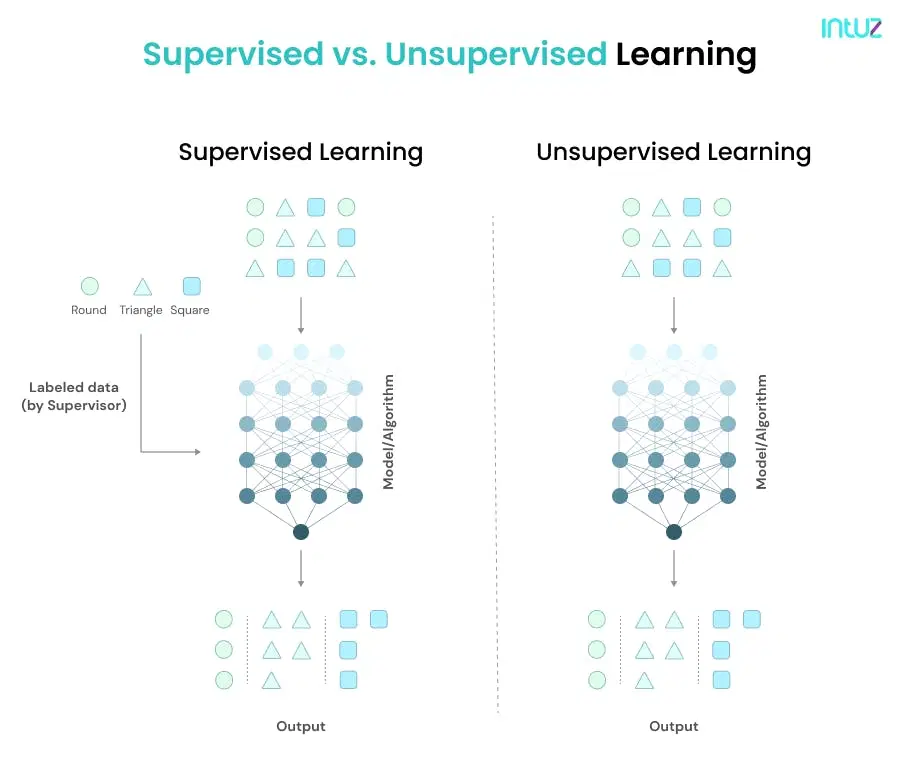
On the other hand, unsupervised learning involves training models on data without explicit instructions on what to predict. The model learns the patterns and structures from the data itself.
Reinforcement Learning (RL)
RL is a type of ML that trains software to make decisions to achieve optimal results. It mimics the trial-and-error learning approach or a reward-and-punishment paradigm applied by humans for processing data.
This approach can be used in various applications in Generative AI, including automated content creation, drug discovery (where the model generates novel molecular structures), and game AI, where the system creates new levels or challenges.
Training methods
Certain methodologies come into play when building and optimizing ML models used in Generative AI:
- Backpropagation calculates the gradient (or derivative) of the loss function concerning each weight in the network and then adjusts the weights to minimize the loss. This enables the ML model to learn iteratively from the training data.
- Fine-tuning involves adapting a pre-trained model to a new but related task. A generative model trained on a large, generic dataset can be refined on a smaller, domain-specific dataset to produce content relevant to a specific field or style.
- Transfer learning repurposes a model developed for one task to a second related task. Generative AI enables you to build upon existing models and techniques, enabling the creation of more complex and sophisticated generative models.
4. Generative models
Generative models are a class of algorithms in ML designed to generate new data points that resemble the training data. They comprise four key components:
Generative Adversarial Networks (GANs)
GANs work on a principle of competition between two neural networks: the Generator and the Discriminator. The Generator creates data that is indistinguishable from real data, while the Discriminator distinguishes between real data and data produced by the Generator.
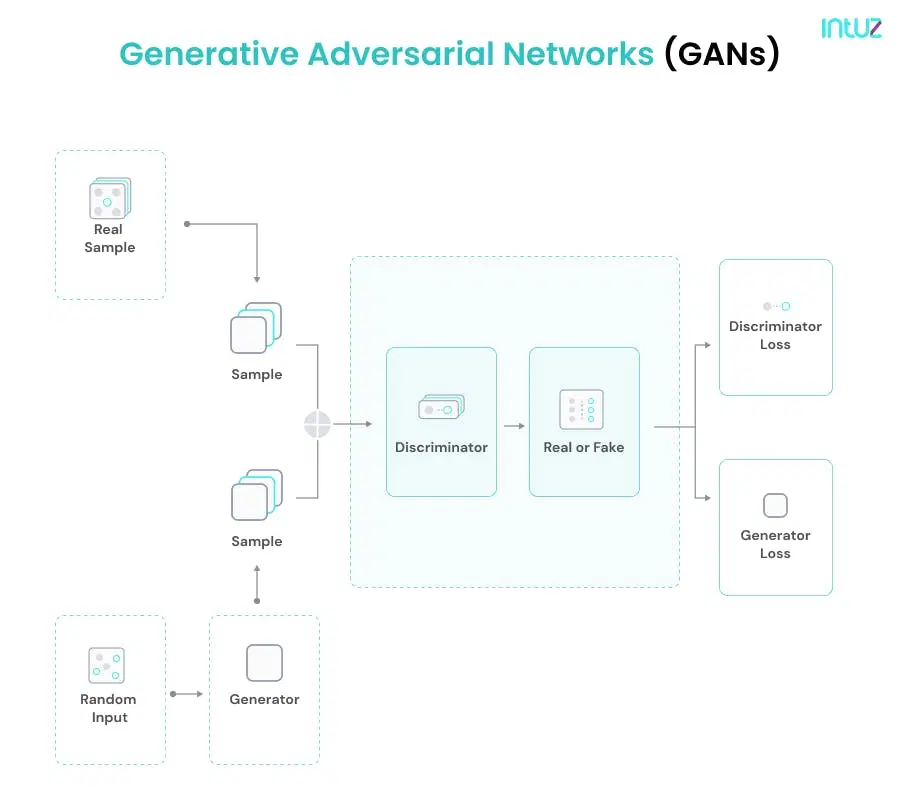
GANs have been successfully applied in image generation, photo-realistic image manipulation, art creation, and even generating realistic human faces. There are two noted types of GAN:
Variational Autoencoders (VAEs)
VAEs are another class of generative models that use a different approach to generate data. They comprise two main features:
VAEs are particularly noted for their applications in generating variations of input data, such as faces with different expressions, and their role in unsupervised learning.
Autoencoders
Autoencoders are a type of neural network used to learn efficient codings of unlabeled data. The network is designed to compress the input into a latent-space representation (encoding) and reconstruct the input as closely as possible from this representation (decoding).
Autoencoders are used for dimensionality reduction, feature learning, and denoising data.
Generative AI industry-specific use cases
With the accelerated shift to online business models during the pandemic and the consequent adoption of AI-based tools to execute tasks and enhance productivity, it is not surprising to see Generative AI finding use in many different industries, including:
1. Travel and tourism
Generative AI in this sector is expected to grow revenue at a CAGR of 17.5% from 2023 to 2029, reaching nearly $9600 million. It has immense potential to create a more immersive and engaging experience while planning travel. Let us take a look:
Tailored travel suggestions
AI in travel, especially generative AI, can comb through a customer’s past behavior, buying history, and preferences to understand what they truly like and suggest vacation ideas that have a higher chance of appealing to them and compelling them to actually complete their bookings.
Streamlined and personalized itineraries
Generative AI can further tune its recommendations to offer a start-to-finish travel plan catering to customers’ unique tastes.
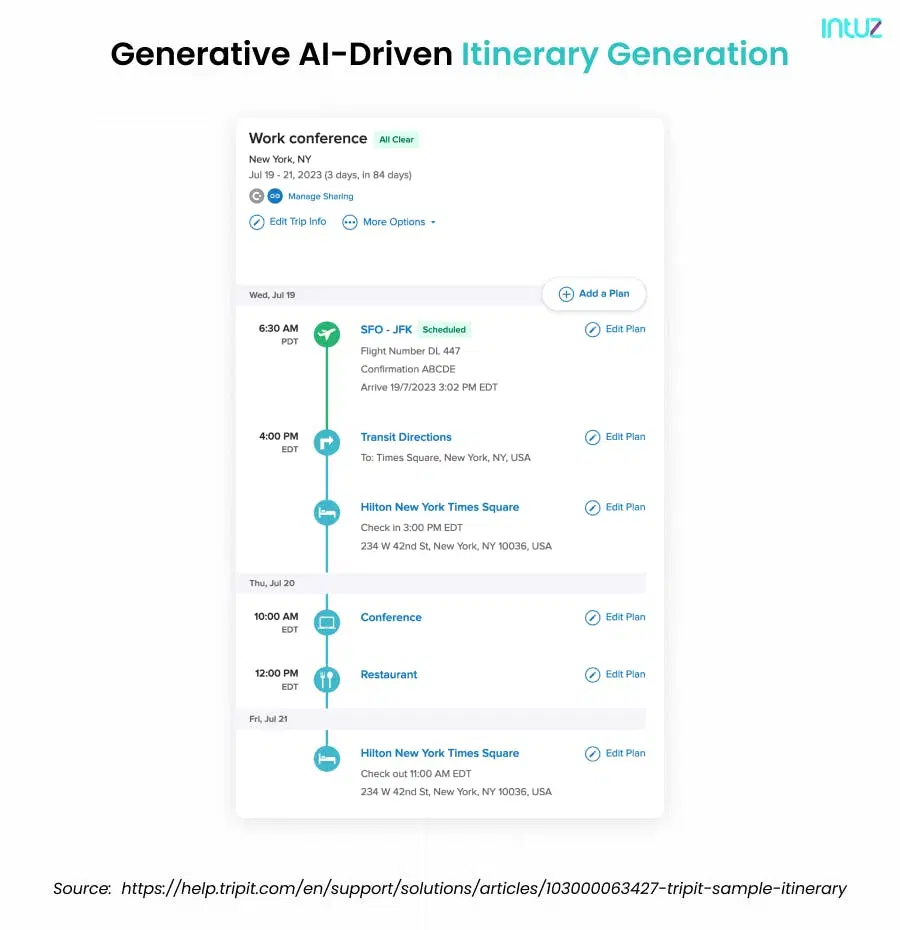
From optimal travel routes and accommodation options to food choices and current deals on tourist attractions, AI-powered smart trip planners can deliver an all-in-one itinerary to the customer’s inbox, ready for booking.
For example, TripIt’s Smart Itinerary Planner is a popular AI-driven travel companion that helps in several ways in addition to creating a comprehensive trip itinerary:
Content that enhances customer interaction
Generative AI makes creating high-quality and appealing images and videos easy. This visual content gives customers a taste of where they are about to go and what they can expect. It can be especially useful in social media campaigns where aesthetics matter.
On the other hand, Generative AI can help craft compelling narratives about destinations, weaving historical facts, anecdotes, and local legends that would make an exciting addition to the site’s blogs, brochures, and other sales literature.
2. Health and medicine
Generative AI can play an essential supportive function in the healthcare space. While physicians should still make final decisions, AI technology can easily fit into high-repetition, low-risk environments and thus save time and effort. It can perform the following tasks:
Routine information gathering
Generative AI can conduct preliminary questioning on the healthcare provider’s behalf by asking about the patient’s medical history conversationally and retrieving records from health information exchanges.
It can also organize the collected information in a proper hierarchy, enabling doctors and healthcare specialists to glean the data quickly.
Disease diagnosis and drug discovery
Generative AI can help diagnose common conditions for which sufficiently large datasets (including datasets from diverse populations) can be accessed.
It can analyze medical images (X-rays, MRIs, CT scans) to detect abnormalities like tumors, fractures, or diseases like pneumonia. This firsthand information can create more accurate and less invasive testing methods or drug treatments.
Clinical trial optimization
Generative AI can quickly examine genetic and phenotypic data alongside real-world data (such as the patient’s medical history), allowing researchers to better understand how and why different subgroups of patients respond differently to the same treatments.
By generating realistic, synthetic patient data, the technology can also simulate clinical trial outcomes without needing as many actual participants. This can help in the early clinical trial design stages and predict efficacy before investing in large-scale studies.
3. Education
For several years, online platforms like Udemy and Coursera have facilitated access to top-notch education for millions who were previously excluded. With Generative AI, education can become a truly individual journey that helps students tap into their potential.
Personalized learning journeys
Generative AI adapts to each student’s strengths, weaknesses, and learning styles to create personalized learning paths for any subject. From breakdowns of complex topics to visual representations of concepts, it enables each individual to learn at their own pace, accessing the right content at the appropriate time.
Superior content creation
Education platforms powered by Generative AI can craft tailored worksheets, discussion prompts, and practical exercises for any subject. They can improve students’ understanding of the subject by pointing out logical gaps and presenting arguments from multiple perspectives.
This also helps teachers save time and research required to read through endless pages to find relevant information for creating content.
Language learning and translation
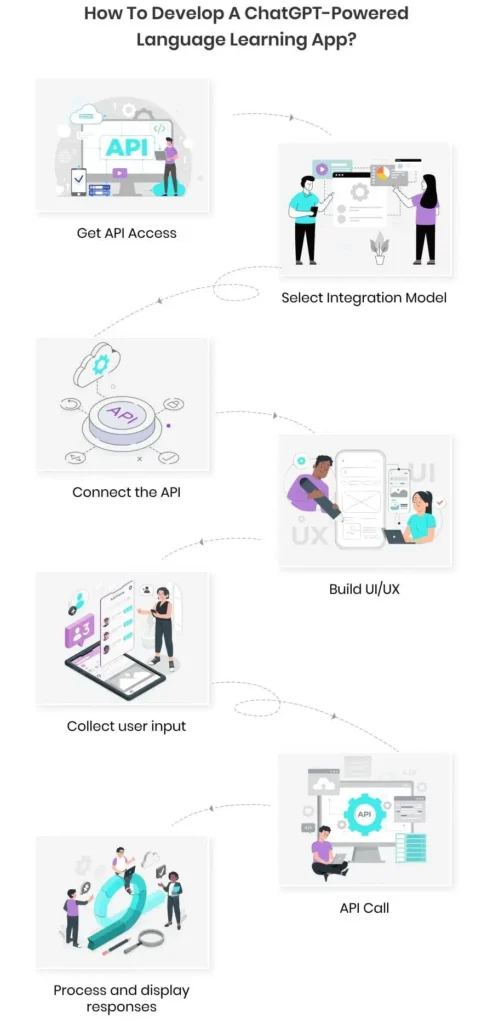
Apps like Duolingo already use adaptive learning algorithms to help anyone learn a new language. Generative AI takes this to the next level with curated practice exercises and real-time translation through NLP capabilities to understand each student’s accent and pronunciation.
4. Retail and eCommerce
McKinsey reports that eCommerce companies that invest in AI enjoy a 3%- 15% jump in revenue and a 10%- 20% jump in sales. With Generative AI, retail and eCommerce brands can take an all-new “smart” approach that skyrockets their numbers.
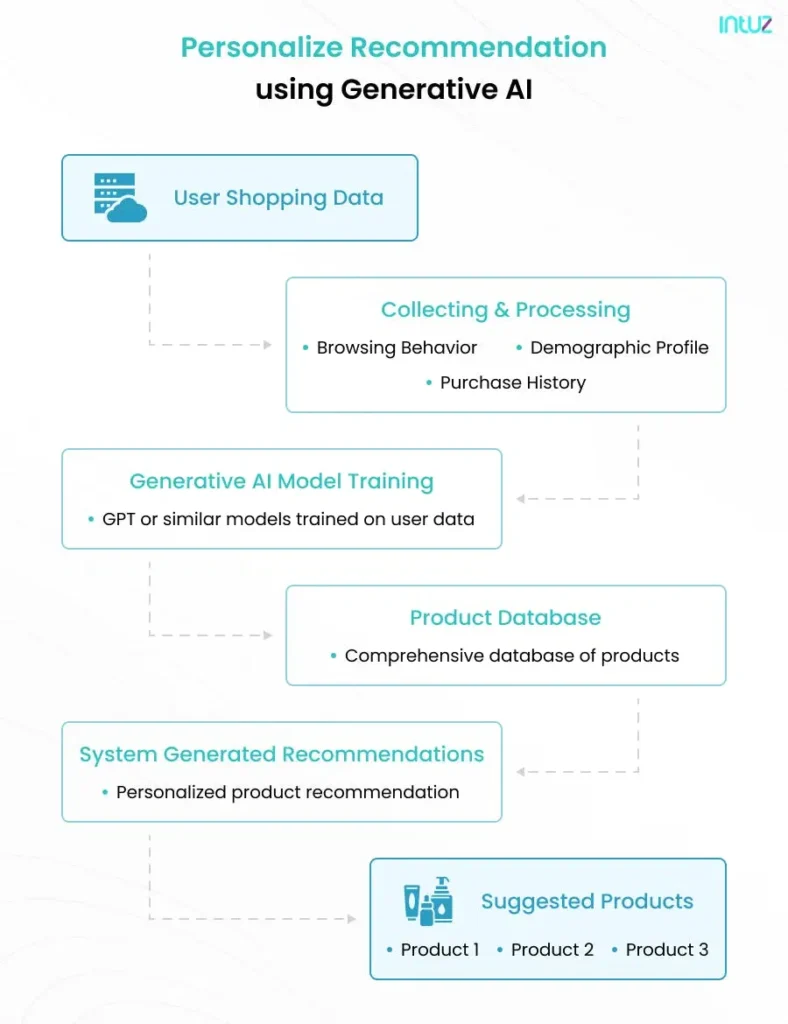
Hyper-personalized recommendations
Did you know that 40% of marketing leaders agree that customer personalization directly impacts eCommerce sales maximization, basket size, and profits?
The advanced AI technology transcends the standard product filters on eCommerce websites to offer hyper-tailored recommendations that meet all of the customer’s unique needs, be it size, brand, color, style, usage, or anything else.
It takes them to their “ideal product” with much less effort. This arrangement increases the likelihood that they will hit the “Buy Now” button and close the sale.
Enhanced product discovery and content
According to Salesforce, 82% of eCommerce companies with AI report moderate improvement in how their customers explore, discover, and engage with products.
AI-powered chatbots can leverage superior recommendation systems to deliver personalized product suggestions and styling ideas by asking customers about their wants and preferences.
They can also suggest different cross-selling or upselling options, intriguing the customer to the extent they purchase.
AI dynamic pricing
Generative AI can help eCommerce companies set flexible prices based on factors like competitor pricing or current market conditions, similar to how Uber adjusts its rates during peak hours or heavy rains.
You can offer discounts during slow periods or increase prices when the demand is high (especially during festivals), enhancing your ROI.
For example, during winter, you could price coats, socks, mufflers, and cardigans at a higher rate due to high demand and gradually decrease as the season progresses. This will maximize conversion and profit per sale.
5. Finance and business
The market for Generative AI in financial services is set to hit $9.4 billion by 2032—unsurprisingly. Finance and banking institutions everywhere are actively investing in Generative AI to drive innovation in their processes.
Here is how they can leverage the technology:
Fraud detection and prevention
Generative AI can help train ML models by incorporating synthetic data to improve fraud detection and prevention. This is a high priority in a world where cybercrime costs are projected to reach $10.5 trillion by 2025.
Enhancing the adaptability of fraud detection systems reduces the number of false positives and negatives, ensuring that customer assets are always kept safe, regardless of the sophistication of the fraud attack.
Risk assessment and credit scoring
Generative AI can significantly streamline the evaluation process for creditworthiness, optimizing loan approval decisions. It does so by facilitating scenario simulation and risk factor analysis.
It can also generate synthetic data representing different risk scenarios, which allows financial companies to build more efficient capital allocation models.
Financial product innovation and design
Generative AI can vastly reduce the timelines for crafting innovative finance and banking products that optimize for specific criteria. With rapid ideation and prototyping, designs can be iterated almost in real-time based on market feedback.
In addition, the technology simulates market demand to predict customer preferences and tailor offerings effectively.
6. Advertising and marketing
The year 2024 and beyond will be the era of the market size of one. Generative AI’s personalizing capabilities can help even small businesses gain massive competitive edges when marketing to their ideal customers.
Quick text generation
Today, 58% of marketers use Generative AI to create content, and chances are that many of the social media posts and blogs you interacted with today were written—or at least conceptualized—by an AI tool.
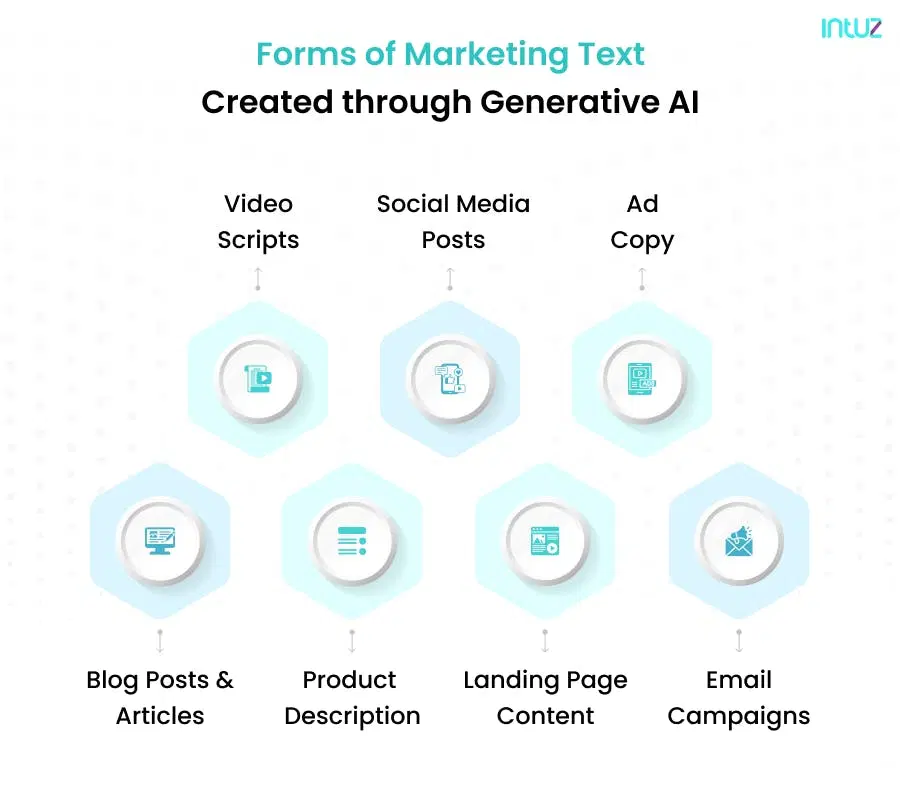
Generative AI lets marketers create high-quality content at scale for a fraction of the cost, helping them expand their reach. You can also use the technology to come up with new ideas and angles, examples, and full-length outlines, making writer’s block a thing of the past.
Dynamic advertising
Dynamic ads have been around for a while, appearing on other websites as ads for the products a customer was looking at in a previous browsing session.
Generative AI in digital marketing refines this with more nuanced knowledge of a customer’s past searches, previously viewed items, and buying history to create ads that are visually most likely to drive action.
For example, if someone browses through a specific eyeshadow brand, AI helps showcase eyeshadows in similar shades from different brands within the same budget.
Compelling sales hooks
Generative AI can use customer data to suggest tailored copy for email campaigns, landing pages, marketing brochures, and other forms of content—unique to each customer.
This hyper-personalized copywriting increases the chance of converting customers regardless of their current platform. Moreover, the technology can also suggest different tones, styles, and forms of writing sales hooks.
7. Architecture and engineering
Generative AI is also a prime pick for students and professionals in this sector. Let us take a look at the benefits it brings to the table:
Schematic design
Generative AI can help develop viable and innovative ideas for the schematics of any project, including floor plans, site plans, HVAC plans and more.
With text-to-image converters or Generative Fill/Expand in Photoshop, architects can quickly visualize how the design they conceptualize will look in practice.
It can also create immersive videos based on a 3D render of the project to help users better understand how to move through the structure.
Design development
Generative AI can prepare complete 2D and 3D designs based on the approved schematics. It can convey concepts to clients, from adding textures and colors to preparing multiple interior design concepts to altering aspect ratio while maintaining look and feel.
8. Legal and legal services
The advanced generative AI in legal industry can inject unprecedented speed and efficiency into traditional legal practices, automating up to 44% of legal tasks. Lawyers can access specific data and smart insights much faster, helping them focus on high-value strategic work.
Enhanced legal research efficiency
Generative AI can rapidly scan large databases of legal documents and other materials to glean relevant insights based on the given prompt.
It can quickly summarize complex legal materials and predict legal outcomes, helping lawyers prepare better for their trials and devise ideal strategies for contingencies.
For instance, if a lawyer receives a 50-page contract for a client review, the technology can generate a 2-page summary highlighting essential clauses, key actions, potential issues, and main legal arguments within seconds.
Automated contract analysis
Generative AI can scan contracts in seconds, identify critical clauses, compare the terms of a contract across multiple documents, extract the most relevant figures, and pinpoint any inconsistencies.
This is particularly useful in complex negotiations such as a merger where data privacy obligations, termination clauses, and Intellectual Property (IP) ownership could be in the mix.
Patent search
Generative AI can scan patent databases to determine whether any given idea can be patented and also present key inputs on the legal requirements for getting patents in different fields.
Patent Lens, for instance, is an AI tool that employs NLP to conduct patent searches across multiple databases simultaneously. This can help legal companies save time and money and avoid potential patent infringement cases later.
How to Implement Generative AI in Your Business
Implementing generative AI in a business follows five stages: use case identification, data preparation, model selection, pilot deployment, and scaled integration with ongoing monitoring.
Identify Your Use Case
Audit existing workflows for repetitive, language-intensive, or content-heavy tasks. Prioritize use cases with measurable ROI: support deflection, content production, code review, or document analysis. Avoid starting with “let’s do AI” — start with a specific business problem.
Assess & Prepare Your Data
Inventory available data — internal documents, customer interactions, product data. Evaluate quality, volume, and privacy classification. Clean and label data for fine-tuning if required. Data quality is the single largest determinant of GenAI success.
Select the Right Model
Choose between API-based models (GPT-4, Claude, Gemini), open-source models (Llama 3, Mistral), or domain-specific fine-tuned models. Decision factors: data sensitivity, latency requirements, customization depth, and total cost of ownership.
Build a Pilot
Develop a minimum viable prototype with a dedicated team: AI engineers, prompt engineers, and domain experts. Run a controlled pilot with real users and measure against defined success metrics before scaling.
Scale, Monitor & Govern
Deploy to production with guardrails: content filtering, output monitoring, hallucination detection, and human-in-the-loop review for high-stakes decisions. Establish ongoing retraining, evaluation, and compliance review cycles.
Ethical Considerations with Generative AI
While the benefits of Generative AI are manifold, it is vital to consider the potential pitfalls. Generative AI is only as good as the prompt given to it by humans and the data on which it bases its learning.
As Generative AI becomes an integral part of every industry, guardrails should be built for the ethical ramifications of letting AI take over human tasks.
1. Distribution of harmful content
Users can potentially generate offensive or malicious content through their prompts. Such content can significantly damage company’s reputations, if sent to a wide audience as with a mass email, or can spread harmful and hateful views online if it perpetuates discriminatory beliefs.
2. Data privacy violations
The data on which Generative AI models are trained can sometimes contain personally identifiable information about people that can be extracted with the right kind of prompt.
At the same time, given the complexity of large language models, it can be more challenging for an individual to know that their information is available publicly.
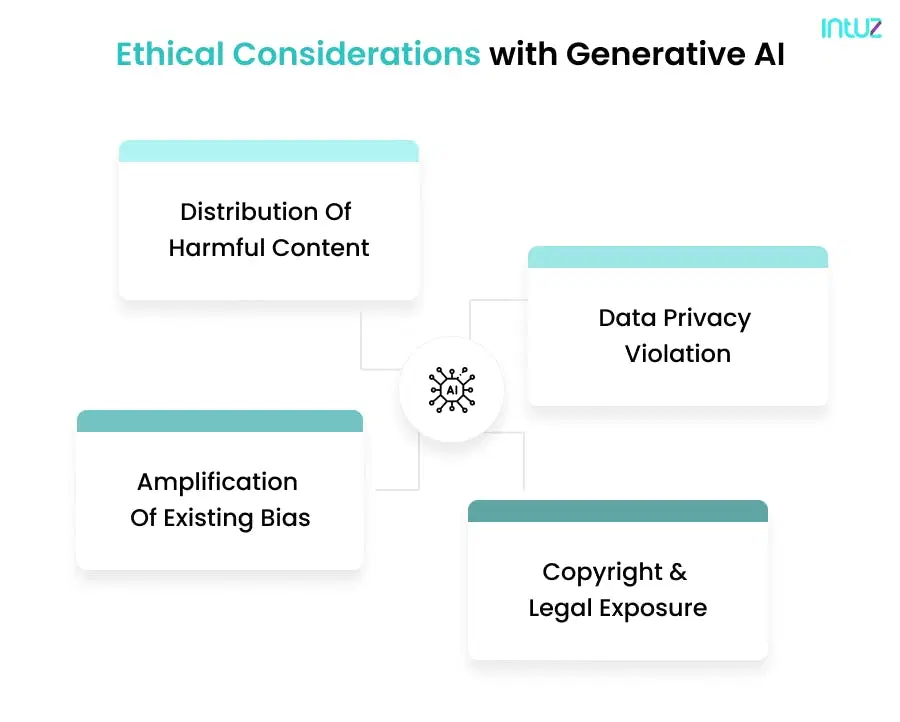
3. Copyright and legal exposure
Generative AI creates content based on databases of existing content, which could potentially infringe on copyrights if the data’s source is unknown. This can damage the company’s reputation, especially if the data is drawn from another company’s IP.
4. Amplification of existing bias
If the databases on which Generative AI is trained are biased, the content created by that AI will also be biased. This can have harmful real-world implications, such as the continued exclusion of job candidates from historically marginalized backgrounds.
Explore Solutions
The future of Generative AI is bright
There is no doubt that Generative AI is here to stay. Its capacity to streamline and optimize far exceeds any human or traditional digital ability, and its applications are only just being explored.
For example, artists and creators can leverage this technology to generate novel ideas and streamline their creativity. Fashion brands can prototype, customize, and optimize products before they are manufactured, thereby saving time and resources.
Gartner claims that 40% of enterprise apps will have embedded conversational AI by 2024, up from less than 5% in 2020, and more than 100 million workers will collaborate with “robo-colleagues” by 2026.
Overall, Generative AI can supplement human endeavor, bringing top-notch accuracy and speed while enabling the creativity and strategic thought that only humans can drive.
Do you want to upgrade your business operations with this advanced AI technology? Gain a competitive edge and access a viable development strategy from our experts at Intuz. We offer generative AI development services to make generative AI development solutions a reality.
Book a free consultation with us and build your own.
FAQs
When should a business build a custom generative AI solution instead of relying on SaaS tools?
A business should invest in custom generative AI development when it needs deep integration with proprietary data, high output accuracy, or automation across multiple systems. SaaS tools work well for isolated productivity tasks, but they fall short when AI needs to drive core workflows such as customer support automation, internal knowledge systems, or decision-making processes that require consistency, auditability, and control.
How much does it realistically cost to build a generative AI solution?
The cost varies based on complexity, but most SMB implementations fall between $8,000 and $25,000 for an MVP, and $25,000 to $120,000+ for a production-grade system. Ongoing costs include API usage, which can range from $100 to several thousand dollars per month. The main cost drivers are data complexity, integration depth, and the level of accuracy required for the use case.
How long does it take to build and deploy a production-ready generative AI application?
Development timelines typically range from 2–4 weeks for a prototype, 4–8 weeks for an MVP, and 8–16+ weeks for a fully production-ready system. The biggest delays usually come from integration challenges, data readiness issues, and iterative testing required to achieve acceptable accuracy levels.
How should businesses measure ROI from generative AI development?
ROI should be measured through tangible business outcomes such as time saved per task, reduction in manual effort, improvement in output quality, and increased conversion rates or operational efficiency. Instead of focusing on the novelty of AI, businesses should evaluate how effectively it reduces costs, accelerates workflows, or improves decision-making accuracy.
How do you select the right generative AI framework for enterprise projects?
Assess project needs: Use PyTorch for research-heavy NLP/computer vision, TensorFlow for scalable production deploys, or LangChain/LlamaIndex for RAG pipelines. Prioritize GPU support like NVIDIA NIM for latency reduction and integrate with tools like Diffusers for image generation.
When should you implement RAG in generative AI development and how?
Use RAG for grounding LLMs in enterprise data to cut hallucinations: Retrieve from vector DBs (e.g., Pinecone), inject context into prompts, and generate via models like Llama-2. Ideal for internal knowledge bases in healthcare/fintech; test retrieval accuracy first.
What’s the most efficient way to fine-tune LLMs for domain-specific GenAI apps?
Collect task-specific data, preprocess with cleaning/tokenization, apply LoRA/PEFT for low-cost adaptation on GPUs, and validate via expert review plus metrics like BLEU/ROUGE. Avoid full retraining; iterate with feedback loops for 20-30% accuracy gains.
What are the top technical challenges in GenAI development and fixes?
Hallucinations (use RAG), bias/model drift (diverse data + RLHF), data quality (real-time augmentation), and eval complexity (custom metrics). Govern with unified platforms for privacy; 70% of failures stem from poor data prep.