

10+ Best Use Cases of Generative AI in Digital Marketing
Updated 2 Apr 2026

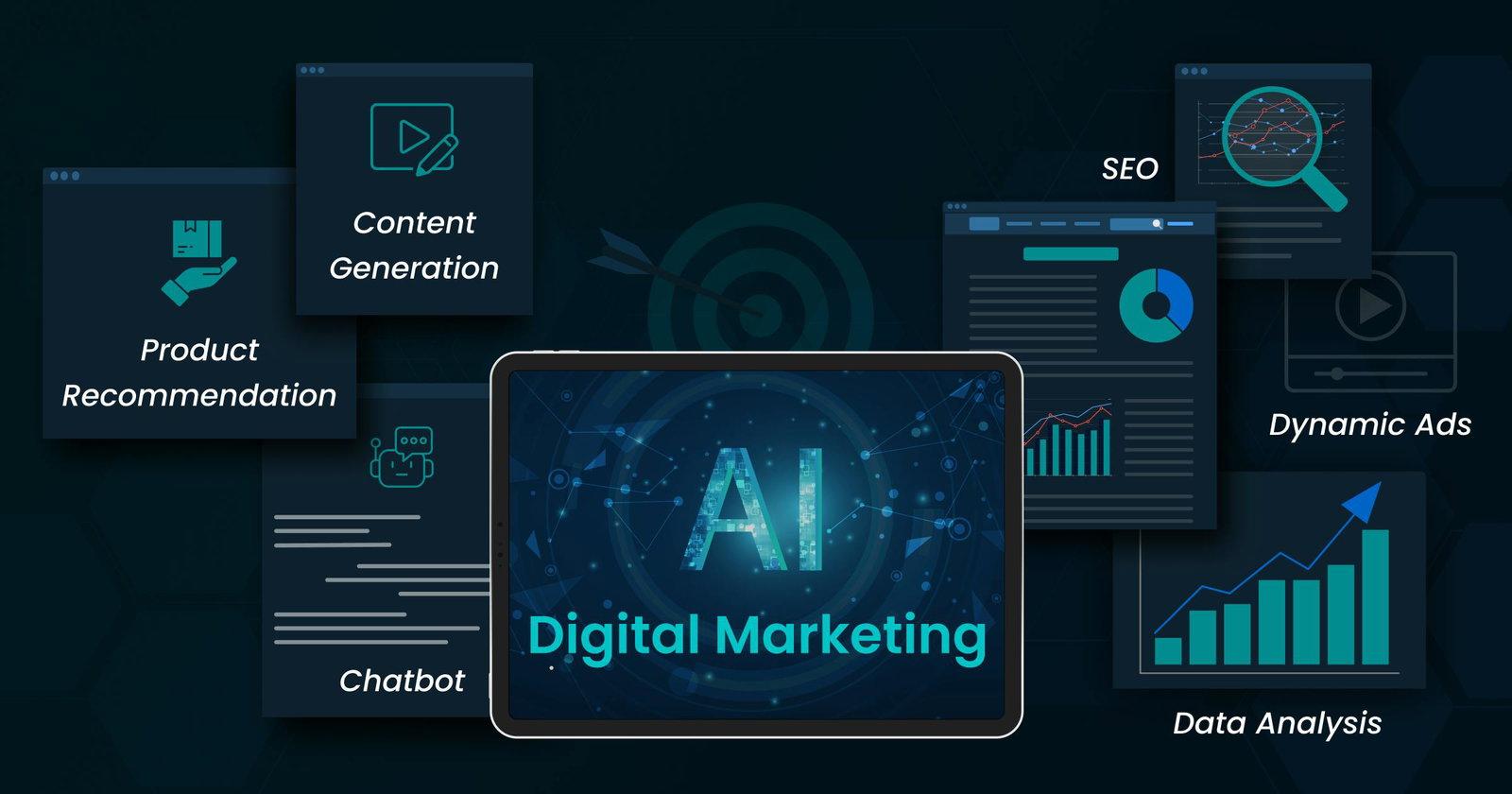
Marketing in 2026 will be all about the market size of one. There is no denying that marketing tools have come a long way in the last 20 years and are well-equipped to craft those super-personalized campaigns that convert. Read this blog to learn more about how Generative AI is enhancing the digital marketing industry:
Practically, though, personalization at scale can be hard when using traditional digital tools. Your reach is limited as a small business unless you shell out money for paid search ads or premium link placements.
AI in marketing market valued at $47.32 billion in 2025, projected to grow at 36.6% CAGR to reach $107.5 billion by 2028 (Statista / Grand View Research)
However, there is only so much you can do with your digital marketing activities, even if you have the data about what your customer wants. Because of limited resources, analyzing that data, brainstorming premium campaign ideas, and making sales can be overwhelming.
What Is Generative AI in Digital Marketing?
Generative AI in digital marketing refers to the use of machine learning models — including large language models (LLMs) and generative adversarial networks (GANs) — to autonomously create content, personalize campaigns, and optimize advertising spend at scale. Unlike rule-based marketing automation, which follows pre-defined workflows, generative AI learns continuously from vast datasets to produce original text, images, video, and strategic recommendations tailored to individual users.
In practical terms, it transforms how marketing teams operate: instead of manually producing each campaign asset, teams define goals and audiences while AI generates the content, tests variations, and optimizes performance in real time. A specialized AI development company typically implements these solutions at the enterprise level.
With the right Generative AI tools, your small business can create the hyper-tailored experience that every customer expects and accomplishes in days that would have taken weeks or months.
| Attributes | Traditional Automation | Generative AI |
|---|---|---|
| Content creation | Uses pre-written templates with variable substitution | Generates original, contextually relevant content from scratch |
| Personalization depth | Segment-level (e.g., “users who bought X”) | Individual-level, dynamically adjusted to each user's behavior |
| Learning & adaptation | Rule-based; requires manual updates | Learns continuously from new data without reprogramming |
| Creative output | Limited to predefined formats and copy variations | Produces text, images, video, and audio on demand |
| Campaign optimization | Scheduled A/B tests; slow iteration cycles | Real-time optimization across channels simultaneously |
| Setup complexity | Lower — workflow-based tools accessible to non-technical users | Higher — requires ML expertise or a specialist implementation partner |
11 Most Practical Use Cases of Generative AI in Digital Marketing
McKinsey estimates that Generative AI could boost the productivity of marketing by 5-15% of total digital marketing spend, or about $463 billion annually. Without further ado, let us dive into some of the high-impact use cases of Generative AI in marketing.
1. Text generation
AI text generation uses large language models to produce original marketing copy — blog posts, social media content, email sequences, and product descriptions — trained on diverse text datasets to match human writing quality and brand voice.
Many of the articles and social media posts you have read recently were generated - or at least conceptualized - by ChatGPT.
Large-language models are exposed to wide varieties of text across different contexts and applications, through which they learn how to generate original content that human marketers would generate in similar contexts.
With AI-generated content creation capabilities in your arsenal, writer’s block will become a thing of the past. You can use it to come up with new ideas and angles, examples, and full-length outlines.
An eMarketer research shows that 58% of marketers use Generative AI for creating content, thereby increasing performance. That means that by using AI, you can optimize your digital marketing processes and improve the quality of content you put out for your customers.
![[]](/_next/image?url=https%3A%2F%2Fintuz-site-uat.b-cdn.net%2FForms_of_Marketing_Text_Created_through_Generative_AI.png&w=1920&q=75)
2. Video/image creation
Generative AI image and video tools — such as Midjourney, DALL·E, and Synthesia — allow marketers to create professional-quality visual assets from text prompts, without design expertise or agency costs.
Feed detailed text instructions into an AI image/video generator, and you will get high-quality visuals in seconds, without any need to pay expensive commissions or go back and forth with design agencies over edits.
When it comes to video, an AI assistant can create storyboards for a concept, write out a script for you, and even put it together in a final video.
For instance, Xerox uses Synthesia, an AI video generator, to create custom AI-powered sales training videos in multiple languages, cutting video training costs by 50% while delivering training content 30% faster.
With Generative AI, even marketers who are not design experts can create a visual treat for users, delivering fantastic customer experiences.
![[]](/_next/image?url=https%3A%2F%2Fintuz-site-uat.b-cdn.net%2FMarketing_Videos_with_AI_Avatars_and_Voiceovers.png&w=1920&q=75)
3. Compel more sales with dynamic product ads
Dynamic product ads automatically display personalized product recommendations to users based on their browsing history, past purchases, and real-time behavior — powered by generative AI that predicts which products each individual is most likely to buy.
For example, you must have noticed that after researching holiday destinations or vacation packages, you start seeing hotel or homestay ads on your Google or Facebook feed. Those are dynamic product ads.
According to Infosys, 86% of customers agree personalized content creation has some impact on what they purchase, with 1/4 admitting it has “significant influences” on their buying decisions.
Thankfully, generative AI can study the nuanced patterns of a user’s online activities and predict which products they will most likely be interested in.
The information helps create advertisements comprising the right imagery and copy with surprising accuracy, resulting in a notable boost in conversion rates.
4. Hook more customers with targeted marketing messages
Forbes Insights reports that 37% of digital marketing leaders regard product recommendations as the reason behind increased sales and higher Customer Lifetime Value (CLTV). Tap into the potential of Generative AI, and conversions will not be hard for you to achieve.
You see, the AI and Machine Learning (ML) algorithms employed on a website capture and analyze data around a customer’s past searches, previously viewed items, and buying history.
Generative AI technology uses this data to suggest products tailored to individual customers. For example, if someone browses through a specific lipstick brand, AI helps showcase lipsticks in similar shades from different brands within the same budget.
Having just data does not help. The AI technology steps in creates a narrative using that data, and gives you hooks you can use to entice and inspire more sales.
That is why, besides product recommendation, Generative AI empowers you to write custom copy for blog posts, email campaigns, landing pages, product descriptions, and other digital marketing materials that circle what the customer wants, hitting the bullseye.
5. Leverage the power of AI-driven chatbots
Did you know that according to Salesforce, 82% of businesses using AI have reported moderate improvement in how their customers explore, discover, and engage with products? And what is better than chatbots for attracting customer loyalty?
AI-driven chatbots utilize advanced recommendation systems to provide tailored product suggestions and styling ideas by asking questions about product size, color, style, brand, or budget. It makes delivering impeccable customer service a breeze.
This can lead to customers being suggested different cross-selling or upselling options, ultimately leading to a purchase.
Additionally, AI chatbots can personalize every message and answer queries with human-like empathy. They are available 24/7 and can instantly respond, handling multiple user queries simultaneously. Personalized experiences like these open doors to quick sales and higher customer satisfaction.
![[]](/_next/image?url=https%3A%2F%2Fintuz-site-uat.b-cdn.net%2FHow_AI-powered_Chatbots_Contribute_to_Marketing.png&w=1920&q=75)
6. Attract potential customers through keyword research
Generative AI can crawl through vast volumes of data and identify the keywords people are searching for in your space. Then, it can tweak your digital marketing content (including the ones existing online) to optimize for those keywords.
It can determine the frequency of keywords, suggest appropriate keywords for headings, recommend the number of images for a specific content piece, and even outline the main headings to cover.
Frase.io and Surfer SEO are considered popular Generative AI for content optimization.
Such Generative AI tools can also forecast content trends and topics that are likely to resonate with your audience in the future.
![[]](/_next/image?url=https%3A%2F%2Fintuz-site-uat.b-cdn.net%2FContent_Optimisation_using_Generative_AI.png&w=1920&q=75)
7. Boost user engagement with on-page optimization
Scratching your head about the best meta title for your homepage? Tired of beta-testing content layouts? Unable to decide the user or search intent for keyword research?
Generative AI can cover all the SEO basics that will bring you to the front page of search results without compromising on creating a meaningful content experience for your customers.
For example, after studying vast amounts of data, it can identify market trends and patterns you may have overlooked and help you write meta titles and descriptions that are SEO-friendly and compelling to your customers.
Furthermore, it can evaluate the most successful content structures within specific industries or niches, suggesting formats that improve readability, retain user interest, increase user experience, and guide visitors seamlessly through a website.
For instance, if you are a small SaaS business, Generative AI can suggest you add interactive elements, such as embedded videos or quizzes, to engage first-time site visitors and boost sign-ups for Free Trial.
And yes, you will still have to run beta tests, but the technology makes the process much faster and increases the likelihood of you getting clicks from search engines.
8. Analyze competitors and identify gaps
How are your competitors doing their SEO? Generative AI can analyze their pages and gather data on their activities in real-time, giving you valuable insights into how they are undertaking SEO in response to changes in the broader marketing landscape.
AI can provide tips on whether to stick to the same strategies, what keywords to use, and which third-party sites to approach for outreach or try something else entirely.
9. Pitch for backlinks more successfully with custom outreach emails
Generative AI can analyze extensive datasets, including the content of the target website, recent articles published by the site, and its overall theme, to craft customized emails that resonate with the recipient's interests and needs.
This level of personalization increases the likelihood of engaging the recipient, thereby improving your chances of securing a backlink.
In addition, AI technology can streamline the outreach process by automating the creation of unique email templates for different niches and types of content. This saves time and allows you to scale your outreach efforts without compromising the quality of the pitches.
Automation is extremely handy especially if your team is small with limited resources. Plus, by generating subject lines that capture attention and content that clearly articulates the value proposition, you can effectively increase open and response rates.
10. Maximize campaign effectiveness and ROI
Chances are, you already have vast amounts of data about how your customers behave. With Generative AI, you can process that data much faster and understand even nascent behavioral trends.
For instance, the technology can help you pick up on customer churn signals by paying attention to social media conversations about your brand.
Accordingly, you can tweak your ad campaigns while they are still running (without waiting until the next cycle) and start seeing more retention immediately.
11. Know customer trends in advance through predictive analytics
No one can see the future, but you can come close to it with Generative AI. It uses ML models, particularly Generative Adversarial Networks (GANs), to simulate and predict future trends based on historical data.
These AI models are trained on vast amounts of data from a specific industry, analyzing patterns, customer behaviors, preferences, and market dynamics. The AI can identify subtle correlations and causations that humans might overlook.
Consider the food and beverage industry, where consumer preferences can shift rapidly due to health trends, seasonal ingredients, and changing dietary needs. A beverage company could use generative AI to analyze data from social media, search trends, sales data, and even global health studies to predict the next big flavor or product type.
For instance, if Generative AI identifies a growing interest in plant-based diets and superfoods, it might predict a rising demand for a kombucha drink infused with kale, before this trend becomes mainstream.
By predicting future trends, businesses can make informed decisions about which products to develop, how to price them, and where to allocate marketing resources.
Benefits of Generative AI in Digital Marketing
1. Personalization at scale
Traditional marketing segments audiences into broad categories, which, in turn, translates to creating generic blog posts, emails, or ads.
However, with Generative AI, you can personalize messaging at an individual level. In real-time, you can analyze user behavior and preferences to create hyper-relevant and dynamic product descriptions, email subject lines, and site experiences.
2. Reducing costs without compromising quality
In a conventional setup, digital marketing teams would consist largely of writers, SEO specialists, PPC experts, designers, and web developers, each with their own set of responsibilities. This would lead to high expenses in both labor and time.
AI minimizes this dependency by instantly generating high-quality assets, enabling teams to achieve the desired output without sacrificing creativity and efficiency.
3. Access to data-driven insights
It’s great to have raw data about customer behavior at your fingertips. But that isn’t simply enough. You also need to be able to interpret patterns, predict trends, and recommend strategic actions before engagement drops. Generative AI makes data analysis a breeze.
For instance, AI can forecast customer churn by detecting early warning signs in user activity, allowing you to intervene with retention offers.
Top Generative AI Tools for Digital Marketing
1. Jasper for copywriting and content creation
A purpose-built GenAI platform, Jasper delivers advanced brand control and an intuitive AI toolkit that allows you to automate blog, product description, and social media copy creation. In addition, it helps you create email sequences and marketing briefs - per your goals, strategies, and target audiences.
2. Adobe Firefly for visual design
If you want to create photorealistic images with better, richer composition and improved mood and lighting, leverage Adobe Firefly. You can lengthen ambient audio, eliminate awkward cuts, and extend clips.
You can also use text prompts to transform ideas into stunning video clips for pitching ideas, b-roll, and much more.
3. Synthesia for video marketing
Synthesia is an AI video generator and marketing tool. It allows you to create videos in different languages, such as French, German, and Spanish. You can also use diverse AI avatars and voice-overs that align with your brand identity.
The videos created on Synthesia are easy to download and share with its built-in marketing features.
4. Albert.ai for ad optimization
Albert.ai is an AI marketing platform enabling you to manage digital advertising campaigns autonomously. From a unified platform, you can analyze data across channels, A/B test and refine content, optimize budgets, and schedule ad campaigns.
This allows you to manage your campaigns and audiences more frequently and experiment with messaging.
5. Chatfuel for social media management
Chatfuel is a no-code chatbot platform that helps you automate conversations on Facebook Messenger, Instagram, and WhatsApp.
On Facebook Messenger, for instance, it automates FAQs, sends promotional messages, and integrates with CRM tools. Its Instagram chatbot can reply to comments, DMs, and story mentions, improving engagement and customer interaction.
You can also create AI-driven WhatsApp chatbots for customer support, lead generation, and sales without requiring coding skills.
6. SEO for SurferSEO
SurferSEO is a content optimization tool that assists in creating copy optimized for search engines. It evaluates content based on keyword density, readability, length, and use of headers. You can connect your Google Search Console to Surfer and receive an overview of your content’s performance, recognizing what’s working and what’s not.
Examples of Companies Using Generative AI for Digital Marketing
Big brands like Coca-Cola, Netflix, Carvana, and Nike are all in on Generative AI, and you’ve probably seen it in action without even realizing it.
Take Coca-Cola’s “Create Real Magic” campaign. It lets you generate your own AI-powered brand artwork, making marketing more interactive and personal.
On the other hand, Netflix uses AI to produce content recommendations, so ideally, you binge-watch way more than you planned. Carvana takes a different approach, creating personalized AI-generated videos about your car purchase, making the whole experience feel special.
Nike, too, is crunching customer data with AI to predict what customers will want next so that their marketing efforts show that timeliness. Starbucks is optimizing operations and personalizing experiences with AI-driven insights.
Generative AI Apps & Solutions Development Services Company
In conclusion
There is no doubt that Generative AI has a lot of potential. It streamlines workflows, brainstorms ideas, and expedites overall work, a boon for teams and businesses looking to enhance their productivity and performance!
However, adding that a tool is as good as the people who use it. With the right usage policies and continuous learning, Generative AI can be a powerful force for your marketing campaigns.
From now on, the sky will truly be the limit for marketers - all you need is a powerful tool like Generative AI and your imagination. It is a world where you can deliver top-notch customer experiences while consistently innovating at the same time.
The sooner you board the ride, the sooner you will start enjoying the fruits of this new wave of marketing.
Are you a business owner facing hurdles in personalized marketing and experiencing low conversions despite having valuable customer data at your fingertips?
Book Your Free 45-Minute Consultation with Our AI Experts Today!
In this personalized session, you'll receive:
 Custom generative AI marketing audit tailored to your business
- Guidance on AI-driven personalization tactics for hyper-relevant experiences
- An actionable AI marketing roadmap to integrate AI into your system

Pratik Rupareliya
Co-Founder & Head of Strategy
I build production-grade AI systems that deliver real business outcomes. 700+ projects delivered globally across AI, cloud, and scalable application development — helping organizations reduce manual work, accelerate speed, and modernize their technology stack.

FAQs
What does generative AI marketing actually cost, and when does the ROI turn positive?
How is generative AI changing SEO, and does it hurt or help organic visibility?
How should marketing teams measure the ROI of generative AI, and what metrics actually matter?
How do you maintain brand voice consistency when using generative AI at scale?
Generative AI vs. performance AI (Google Performance Max, Meta Advantage+) — which should marketers prioritize?
Explore our AI Resources & Insights
Read out our articles on the Artificial Intelligence and gain deeper insight.

Trusted by


WORK WITH US
Tell us what
cant'fail
We respond within 24 hours with a clear point of view, not a sales pitch.
GET IN TOUCH
or email getstarted@intuz.comResponse within 24 hours — no junior reps
NDA on every engagement — standard, not optional
GDPR · HIPAA · DPA — compliance frameworks are standard, not custom-added
No retainers. No lock-in. Your IP, always.