



MCP integration costs for existing SaaS applications depend on your product architecture, data exposure layers, security requirements, and AI agent complexity—this guide breaks down real-world pricing, timelines, and how to optimize ROI with the right implementation partner.
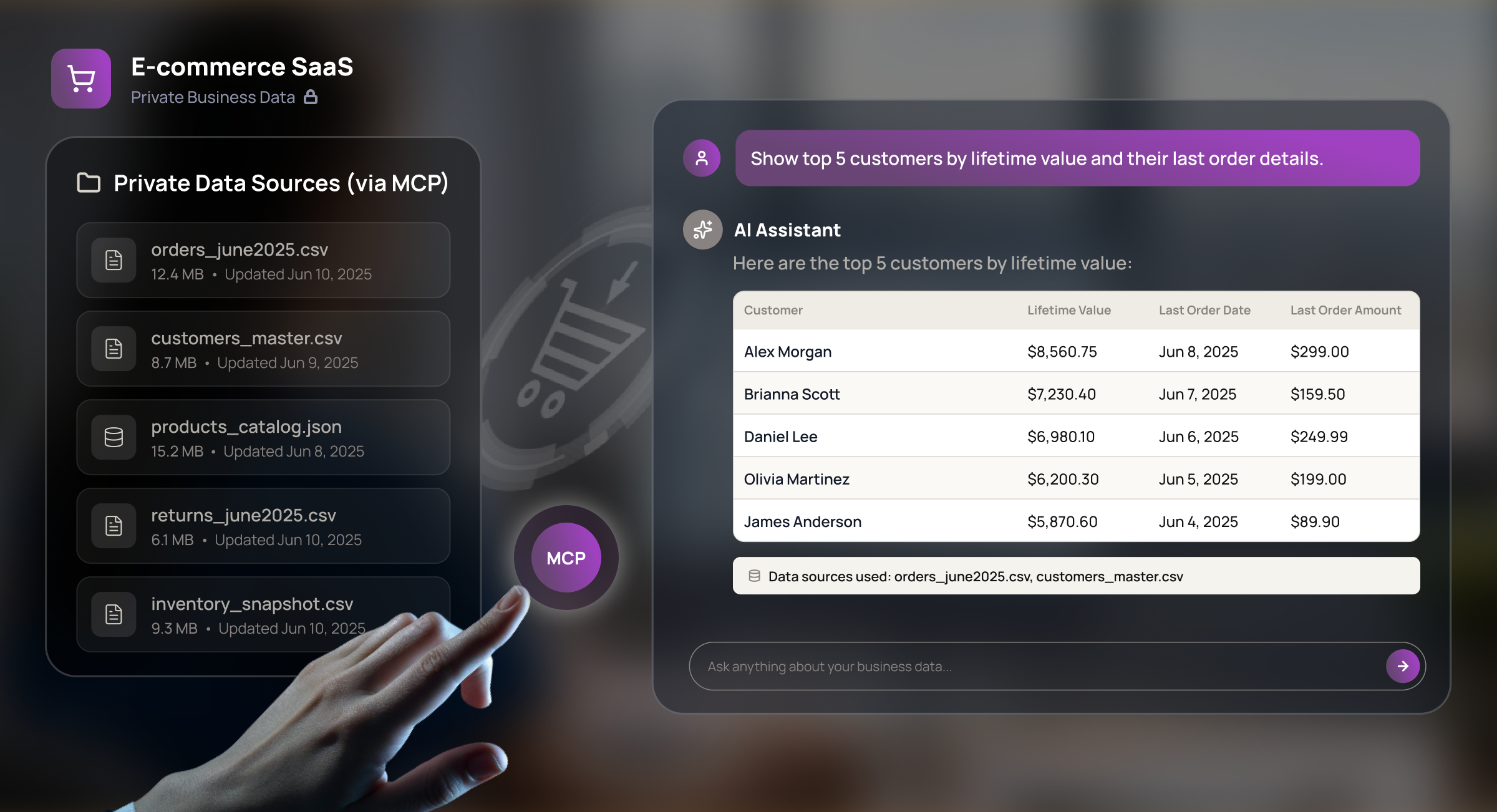
MCP adoption is accelerating at a pace we usually associate with infrastructure layers. Since 2024, the ecosystem has grown from three servers to over 6,800 active deployments – a 2,200% increase! In large enterprises, more than 15% of employees now run at least one MCP server.
For SaaS apps, such development matters because AI is no longer a side feature. Today, copilots query live data, assistants update records, and automations trigger workflows. Which also means AI needs the same financial discipline as billing, auth, and analytics.
In this blog, we break those costs down in concrete terms so you can estimate what MCP integration would look like for your SaaS app. You’ll also learn how Intuz can help you in this endeavor.
Show
- MCP adoption has surged from 3 servers to over 6,800 active deployments since 2024 — a 2,200% increase — making it a core infrastructure concern for SaaS companies, not just a feature add-on.
- MCP integration costs vary significantly by SaaS scale: small apps typically spend $6K–$18K on initial development, while enterprise SaaS can invest $39K–$90K+ in build costs alone, excluding ongoing infrastructure and model spend.
- Three integration approaches exist — DIY in-house ($10K–$60K), development agency ($15K–$80K), and hybrid ($8K–$35K) — each with distinct trade-offs in speed, control, and knowledge transfer.
- Hidden ongoing costs such as tool contract maintenance, observability overhead (5–10% of infra cost), and scale-driven model/log spend can quietly erode MCP ROI if not planned for from the start.
- MCP delivers measurable ROI by collapsing N×M integration complexity to N+M — a mid-market SaaS example shows savings from $48,000/year (without MCP) down to $8,000/year (with MCP), with most teams reaching break-even within 12–18 months.
Detailed Cost Breakdown of MCP Integration for Existing SaaS Applications
Two major layers of work drive the MCP integration cost:
1. Development costs
This is a one-time engineering effort required to introduce MCP as a platform layer and covers the following activities:
a. Infrastructure and AI modelling
In the first step, you define how models authenticate, discover tools, and exchange structured data. The work includes standing up the MCP service, configuring environments, defining base schemas, and wiring identity.
In most SaaS apps, this looks like creating a new internal service, which is comparable to introducing an API gateway or a workflow engine.
For a small product, the initial layer can sometimes be stood up in a few days. Reaching production-grade stability usually takes one to two weeks. For a multi-module SaaS, it becomes a multi-week-long project.
The cost? It exists regardless of how many AI features you roll out later.
b. Integration development
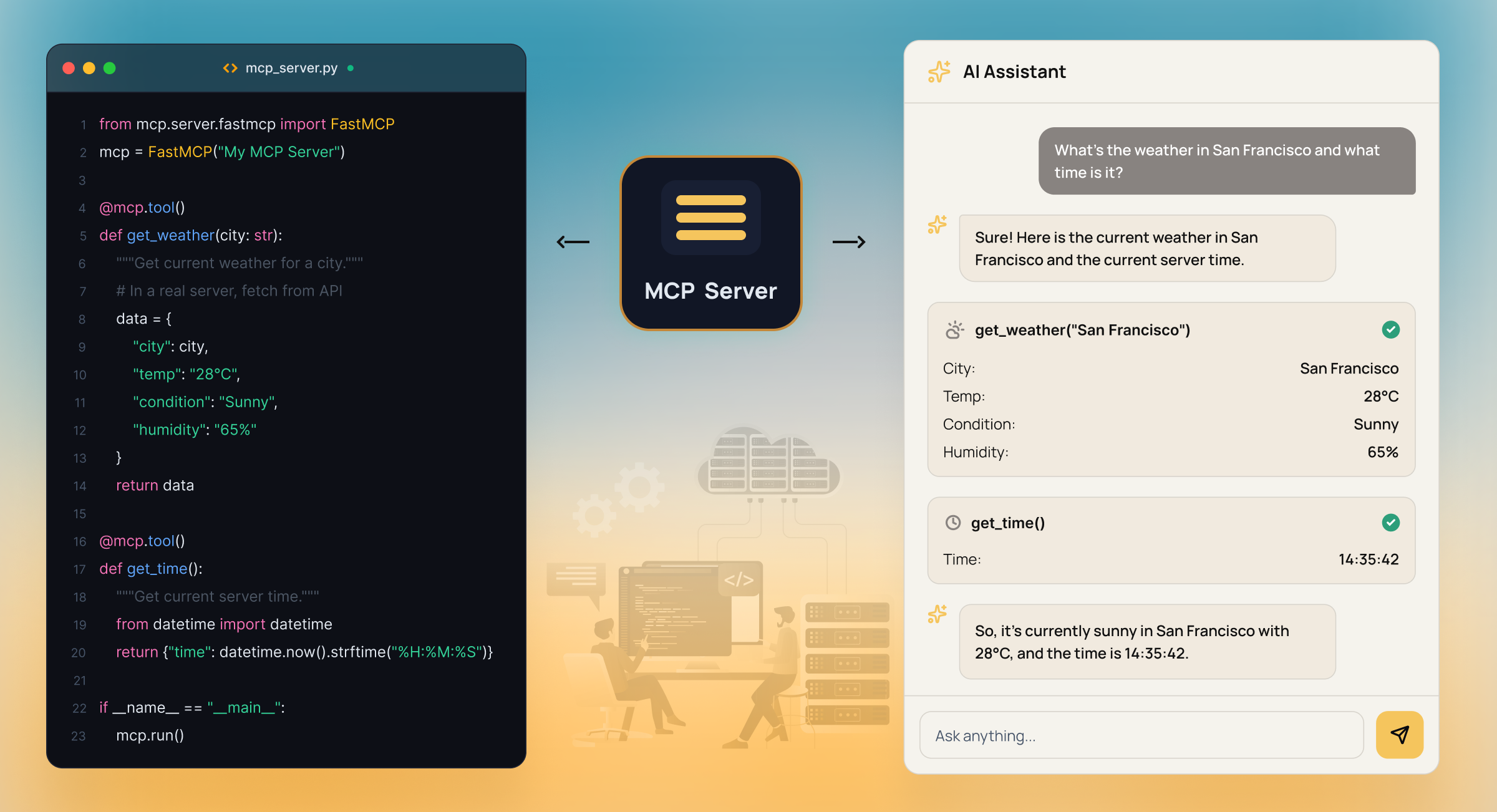
This is where MCP becomes real. Each internal capability you want a model to use is expressed as a tool, whether that’s user lookup, ticket search, billing queries, workflow triggers, or analytics queries. The work scales with the number of internal systems, the complexity of data models, and the variance in permission logic.
c. Frontend and UI modifications
In addition, you must adapt SaaS app touchpoints to support AI-driven interactions, which involves introducing copilot panels or assistant views, enabling streaming responses, designing action confirmation flows, and defining clear error and recovery states. You also need feedback loops so teams can validate, correct, or refine model behavior.
2. Deployment and testing costs
Once the MCP deployment is live, two recurring cost centers appear:
a. Hosting and computing
Here, the cost is driven by request volume, tool call frequency, logging and observability requirements, and the need for environment separation. For early-stage SaaS apps, this overhead is negligible. But for high-traffic ones, MCP sustenance demands a predictable, recurring monthly spend.
b. Testing and quality assurance
This work requires new test harnesses, synthetic conversations, contract tests for tools, and environment-level validation across staging and production. The cost typically includes extending existing automation frameworks or introducing AI-specific testing layers to simulate and verify MCP-driven interactions.
MCP Integration Cost by Platform Layer and SaaS Scale
| Cost Area | What This Covers | Small SaaS | Mid-Market SaaS | Enterprise SaaS |
|---|---|---|---|---|
| MCP Server Setup | MCP service, base schemas, auth, environment wiring | $1k–$4k | $3k–$10k | $8k–$18k |
| Integration Development | Tool contracts for internal systems, API wrapping, orchestration | $3k–$8k | $8k–$20k | $20k–$45k |
| Frontend / UI Modifications | Copilot surfaces, streaming, action flows, error states | $1k–$3k | $3k–$8k | $6k–$15k |
| Hosting & Compute (Monthly) | MCP runtime, logs, environments | $0–$30 | $30–$200 | $200–$1,000+ |
| AI Model Spend (Monthly) | Token usage across AI surfaces | $20–$50 | $100–$300 | $500–$2,000+ |
| QA & Security Testing | Boundary tests, failure paths, audit behavior | $1k–$3k | $2k–$6k | $5k–$12k |
MCP Integration Approaches and Their Cost Comparison
| Approach | Cost Range | Typical Timeline | Pros | Cons | Best For |
|---|---|---|---|---|---|
| DIY In-House MCP Integration | $10k–$60k | 4–12 weeks | Full architectural control, Deep product context, No external dependency | Steep learning curve, Security and governance are often deferred, Higher rework risk | Teams with strong platform engineering and prior AI infrastructure experience |
| Via Development Agency / Consultancy | $15k–$80k | 3–8 weeks | Fastest path to production, Security and governance baked in, Lower delivery risk | Higher upfront spend, Less internal learning | Growth-stage SaaS shipping AI as a product surface |
| Hybrid (Internal + External) | $8k–$35k | 4–10 weeks | Knowledge transfer, Lower long-term cost, Internal ownership with guardrails | Requires coordination, Slower than a pure agency model | Teams building internal capability while shipping fast |
Key Implementation Considerations by SaaS Maturity
1. Small SaaS apps
The goal is to think of MCP as a thin platform layer, not a product redesign. Therefore, start by selecting one AI surface and no more than three to five tools. These tools should map to your most stable APIs, such as ‘get_user,’ ‘get_plan,’ or ‘list_tickets.’ Don’t attempt to model your entire domain. Avoid building a generic permission framework.
2. Mid-market SaaS platforms
At this stage, you must centralize how AI features access core entities. Define one canonical tool for each domain: users, accounts, usage, billing, workflows. Remove feature-specific adapters. All AI touch-points must use the same MCP tools. Then implement tenant and role checks in the MCP layer rather than in prompts or feature code.
3. Enterprise SaaS applications
Here, place MCP behind your existing identity layer. Every tool must enforce tenant isolation and role scope before executing. Integrate MCP into your CI/CD pipeline. Tool definitions should be versioned and reviewed, as with public APIs. Add mandatory audit records for every model-driven action. Log tool name, caller, target resource, and result.
Hidden and Ongoing Costs of MCP Integration
MCP carries costs that don’t appear in the initial build estimate. These aren’t surprises if you plan for them. But they quickly become expensive when ignored. Here’s what to know:
1. Maintenance and evolution
Tool contracts aren’t static. As your SaaS app evolves, APIs change, fields get added, and permission models grow more granular. All of this must reflect in your MCP tools. Therefore, you can version, deprecate, and review them in code.
Intuz Recommends
Budget ongoing engineering time for this work. In practice, this means allocating 0.25–0.5 FTE per quarter to MCP upkeep once you have multiple AI touchpoints.
2. Monitoring and operations
Every MCP deployment should emit tool call volume, latency, failure rates, permission denials, and model fallback paths. For that, you’ll need to set up dashboards, alerts, and runbooks as you would for any other production service.
Intuz Recommends
Expect to spend 5–10% of your MCP infrastructure cost on observability and incident handling.
3. Scale-driven growth
As AI adoption grows, three curves move together:
- MCP request volume
- Model token usage
- Log and audit volume
Early on, these costs are trivial. At scale, they become line items.
Intuz Recommends
Tie spend to adoption milestones. As a planning baseline: First AI surface: $50–$200/month3–5 AI surfaces: $300–$1,000/monthPlatform-wide AI usage: $1,500–$5,000+/month Review these numbers quarterly alongside active AI users and surface count. This keeps growth predictable and prevents AI infrastructure spend from becoming an unplanned tax on product success.
ROI of MCP Integration for SaaS Companies
The return on MCP comes from collapsing repeated integration work into a single platform layer. You can make this visible using a simple cost-benefit analysis framework based on numbers you already track.
Let’s understand this better with an example.
Model the MCP ROI using the three inputs you already have:
- Number of AI features you plan to ship in the next 12 months
- Average number of internal systems each feature touches
- (users, billing, tickets, events, workflows)
- Average engineering effort per system integration (in hours)
Without MCP
Each AI feature integrates with backend systems independently.
Annual Integration Cost = AI Features × Systems per Feature × Hours per System × Hourly Rate
Example (mid-market SaaS):
- 6 AI features planned
- 4 internal systems per feature
- 20 hours per system
- $100/hour blended cost
6 × 4 × 20 × 100 = $48,000 per year
With MCP
Each system is integrated once and reused across all AI features.
Annual Integration Cost = Systems × Hours per System × Hourly Rate
4 × 20 × 100 = $8,000
Even after adding:
- MCP build cost
- Ongoing maintenance
- Infrastructure and model spend
Most teams reach break-even within 12–18 months once AI becomes a recurring product surface.
The same model applies to:
- Rework from backend changes
- Security review overhead per feature
- Debug time for inconsistent AI behavior
Why Intuz Is the Right MCP Integration Partner
Our AI development services begins by mapping every system your AI features already touch: user data, billing, support, analytics, and workflows. We trace where prompts inject data, where glue code exists, and where access rules diverge.
From this, we define:
- Which systems become MCP tools
- Which entities are exposed first
- Where permission checks must live
- Which AI surfaces migrate in phase one
This establishes ownership and fixes the boundaries that most MCP projects leave implicit.
Tool contract design and orchestration layer
We then design each MCP tool as a product API. Inputs, outputs, failure paths, and permission rules are explicit. Tools call your existing services. No business logic is duplicated. The MCP layer becomes the only path for models to read or write product state.
Feature migration and product integration
We reroute at least one live AI surface through MCP in the first phase. This proves that MCP can replace existing logic and immediately exposes hidden coupling. Your product team works alongside us to adapt UI flows for:
- Tool-driven responses
- Action confirmation
- Failure recovery
- Streaming output
MCP becomes part of the product experience, not a backend experiment.
Security and governance integration
Lastly, we develop MCP server for SaaS with your identity layer. Tenant and role enforcement happens inside the MCP server. Every tool call is scoped before execution. This aligns MCP with the same governance model you apply to your core APIs.
To evaluate what MCP integration would look like for your SaaS app, book a free 45-minute MCP consultation with Intuz.
FAQs
How much does MCP integration typically cost for a SaaS app?
For most SaaS products, MCP integration ranges from $5,000–$14,000 for small apps to $34,000–$90,000+ for enterprise-scale platforms. The total depends on how many internal systems you’re exposing as tools, your security and compliance requirements, and whether you’re building in-house or working with an integration partner. Beyond the one-time build, plan for $50–$2,000/month in recurring infrastructure and AI model spend depending on request volume. A detailed breakdown by platform layer and SaaS scale helps teams budget more precisely before starting.
What factors drive up MCP integration costs the most?
The biggest cost drivers are integration depth — specifically how many internal systems (billing, CRM, support, analytics) need to become MCP tools — and the complexity of your permission and tenant isolation logic. Multi-module SaaS platforms with fine-grained role models or strict compliance requirements (SOC 2, HIPAA) regularly see costs run 2–3x higher than simpler products. Custom frontend work for copilot panels, streaming responses, and action confirmation flows adds further cost that teams often underestimate at the start.
Should we build MCP in-house or hire an integration partner?
It depends on your team’s existing AI infrastructure experience. In-house gives you full architectural control and deep product context, but carries a steep learning curve and higher rework risk — expect $10,000–$60,000 and 4–12 weeks. An agency like Intuz reduces delivery risk and ships faster (3–8 weeks, $15,000–$80,000), with security and governance built in from day one. A hybrid model ($8,000–$35,000) works well when you want internal ownership but need experienced guidance for the initial architecture and tool contract design.
What are the hidden or ongoing costs of MCP integration?
Three ongoing cost centers catch teams off guard. First, tool contract maintenance — as your SaaS evolves, MCP tool definitions must be versioned and updated, requiring roughly 0.25–0.5 FTE per quarter once you have multiple AI touchpoints. Second, observability — budget 5–10% of infrastructure cost for dashboards, alerting, and incident handling. Third, scale-driven growth: model token usage, MCP request volume, and audit log storage all grow together. At platform-wide AI adoption, monthly recurring costs can reach $1,500–$5,000+ before any new feature development.
When does MCP integration break even for a SaaS company?
Most teams hit break-even within 12–18 months once AI becomes a recurring product surface. Using a standard mid-market example: without MCP, 6 AI features touching 4 internal systems each at 20 hours/system costs $48,000/year in integration work. With MCP, each system is integrated once and reused, dropping that to $8,000. Add build costs, maintenance, and infrastructure, and the net savings still become material within the first year for teams shipping AI features regularly. The ROI accelerates as more AI surfaces share the same MCP layer.
How long does MCP integration take for an existing SaaS product?
Timeline varies by approach and complexity. A focused in-house build typically takes 4–12 weeks; an agency-led engagement 3–8 weeks; a hybrid model 4–10 weeks. For small SaaS products with a narrow tool scope (3–5 tools, stable APIs), the initial MCP layer can be standing in production within 2–3 weeks. Enterprise platforms with multi-module systems, CI/CD integration, versioned tool contracts, and mandatory audit infrastructure routinely take 8–16 weeks from scoping to stable production deployment.
Work with Intuz
Want to Integrate MCP for Your SaaS Product?
Get a cost estimate tailored to your SaaS architecture and team size.
Let's Get Started
Share this article