


MCP Server Development
Company
We design and build production-ready MCP servers that safely connect LLMs with
your tools, data, and systems, enabling context-rich automation, full auditability, and
measurable business impact at scale.
54
AI Systems Live
Our strongest AI proof
Shipped to production.
Not to demo.
54+ AI systems live today — agentic LLMs, computer vision pipelines,
predictive models, and automation workflows. Every one in daily operational
use by the client that funded it. We count what shipped, not what was
prototyped.
16
Years
Since 2008
80
Retention
3+ year clients
4.8
Clutch Rating
Independently verified
Trusted by


















Why Your Business Needs to
Build or Integrate an MCP Server
Real-Time Access to Internal Tools and Data
Let us help your AI agents integrate with CRMs, ERPs, analytics platforms, and proprietary systems. That way, instead of working with static prompt data, they can read, write, and act on live operational data with complete permission control.
Multi-Step LLM Workflows
Enable your AI agents to plan, execute, validate, and escalate tasks across diverse systems. MCP allows LLMs to orchestrate structured, multi-step workflows across sales, customer service, finance, and ops. Move beyond single-turn responses!
Lower Integration and Maintenance Costs
Eliminate fragile one-off scripts and duplicated API work with our help. Let a centralized MCP layer serve as your reusable AI integration backbone, supporting multiple models, agents, and flows while significantly reducing long-term engineering costs.
AI Standardization That’s Future-Proof
Since MCP decouples your tool integrations from any single LLM provider, you gain the freedom to switch models, add new AI platforms, and expand into new use cases. And that too, without re-architecting your entire automation stack!
MCP Server Development
Services Intuz Offers
From ideation to integration, our MCP ecosystems are designed to align with your AI vision.
Custom MCP Server Architecture and Development
Our team outlines MCP server architectures around your security model, workflows, and performance needs. From schema definitions and prompt templates to validation layers and logging, we cover the nitty-gritty to build you a robust backbone that safely connects LLMs to your internal systems.
Multi-Agent Workflow Integration Using MCP
We implement multi-agent patterns where specialized agents collaborate via your MCP server to execute discrete responsibilities, such as researching, calling tools, reconciling outputs, and escalating to your human teams when needed. Convert complex biz operations into auditable execution graphs.
AI Workflow Automation with MCP
Intuz maps your existing processes into MCP-driven automations for sales, support, back-office, and analytics. We then combine LLM reasoning with deterministic steps, approval checkpoints, and failure-handling mechanisms, ensuring automations are reliable, explainable, and easy to monitor.
MCP Connectors for Tools, APIs, and Databases
We wrap SaaS platforms, custom APIs, cloud services, and on-premise applications into MCP-compliant connectors with strict access rules. Each connector enforces scoped permissions, credential isolation, request validation, and rate limits to prevent unauthorized access and misuse of tools.
Plus 2 mcp server development capabilities
Our engineers implement short- and long-term memory layers using vector databases such as Pinecone, Weaviate, and Redis, as well as traditional datastores. This lets your AI agents recall previous conversations, documents, and events, ensuring consistent, context-aware responses.
We tune MCP servers for production: throughput, latency, and resilience. This includes cache-layer tuning, intelligent load balancing, active health checks, metrics instrumentation, and distributed autoscaling. The result is AI workflows that stay responsive as concurrency, tool calls, and model invocations grow.
Our MCP Server Development Process
Discover how our agile MCP server development process brings your ideas to life,
delivering intelligent solutions that drive business growth and innovation.
MCP Architecture Design
We audit your existing systems, security posture, and target AI use cases to define a production-ready MCP architecture. This blueprint specifies tool boundaries, schema design, memory strategy, and observability requirements.
MCP Server Development
Our engineers implement the MCP server, tool interfaces, and routing logic to connect LLMs with your APIs, databases, and internal applications. Every integration enforces authentication, authorization, and scoped access.
LLM and Agent Orchestration Setup
We configure agents, prompts, and orchestration flows to support task planning, tool execution, output validation, and human-in-the-loop escalation. This enables high-level intents to be executed as controlled workflows.
Testing and Debugging
We execute unit, integration, security, and performance testing across the MCP stack. This includes validation of tool permissions, context routing accuracy, latency under load, failure recovery behavior, and audit logging.
Deployment and Continuous Support
We implement MCP servers to cloud, hybrid, or on-prem environments with production monitoring and centralized logging. We then provide ongoing optimization, reliability tuning, and feature extensions as your AI workloads evolve.
Still scoping? Let’s talk.
Ready to Build Your Own MCP Server?
Build a secure, scalable MCP server tailored to your workflows, tools, and enterprise integrations.
On AI strategy
AI isn’t a trend to chase — it’s a lever. When
applied right, it cuts costs, removes friction,
and gives your team back the hours that
matter.
Nilay Dhamsania
Director & COO, Intuz
On architecture
The best architecture is the one nobody
notices — it just works, scales, and never
lets you down when it matters most.
Jitesh Jani
Chief Technology Officer, Intuz
what our clients say
Real words, not badges
Feedback from CTOs, founders, and engineering leaders — across every discipline we work in.
I really enjoyed working with the Intuz team they offered me great expertise and very good advises on all of my current and future projects.

Patrick Mimran
Founder – Ransoft Srl,
Switzerland
Gen AI-powered marketplace platform
I really appreciated their designs, because they showcased our company’s image in an excellent way.

Matthew Freeman
Founder – Live 4 It Locations,
United Kingdom
Sports & entertainment discovery platform
Working with INTUZ was a relatively smooth and stress-free process. The team did really well in communicating and staying on track with the project.

Jason Horstman
Founder – Adventurocity,
United States
Location-based social app
Why Enterprises Choose
Intuz for MCP Server Development
Proven AI Automation Expertise
Our delivery teams combine LLM engineering, backend architecture, and production DevOps to deploy MCP systems in live environments. We design for real enterprise data, real traffic, and real operational constraints.
Business-First Delivery
We anchor every MCP implementation to measurable business outcomes. Each server, connector, and workflow is mapped to defined KPIs across revenue enablement, operational efficiency, or experience quality.
Faster Time to Production
Using pre-validated architectural patterns, internal accelerators, and connectors, we move from discovery to a working MCP PoC within a controlled sprint window. From there, we harden, observe, and scale the system based on real usage.
Visionary MCP Architecture
Our MCP architectures are vendor-neutral and model-agnostic by design. This allows you to adopt new LLM providers, swap tooling, and meet evolving compliance requirements without destabilizing existing workflows or refactoring core system logic.
Flexible Engagement Models
Work with Intuz through fixed-scope MCP implementations, dedicated delivery pods, or continuous optimization programs. We integrate with your internal teams, cloud environments, and release cycles to maintain delivery velocity.
mcp server development for every industry
Industries That Benefit
Most from MCP Integration
MCP integration enables industry-specific platforms to safely connect LLMs with live data,
tools, and workflows—delivering compliant, actionable AI instead of generic responses.
Healthcare & Pharmaceuticals
Connect EHRs, scheduling systems, and knowledge bases to enable your AI agents to assist clinicians and patients with triage, documentation, and reminders, while honoring strict access rules.
E-commerce & Retail
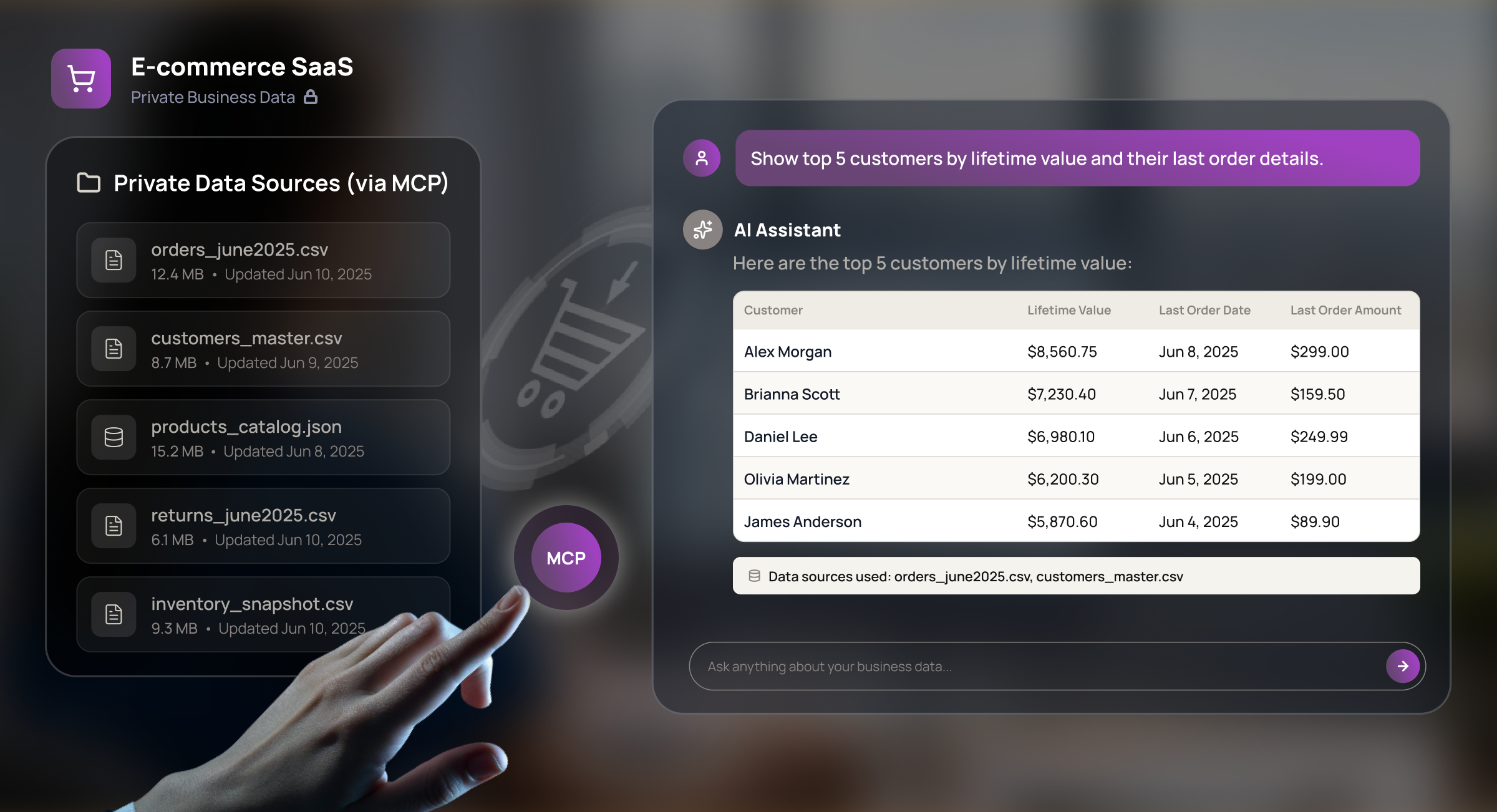
Integrate catalogs, pricing, inventory, and order systems, empowering AI agents to drive personalized recommendations, service requests, and supply-chain alerts based on real-time data. Partner with Intuz!
Finance & Banking
Use MCP to expose core banking, risk engines, and reporting tools to LLMs for reconciliations, document summarization, KYC checks, and advisor copilots with strong governance and approval workflows.
Transportation & Logistics
Combine TMS, WMS, telematics, and billing into MCP tools that power AI agents for shipment tracking, exception handling, invoice processing, and demand forecasting across global networks.
Education & E-learning
Expose LMS, content libraries, assessments, and analytics through MCP. That way, AI tutors can personalize learning paths, generate exercises, and support educators with insights and preparation. Enter into a world of education!
Legal
Connect DMS, matter management, and research tools to give AI assistants secure, context-aware access to case files, precedents, and templates while preserving confidentiality and chain of custody.
Travel
Integrate booking engines, PMS, CRM, and support systems to let AI agents manage reservations, changes, upsells, and guest communications with complete context across channels and trips.
SaaS and Software Products
We help you embed MCP servers behind your SaaS to power in-product copilots, admin automations, and customer-facing agents that can safely manipulate settings, usage data, and configuration across tenants.
Tools & technologies
Tools & Technologies
That We Use
Our AI developers use the best possible tech stack to do a good job for your business.
FAQs
What is an MCP server, and how does it work?
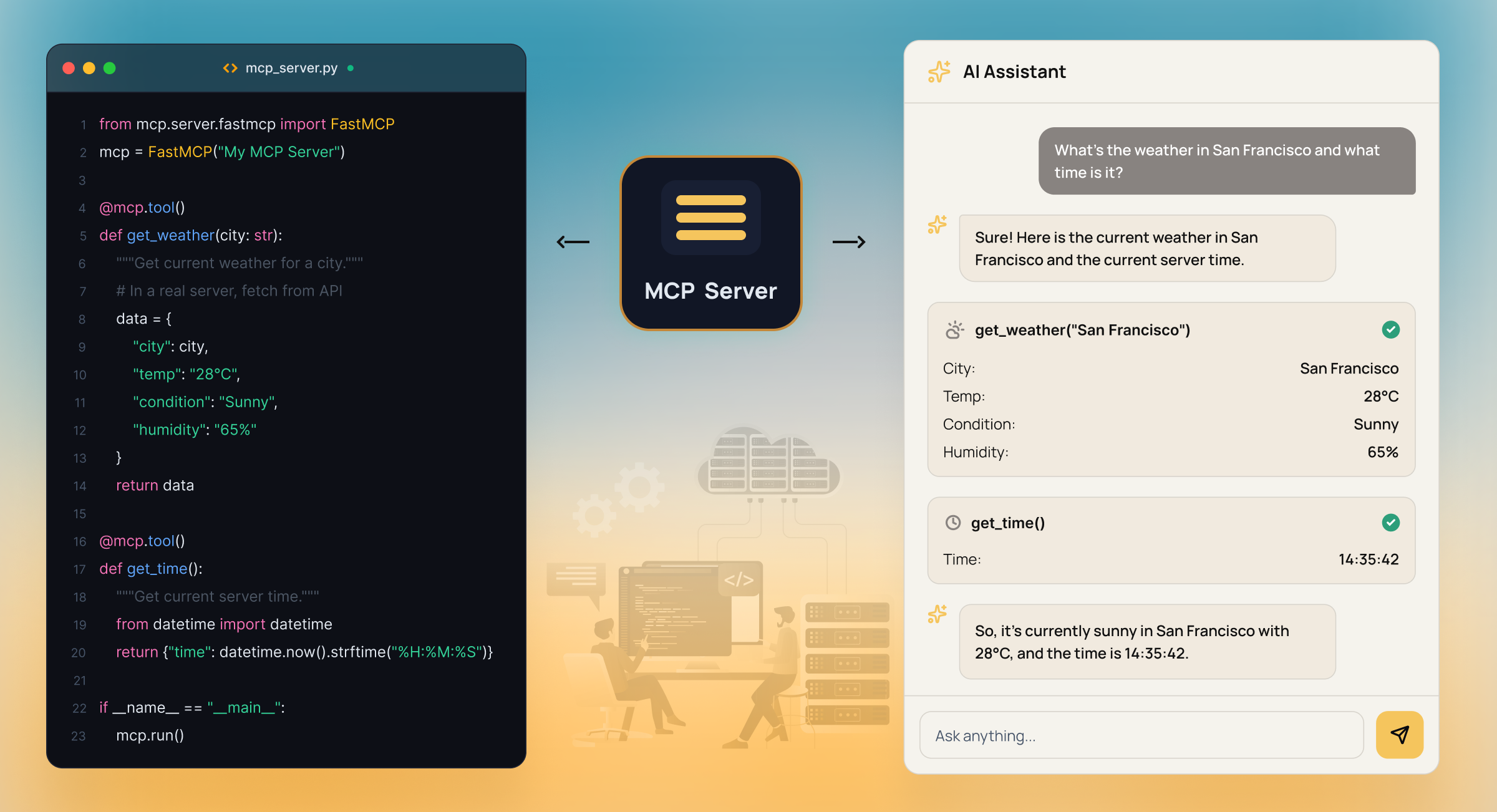
An MCP (Model Context Protocol) server is a backend service that exposes tools, APIs, and data sources to AI models via a standardized protocol. It accepts requests from an MCP-compatible client, invokes the right tools under strict access rules, and returns structured outputs to the LLM or agent.
What services do MCP server development companies offer?
Specialized MCP companies typically provide architecture design, custom server development, connector and tool creation, memory-layer integration, performance optimization, security hardening, and ongoing support. Many also handle multi-agent orchestration and cloud deployment so your MCP server, models, and existing applications work together as a cohesive AI platform.
How much does MCP server development cost?
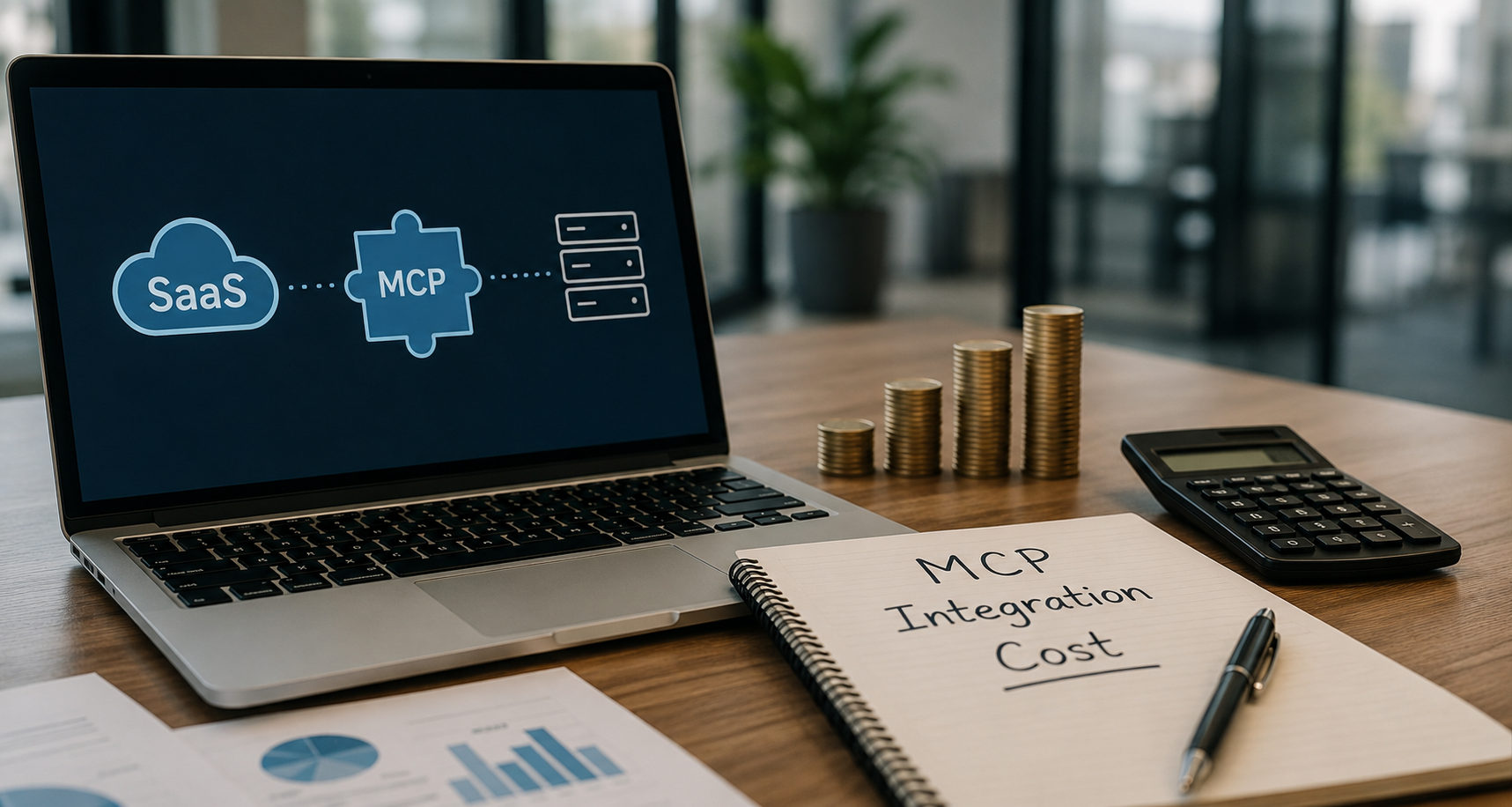
Costs depend on scope: number of tools and systems to integrate, security and compliance needs, performance targets, hosting model, and level of ongoing support. Smaller proofs of concept typically require fewer weeks of effort, while enterprise MCP platforms with dozens of connectors and strict governance require a larger investment. Intuz can provide a tailored estimate after a short discovery workshop.
How long does it take to build and deploy a custom MCP server solution?
Timelines vary by complexity, but many teams start with a 4–8-week MVP covering critical tools and workflows, then iterate based on feedback. Larger, highly regulated deployments with multiple environments, SSO, and advanced observability can extend to several months. Our process quickly gets a validated MCP baseline live while planning a phased expansion.
What security standards do MCP servers support, and are they compliant with US regulations?
Intuz architects MCP servers with enterprise-grade security controls, including encryption in transit and at rest, RBAC, least-privilege access, tool isolation, and detailed audit logs. We align implementations with common US regulatory and industry frameworks relevant to your use case, such as SOC-aligned practices, HIPAA-ready patterns for healthcare, and strong data-protection measures for financial services, then integrate with your existing security stack and policies.
When should a business invest in MCP server development instead of API integrations?
Businesses should consider MCP servers when multiple AI agents or LLM applications require controlled, reusable access to internal systems. Unlike traditional APIs, MCP standardizes tool communication, permissions, and context sharing. It becomes essential when scaling enterprise automation, agent ecosystems, or multi-model environments across departments or customer workflows.
How secure are MCP servers for enterprise AI workflows?
Enterprise MCP servers implement authentication, role-based permissions, audit logging, encrypted communication, and tool-level authorization. This ensures AI agents cannot access unauthorized systems or sensitive datasets. Proper implementation also includes monitoring and governance controls aligned with HIPAA, SOC 2, or GDPR requirements for regulated industries handling confidential business information.
Can MCP servers integrate with existing enterprise systems and legacy software?
Yes. MCP servers are designed to connect AI agents with CRMs, ERPs, document systems, databases, SaaS platforms, and legacy applications through adapters or middleware. Development companies typically build connectors that translate legacy protocols into MCP-compatible tools, allowing organizations to modernize AI adoption without replacing existing infrastructure investments.
How does MCP server development reduce AI operational costs?
MCP servers prevent duplicate integrations by creating reusable tool access layers for multiple AI agents or models. Instead of rebuilding workflows for every application, organizations centralize orchestration and permissions. This reduces engineering time, lowers API redundancy, minimizes security risks, and improves long-term scalability as AI adoption expands across business units.