



By now, most industry leaders have embraced Artificial Intelligence (AI)applications in multiple domains.
In the healthcare sector, in particular, large language models (LLMs) and Generative Adversarial Networks (GANs) have opened up new ways for healthcare businesses to approach patient engagement by creating text—and image-based content.
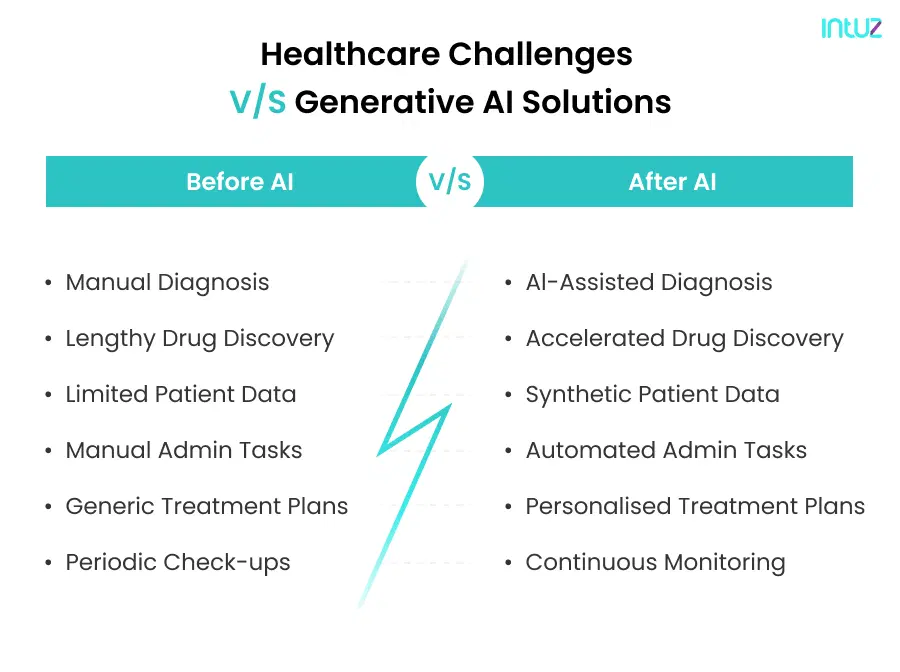
In addition, AI has delivered impressive results when performing routine diagnostic testing, preparing medical documentation, or crafting customized treatment plans.
Many healthcare providers are also using AI to predict patient outcomes faster and more accurately than ever before.
Generative AI, in short, has considerable potential to streamline patient diagnostics, automate repetitive admin tasks, and bring down the costs of managing a healthcare business.
In this guide, we’ll look closer at what that looks like and how you can strategically apply generative AI development services to your health systems.
Show
- AI-assisted diagnostics can potentially improve patient outcomes by 30–40% while reducing treatment costs by up to 50%, making early detection and treatment planning significantly more efficient.
- Generative AI enables personalized health recommendations at scale — from AI chatbots guiding symptom management to automated reminders for medication and lifestyle tracking — with studies showing up to 30% improvement in medical adherence.
- Synthetic patient data generated by AI models allows healthcare organizations to train AI systems without compromising patient privacy, and can enhance diagnostic accuracy by up to 15%.
- AI dramatically accelerates drug discovery by analyzing molecular combinations, predicting drug efficacy, and simulating clinical trial outcomes — as demonstrated by Insilico Medicine completing a full drug discovery cycle for just ~$2.6M vs. the typical $400M+.
- Implementing generative AI in healthcare should follow a phased approach: start by identifying specific pain points, prepare compliant datasets, select the right model type (LLMs vs. GANs), run a small proof of concept, then scale integration into existing EHR and telehealth systems.
7 Most Prominent Applications of Generative AI in Healthcare
1. Enhancing diagnosis and treatment with Generative AI
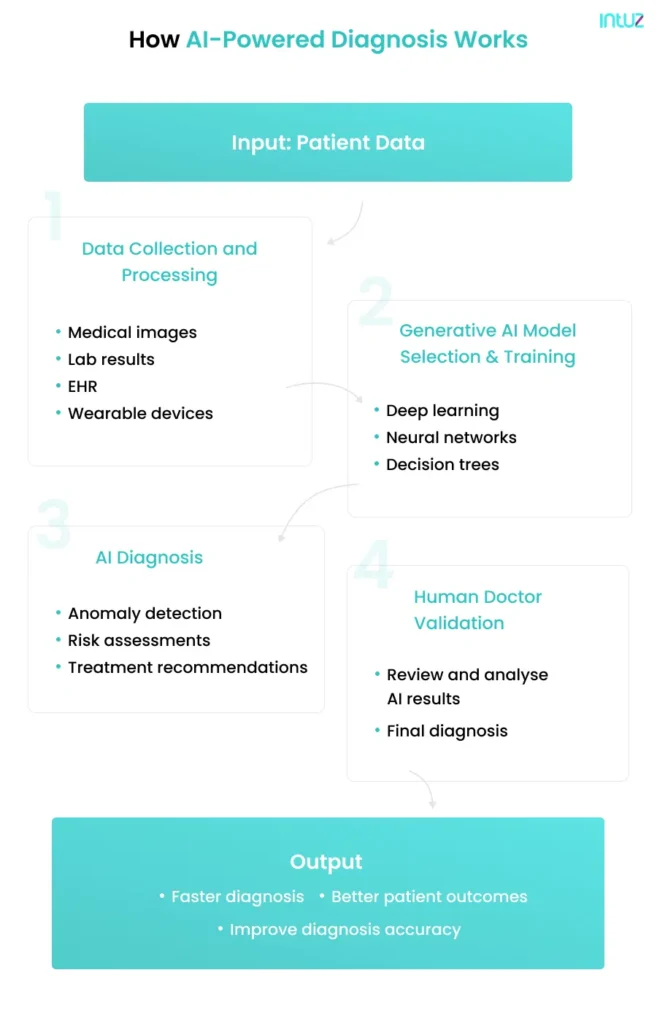
Generative AI models are already proving adept at diagnosis and treatment, helping patients start their cure faster and potentially even saving their lives.
This is because trained AI tools can quickly examine lab results, patient histories, and medical imaging to detect subtle patterns the human eye might miss, such as small abnormalities in MRIs or CT scans that could indicate potentially life-threatening illnesses.
In addition, by analyzing vast volumes of historical data, AI predictive analytics in healthcare can predict how a disease might behave in a specific patient, allowing you to adjust your treatment plan strategically.
The AI model could study a cancer patient’s data and discover, for instance, that a latent gene in their family history renders them immune to one type of chemotherapy.
You can then put them on a different type of chemotherapy from the start, saving time and resources and improving their prognosis.
The benefits are clear.
AI-powered diagnostic and treatment processes translate to more efficient operations, less time wasted on unnecessary procedures or tests, and more targeted care for your patients.
Indeed, research shows that AI-assisted diagnostics could potentially improve patient outcomes by 30% to 40% while reducing treatment costs by up to 50%. The value is even more personal for patients—fewer errors, more precise treatments, and better health outcomes.
2. Providing personalized health and wellness recommendations using AI assistants
At-home wellness and healthcare checks are as essential as those in the lab, and Generative AI is changing the game here, too.
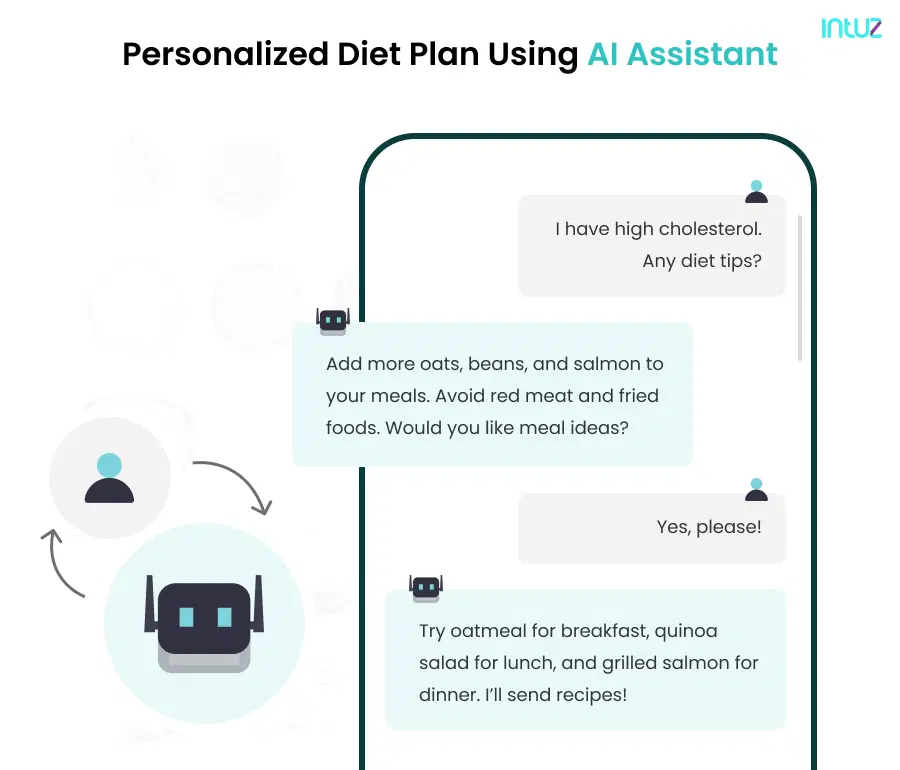
AI-powered chatbots can interact with patients in a human-like fashion, asking them questions about their health and symptom history and giving them instant guidance on the next steps.
This includes best practices to manage symptoms at home or options to book an appointment for more serious conditions.
For instance, based on the responses of a patient with a cough and cold, the AI chatbot can recommend ways to rest and recover on its own or prescribe a test if it’s likely to be a case of COVID-19.
And that’s just the beginning.
Generative AI can also collect patient history and lifestyle information to design on-demand personalized diet and exercise plans.
These can be customized to any requirement and preference, such as a diet that controls blood sugar levels while providing adequate protein to support a weightlifting regimen.
The tool can also send patients timely reminders to take their medicine, log the calories they consume, or get in their daily steps.
For patients with critical health conditions or those who simply struggle with maintaining a routine, this kind of help with medical adherence can be life-changing. A Deloitte study shows that AI assistants can improve medical adherence by up to 30%.
In short, Generative AI offers your patients personalization at scale—something nearly impossible to achieve.
Patients can now take charge of their lifestyle with health tips and timely reminders, avoiding the risk of medical complications like obesity or heart disease. Your business also benefits from a lower burden on healthcare and higher patient satisfaction rates.
3. Generating synthetic data and augmenting real patient data for AI training
The healthcare industry is sure to see an advancement in clinical medicine. However, the rise of neural networks brings privacy concerns that must be addressed to protect patient data. Revealing a person’s sensitive medical records and contact details raises ethical concerns.
So how do you use AI technology in healthcare?
Instead, you can opt for Generative models that create synthetic patient data that are realistic enough to be meaningful, enabling you to train your AI solution without breaking patient confidentiality.
The synthetic data mimics the complexity of real-world patient groups, including genetic anomalies and patterns in ethnic groups, exposing your AI models to a wide range of examples.
This helps them reach more accurate conclusions when applied to real-world clinical settings, such as lab imaging, especially in cases when actual patient data is limited, such as when diagnosing rare diseases.
An MDPI report states that incorporating synthetic data can enhance diagnostic accuracy by up to 15%.
4. Accelerating drug discovery and development using Generative AI
Finding and developing new drugs is key to pushing the frontiers of what healthcare can do—and with Generative AI, this can happen faster and more efficiently than ever.
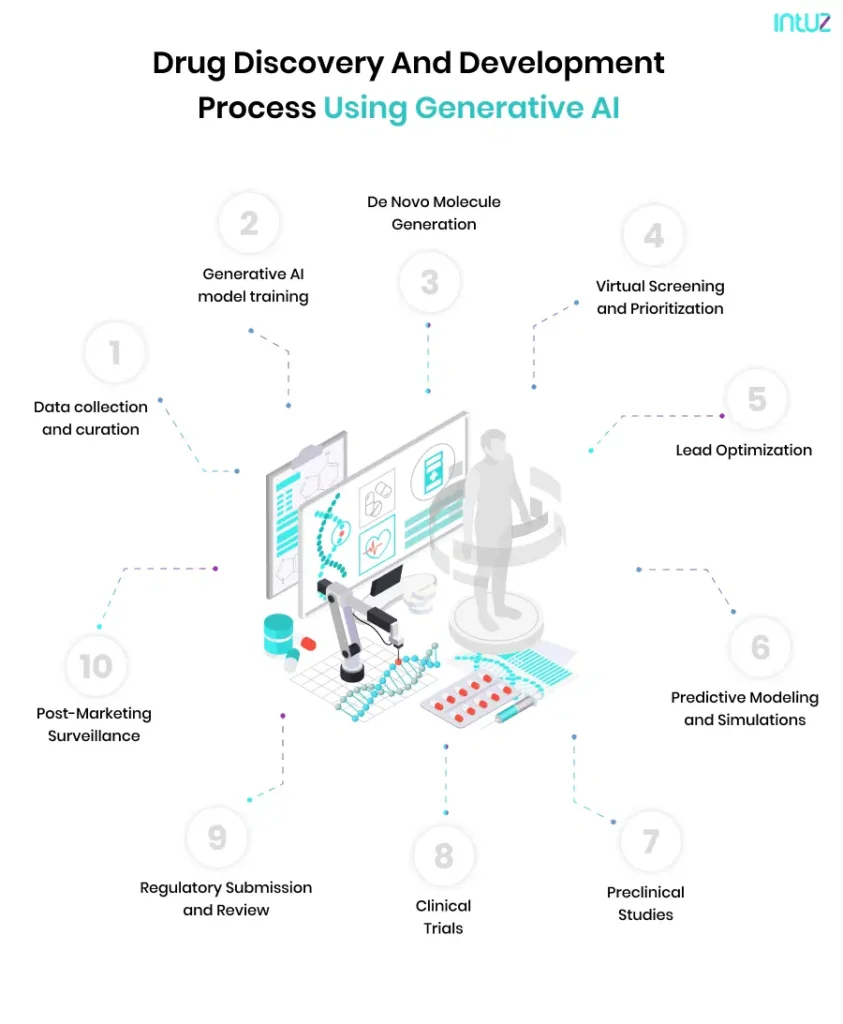
AI models can rapidly study existing compounds, sift through millions of possible combinations, and develop new molecules that are most likely to enhance the potency of the treatment or develop entirely new ones.
This helps narrow down the list of candidates for testing and clinical trials, shortening drug development timelines and saving you valuable time and resources.
Further, Generative AI can study datasets on chemical structures and the human body’s composition to understand how a particular drug will act on a patient with a given set of health preconditions. This helps understand the drug’s efficacy and flags potential side effects.
For instance, Generative AI could study the impact of a cancer treatment on patients with diabetes and determine that for patients above 50, there is a low-to-moderate risk of stroke occurring. Your healthcare team can thus be aware of what to expect before moving into clinical trials.
Finally, Generative AI can simulate the outcome of the clinical trial itself, helping your researchers develop more efficient trials and choose the most eligible patient populations. All of this is key to getting critical drugs to market sooner.
5. Automating medical administrative tasks for improved efficiency
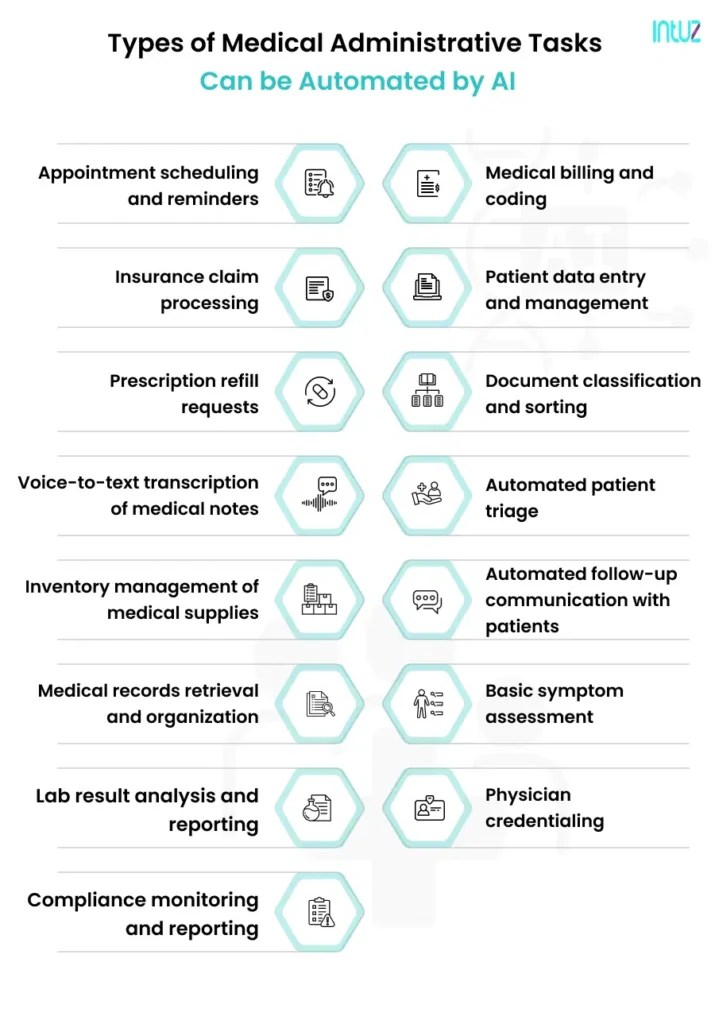
One of the most useful healthcare applications of Generative AI is automating administrative tasks that take up your healthcare team’s limited bandwidth.
For example, AI models powered by Natural Language Processing (NLP) can quickly transcribe doctor-patient discussions and generate medical records for each, speeding up the documentation process and enabling faster billing.
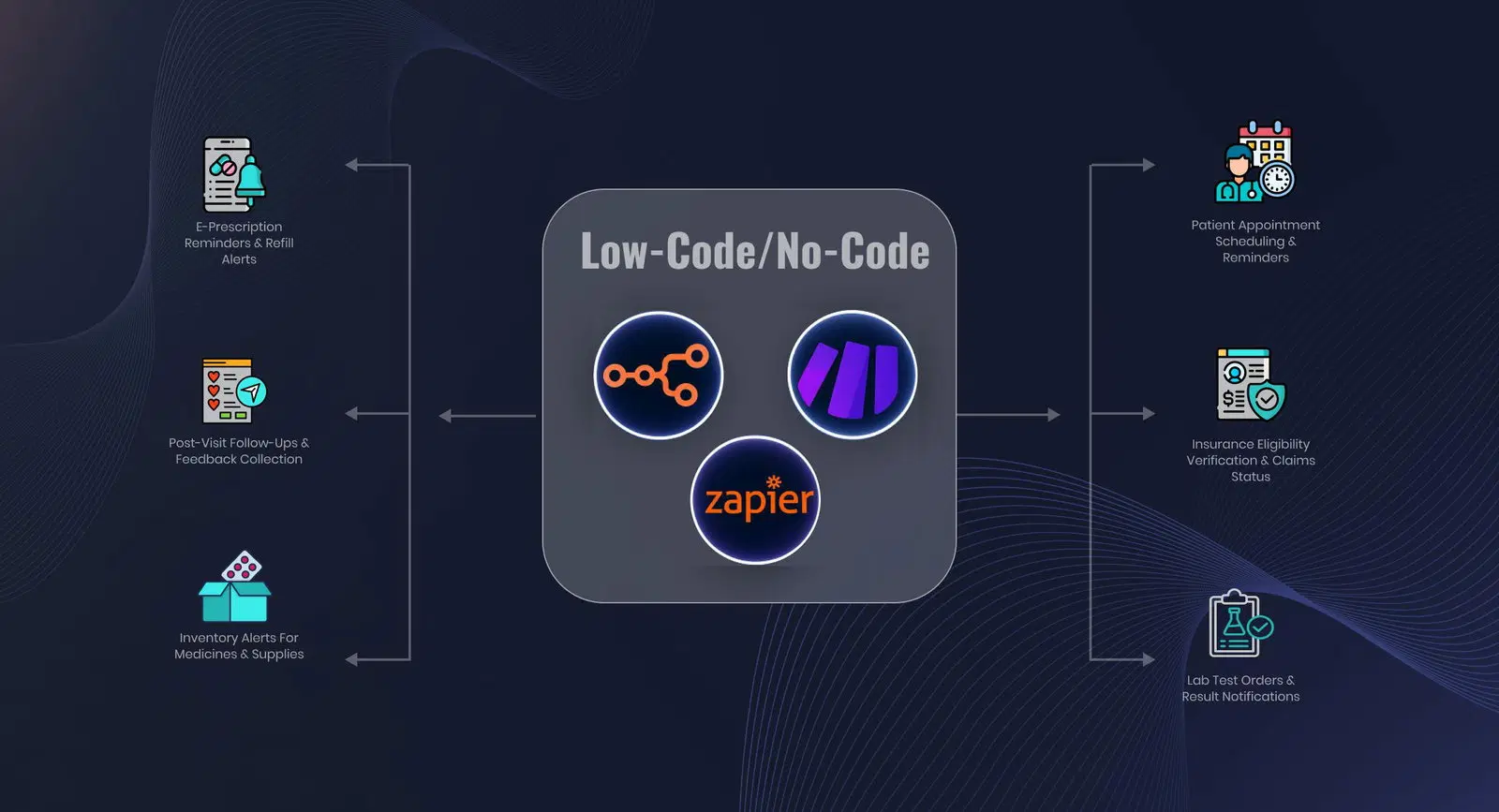
Generative AI tools are also ideal for appointment scheduling and staff deployment. Based on real-time datasets about patient demand and staff availability, they help patients quickly get the care they need without overburdening your team.
Generative AI also excels at processing insurance claims. It can quickly check each claim for compliance, handle prior authorizations, and speed up the approval process. This reduces the payment timelines, improves patient satisfaction, and makes things easier for your providers.
6. Improving medical imaging analysis and diagnosis speed
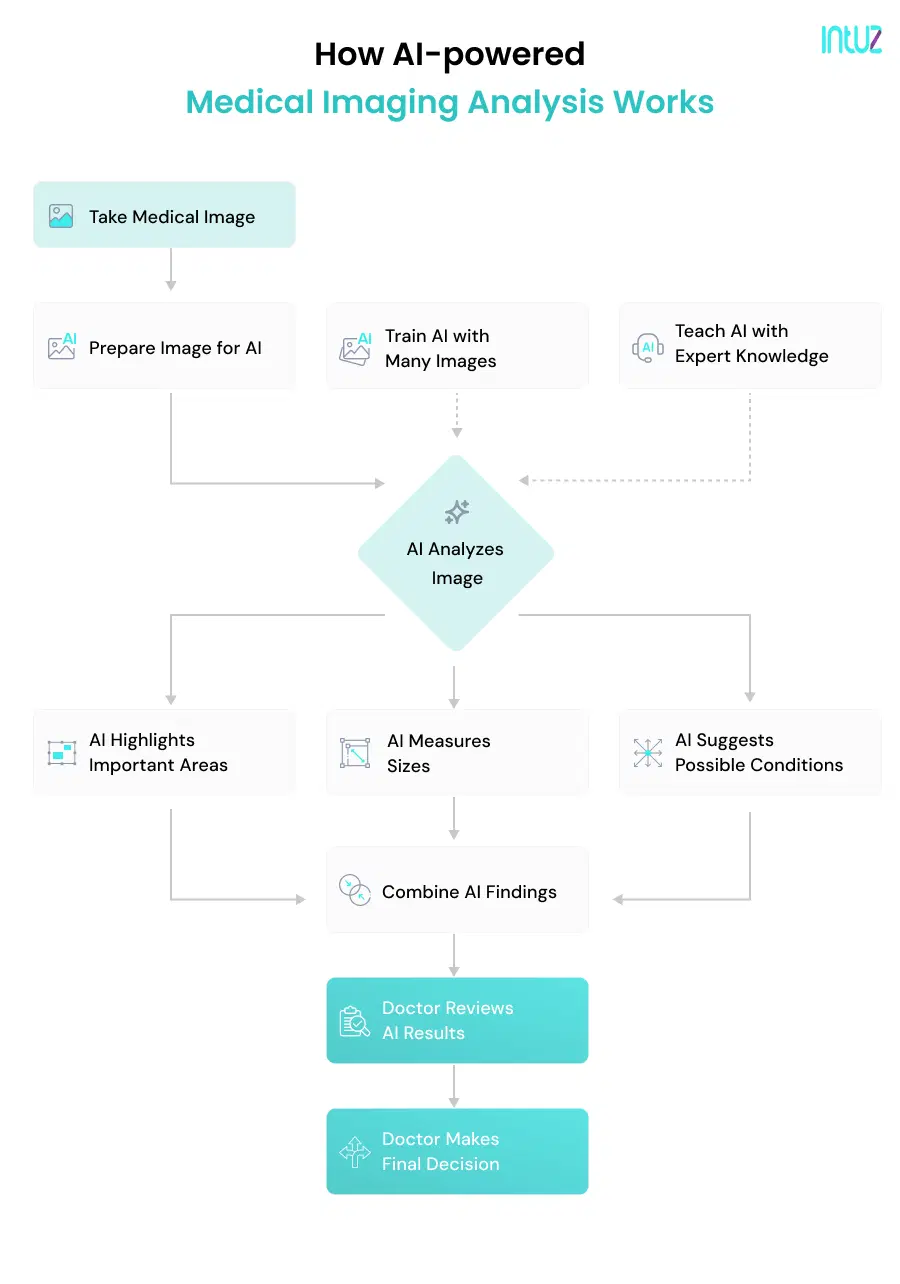
Generative AI can scan and interpret medical images exponentially faster than humans, helping healthcare organizations reach a diagnosis almost instantly—a boon in emergencies where even a few seconds could mean life or death for the patient.
The advanced AI technology is also highly adept at detecting abnormalities like tumors and fractures, spotting signs the human eye might miss, and ensuring that the condition is treated early before complications arise.
All of this reduces the burden on your radiologist, as they no longer have to pore over every MRI. They can train the AI model to flag only the most critical cases, allowing them to devote their energy where it’s most needed.
As a result, you benefit from a happier and more productive team that provides faster, more accurate diagnoses while also improving the overall diagnostic workflow.
7. Enabling remote patient monitoring with Generative AI
With wearables and smartphones now coming with health and fitness features by default, Generative AI can conduct remote patient monitoring at a whole new scale.
By studying data on heart rate, oxygen levels, and other vital signs, it can detect trends that could indicate potential health deterioration and share alerts on how the patient can tweak their lifestyle (such as by doing more cardio) to avoid future problems.
This helps patients take charge of their health and avoid the costs of treating more advanced conditions. In addition, AI can share instant alerts with healthcare providers if the patient’s vitals change significantly, allowing them to step in quickly.
For instance, the technology can study a diabetic patient’s heart monitor to detect early signs of an episode even before the patient feels anything.
Your healthcare team can then get involved and schedule a check-in with the patient, curbing the problem before it results in a hospital admission. This improves patient outcomes and reduces the resource load on your team, allowing them to focus on only the most critical cases.
Who knew we’d have virtual health assistants offering 24/7 access to population health information and support?
Real Examples of Healthcare Companies Using Generative AI
1. Amazon Web Services (AWS) HealthScribe
This HIPAA-eligible service leverages Generative AI for speech recognition to streamline clinical documentation and boost efficiency in hospitals and clinics.
Automatically generating medical notes from patient-doctor interactions reduces clinicians’ time on paperwork, allowing them to focus more on patient care. HealthScribe makes you an expert in health privacy.
2. Google’s Med-PaLM 2
You must have heard of Google’s Med Gemini. Now, it’s testing Med-PaLM 2, an AI chatbot designed to answer medical questions more accurately. It’s being trialed at prominent institutions like the Mayo Clinic.
Med-PaLM 2 utilizes LLMs to improve diagnostic support by responding to patient and provider queries. This Generative AI solution can provide medical insights faster and reduce the administrative burden on healthcare providers.
3. Sanofi and BioMap
In the pharmaceutical sector, Sanofi has partnered with BioMap, using BioMap’s generative AI platform to optimize the drug discovery process. This collaboration highlights the growing role of generative AI in pharma.
This collaboration aims to accelerate the identification of therapeutic candidates, speeding up drug development while reducing costs in health care. Generative AI helps model complex molecular interactions, thus significantly shortening the timeline for drug discovery.
4. Insilico Medicine
A Hong Kong-based biotechnology company is using its AI platform, Pharma.AI, to develop a potential treatment for idiopathic pulmonary fibrosis (IPF), a rare and often fatal lung disease.
Applying Generative AI throughout the preclinical discovery process dramatically cuts development costs. What typically would have cost over $400 million was reduced to about 10% of that amount, roughly $2.6 million.
Moreover, the entire process, from target discovery to preclinical candidate nomination, was completed in just 18 months, much faster than traditional methods.
How to Implement Generative AI in Your Healthcare System
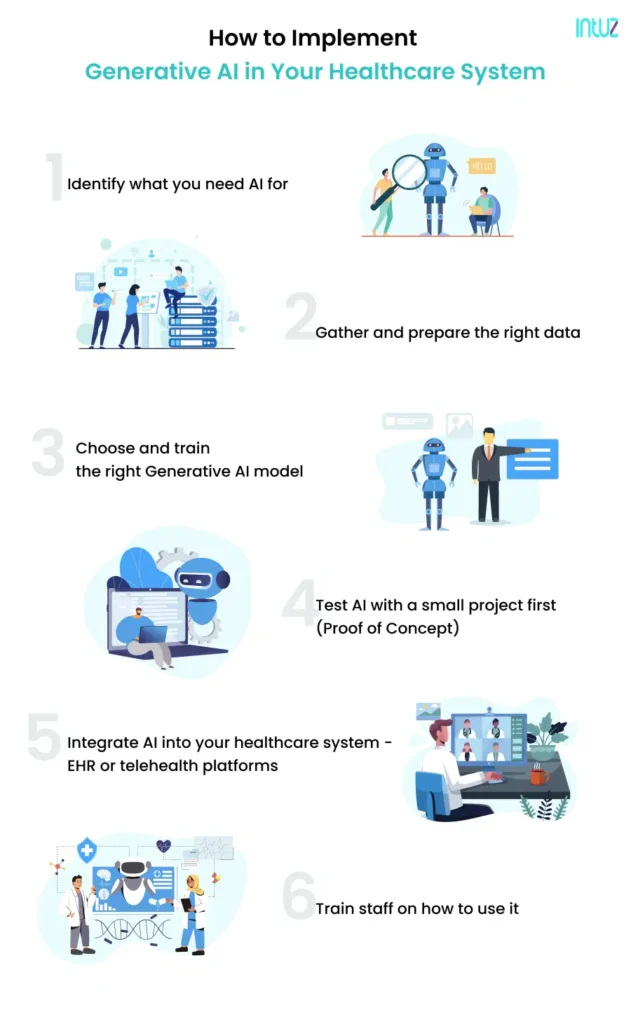
1. Identify what you need AI for
The first step is to pinpoint specific areas where AI can make a difference. Define clear, practical use cases, whether automating medical documentation, improving diagnostic accuracy, personalizing patient care, or streamlining administrative tasks.
For example, you may want to use AI to assist in diagnosing diseases through image analysis or to help manage patient data more efficiently.
Leading AI development company Intuz can help assess your healthcare system’s pain points and potential for AI-driven improvements to ensure you target the most impactful areas and align your efforts with high-priority goals.
2. Gather and prepare the right data
Generative AI relies heavily on high-quality, structured data. Depending on the chosen use cases, you’ll need to collect and organize data from electronic health records (EHR), scans and images, or medical histories.
Ensuring data accuracy and privacy is crucial, particularly given the sensitive nature of healthcare information. You may also need to clean and standardize the data for AI training, ensuring it’s ready for processing while remaining compliant with privacy regulations like HIPAA.
3. Choose and train the right Generative AI model
Once the use cases and data are ready, the next step is to select the suitable AI model. For instance, LLMs might be ideal for generating medical reports, while image GANs could be better for medical image analysis.
After selecting the appropriate model, train it using your prepared data. Training may require collaboration with data scientists to fine-tune the model, ensuring it provides accurate and relevant outputs.
4. Test AI with a small project first
Before rolling out AI across your entire system, starting small is critical. Testing AI in a controlled environment, such as a single department or process, helps assess its performance and identify potential issues.
This proof of concept (PoC) allows you to evaluate the AI’s accuracy, efficiency, and integration with existing workflows. For instance, you might implement AI-driven medical image analysis in radiology to test its ability to detect early-stage diseases.
Intuz can help define clear success metrics so you can validate the AI’s performance before full-scale deployment. Our PoC strategy focuses on quickly demonstrating AI’s value while minimizing disruption.
5. Integrate AI into your healthcare system
After successful testing, you can begin integrating AI into your broader healthcare infrastructure. This may involve linking AI models with existing systems like EHR platforms, telehealth tools, or patient management systems.
Integration should focus on ensuring a seamless transition. AI tools should work alongside human staff, enhancing productivity without causing disruption. Strong data pipelines and secure access controls should be in place during integration.
6. Train staff on how to use it
The success of AI implementation hinges on your staff’s ability to use the new tools effectively. Comprehensive training should be provided to all users, from clinicians to administrative staff.
This includes teaching them how to interact with AI systems, interpret AI-generated insights, and ensure that AI augments human decision-making, not replaces it. Ongoing training and support will be essential as AI evolves and new features are introduced.
If you partner with us, we’ll emphasize how AI can augment—rather than replace—staff capabilities, empowering your team to make better-informed decisions.
Explore Solutions
Transform Healthcare with Our AI-driven Solutions!Optimize Healthcare Delivery With Generative AI
Medical education is evolving as AI and Machine Learning models are used to simulate real-life scenarios, from streamlining administrative activities to refining and enhancing datasets to predicting more accurate patient outcomes.
While it’s not a replacement for human oversight and ingenuity, it’s a worthy partner to have in a highly overworked sector.
We recommend exploring the different healthcare AI models and starting small, such as investing in an auto-scheduler or a medical imaging analysis tool. Of course, a one-hour strategy call with us will give you more clarity on implementation.
But we assure you the benefits will become evident almost immediately. The more you expand your AI infrastructure, the more efficiently you can lead your healthcare business and deliver excellent patient outcomes.
So what are you waiting for?
Book your free consultation with our AI experts today.
FAQs
How does generative AI improve diagnostic accuracy in healthcare?
Generative AI models trained on medical imaging datasets can detect subtle abnormalities — small tumors, fractures, early-stage lesions — that the human eye may miss in MRI, CT, or X-ray scans. By processing far more images per hour than any radiologist, these models flag only critical cases for human review, reducing diagnostic delays. Research cited in this space shows AI-assisted diagnostics can improve patient outcomes by 30–40% while cutting treatment costs by up to 50%. The practical implication: radiologists shift from reviewing every scan to focusing expert attention on flagged, high-priority cases — improving throughput and reducing diagnostic error rates.
Is it safe to use real patient data to train AI models in healthcare?
Using real patient data for AI training raises significant HIPAA and GDPR compliance concerns — and in most cases, it’s avoidable. Generative AI models can create synthetic patient datasets that statistically mirror real-world patient populations, including rare disease patterns and demographic variations. An MDPI study found synthetic data can improve diagnostic model accuracy by up to 15%. For organizations that do use real data, de-identification, encrypted storage, and strict access controls are non-negotiable. The safest path: partner with an AI development team that implements data governance from day one, not as a retrofit after the model is already built.
How long does it take to implement generative AI in a healthcare system?
Timeline depends heavily on scope, but a realistic breakdown looks like this: defining use cases and auditing existing data takes 2–4 weeks; model selection and data preparation takes 4–8 weeks; a proof-of-concept in a single department (e.g., radiology or scheduling) typically runs 6–10 weeks; full integration with EHR platforms, telehealth tools, and compliance sign-off adds another 2–4 months. For most mid-sized healthcare organizations, expect 6–9 months from strategy to live deployment for a meaningful use case. Starting with a narrowly scoped PoC — rather than a system-wide rollout — significantly de-risks the process and accelerates measurable results.
Which generative AI models are most commonly used in healthcare applications?
Two model types dominate healthcare applications. Large Language Models (LLMs) — like those powering AWS HealthScribe and Google’s Med-PaLM 2 — handle text-heavy tasks: clinical note generation, patient Q&A, report summarization, and EHR documentation. Generative Adversarial Networks (GANs) are the standard for imaging tasks: generating synthetic medical images for training, augmenting limited datasets for rare diseases, and supporting radiology AI. Some applications layer both — using an LLM to generate a narrative report from a GAN-analyzed scan. The right model depends on your use case; a discovery session with an AI development partner helps map the architecture before you commit to a tech stack.
How do I choose the right Generative AI solution for my business?
Start by defining your goal — content creation, automation, or customer engagement. Consider your existing datasets, budget, and tech infrastructure. Generative AI suits content-heavy, customer-facing operations, while predictive AI works best for data-driven forecasting. Consulting an experienced AI development partner like Intuz helps map the right solution to your needs.
Work with Intuz
Build Gen AI-Powered Healthcare solutions
See where AI fits in your clinical workflows — no cost.
Let's Get Started
Share this article