

![Top MCP Server Development Companies in USA [2026]](https://www.intuz.com/wp-content/uploads/2026/05/Top-MCP-Server-Development-Companies-in-USA-2026.svg)
In 2026, the leading MCP server development companies in the USA are Intuz (best for SMBs and SaaS), Klavis AI (AI-native products), Bitontree (platform modernization), LeewayHertz, Simform, Edvantis, Rapid Innovation, and Accenture (enterprise scale). The best choice depends on company size, security requirements, timeline, and budget.
According to Gartner, nearly 85% of AI projects fail to deliver expected business value, largely due to poor data integration, lack of governance, and fragile system design.
Integration is a major blocker. A McKinsey study found that over 70% of companies cite difficulty integrating AI with existing systems as a top challenge, slowing time-to-value and increasing technical debt.
Security risks further complicate adoption. IBM reports that AI-driven data exposure significantly increases breach costs, especially when access controls are weak.
As AI copilots, autonomous agents, and LLM-powered workflows become core to modern SaaS and enterprise products, Model Context Protocol (MCP) has emerged as a foundational layer for secure, structured, and scalable AI-to-system communication.
These challenges explain why businesses are turning to MCP (Model Context Protocol) servers—and why choosing the right development partner is critical.
Show
- Over 70% of companies cite difficulty integrating AI with existing systems as a top challenge, slowing time-to-value and increasing technical debt (McKinsey).
- Production-grade MCP development requires authentication, multi-tenant data isolation, audit logging, schema validation, and failure recovery, not just a working demo.
- Proven MCP experience, backend/API depth, security & governance, SMB alignment, and end-to-end delivery capability are the key evaluation factors.
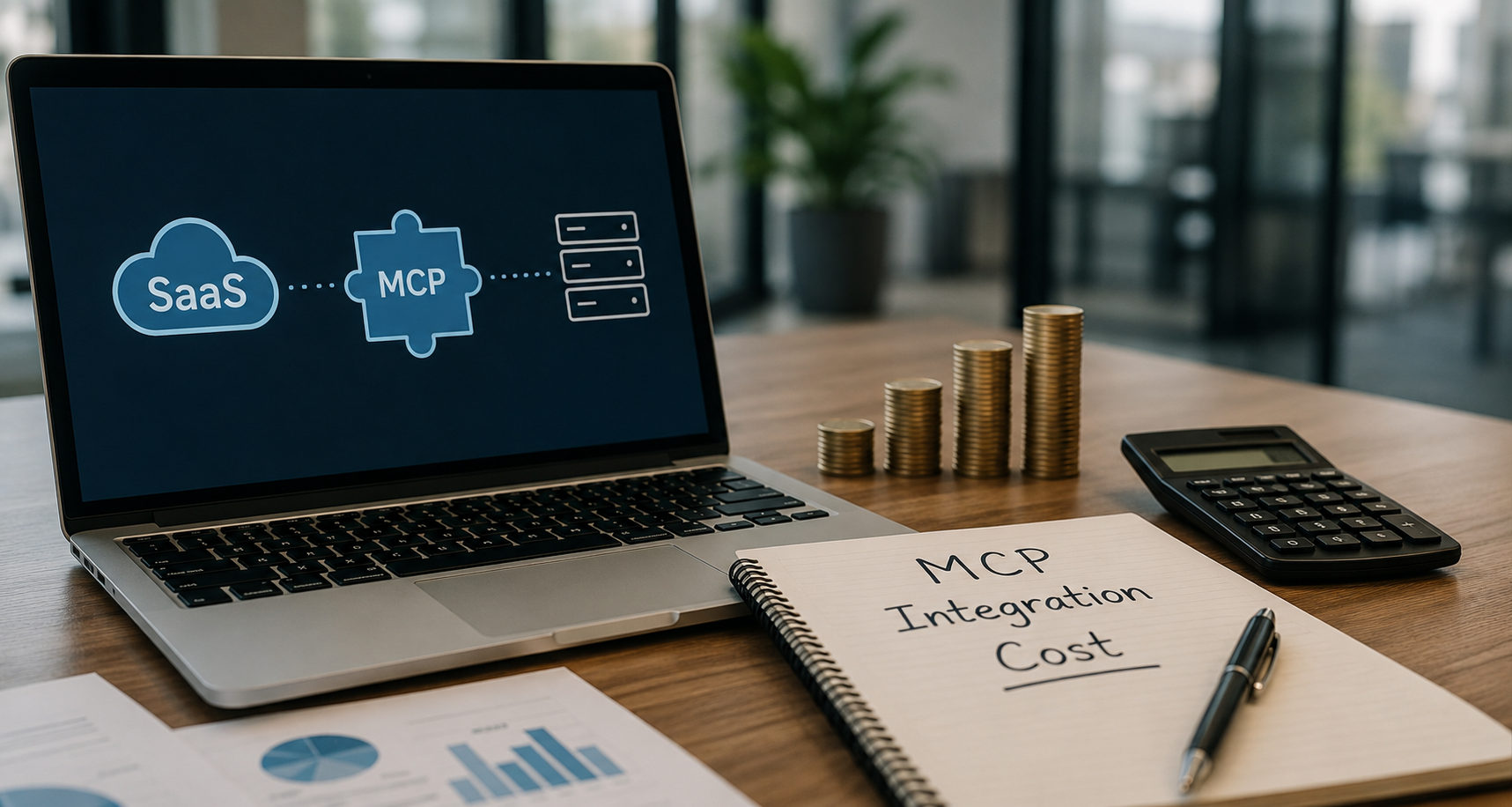
- MVP implementations start at $25K–$50K, while enterprise multi-tenant SaaS deployments can reach $60K–$120K depending on integrations and compliance needs.
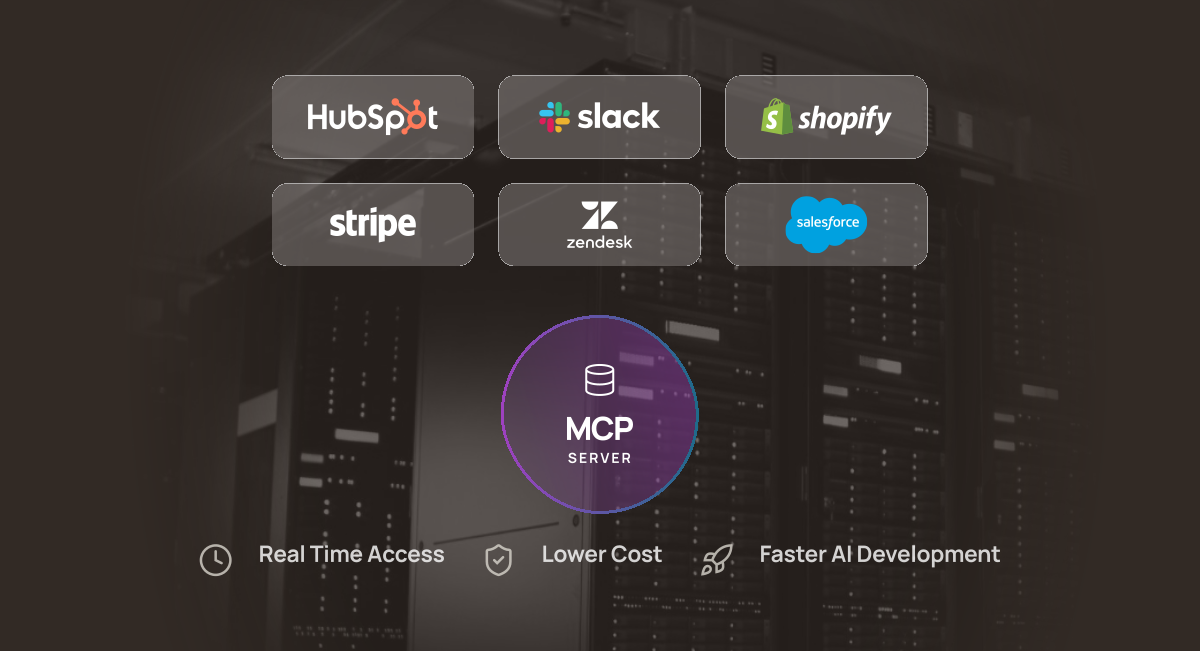
- MCP is becoming the standard AI integration layer — Like REST for web APIs, MCP standardizes how tools, data sources, and agents interact via a consistent JSON-RPC protocol, reducing duplication and improving governance.
Why You Need an MCP Development Partner
Most internal teams underestimate what production-grade MCP development requires. Building a working prototype is straightforward. Building something that handles authentication, multi-tenant data isolation, audit logging, schema validation, failure recovery, and concurrent agent sessions — at production scale — is a different project entirely.
The right MCP development partner reduces this complexity significantly. They bring pre-built patterns for common integration types, security frameworks that meet enterprise compliance requirements, and deployment infrastructure that doesn’t require three months of DevOps work before an AI feature goes live.
How We Selected These MCP Server Development Companies
To ensure this list is practical and decision-ready, we evaluated companies using the following 5 core criteria:
1. Proven MCP & Agentic AI Implementation Experience
We prioritized companies that actively work with MCP servers, agent frameworks, or structured LLM tool invocation, not just generic AI consulting.
2. Backend & API Engineering Depth
MCP servers sit between LLMs and real systems. Strong experience in API design, microservices, and backend integrations was essential.
3. Security, Governance & Access Control
We assessed how well each company handles role-based access, auditability, data isolation, and secure context sharing, especially for regulated or multi-tenant environments.
4. SMB & Mid-Market Alignment
Companies that understand budget constraints, faster timelines, and pragmatic AI ROI for SMBs were ranked higher.
5. End-to-End Delivery Capability
From MCP server design to deployment, monitoring, and optimization—vendors with full lifecycle delivery scored better.
Top 8 MCP Server Development Companies in the USA
1. Intuz
Book a Free AI ConsultationIntuz is an AI-first development company specializing in MCP server development, AI agents, and LLM-powered SaaS platforms. They help SMBs design, build, and deploy production-ready MCP servers that securely connect LLMs with internal tools, workflows, and data sources.
Strengths
- Deep expertise in MCP architecture, agentic workflows, and tool orchestration
- Strong focus on SMB use cases like AI copilots, internal AI tools, and SaaS AI features
- End-to-end delivery: MCP server design, backend integration, frontend copilots, and deployment
- Practical approach to security, access control, and multi-tenant SaaS environments
Highlighted MCP case study
A leading African transport and logistics enterprise partnered with Intuz to build an AI-powered analytics agent connecting to millions of operational records. The result: a conversational chatbot interface built on Gemini 2.0 Flash with 95%+ SQL generation accuracy, a secure read-only analytics layer backed by schema validation, and automated query safety checks — deployed in production.
Core MCP services Intuz Providing
- MCP server design and architecture
- AI-to-system integrations (CRM, databases, APIs)
- Multi-agent orchestration
- Agentic workflow automation
- LLM integration (Gemini, Claude, GPT-5)
- MLOps, and ongoing optimization.
Best For
SMBs and mid-market SaaS companies looking for a hands-on MCP server development partner that balances technical depth with business outcomes.
Expert perspective
Choosing the right MCP server development company can be the difference between a fragile AI demo and a scalable, secure, revenue-driving AI system. For small and medium enterprises, working with an AI-first, execution-focused partner like Intuz ensures MCP implementation is not just technically correct but commercially successful – By Pratik Rupareliya (Head of Strategy, Intuz)

2. Klavis AI
Klavis AI focuses on AI infrastructure and agent systems, helping companies implement MCP-style architectures for LLM tool calling, workflow automation, and AI copilots.
Strengths
- Strong understanding of LLM orchestration and AI infrastructure
- Experience with agent-based systems and context management
- Suitable for teams experimenting with advanced AI workflows
Best For
Startups and product teams building AI-native applications that require flexible MCP-like server layers.
3. Bitontree
Bitontree is a digital engineering company offering AI integration and backend development services, including MCP-aligned server architectures for AI-enabled products.
Strengths
- Solid backend and API engineering capabilities
- Experience integrating AI into existing SaaS products
- Cost-effective for SMB projects
Best For
SMBs modernizing existing platforms with AI features backed by structured MCP-style servers.
4. Accenture
Accenture delivers enterprise-scale AI and data platform solutions, including secure LLM integrations and MCP-like orchestration layers for large organizations.
Strengths
- Deep enterprise AI, security, and compliance expertise
- Strong governance and large-scale system integration
- Access to proprietary frameworks and accelerators
Best For
Large enterprises or heavily regulated organizations with complex AI governance needs (less ideal for cost-sensitive SMBs).
5. IBM
IBM provides AI platform services, AI governance frameworks, and enterprise AI integration, often leveraging structured context and tool access patterns similar to MCP.
Strengths
- Industry-leading AI governance and security
- Strong hybrid cloud and enterprise integration capabilities
- Trusted brand for regulated industries
Best For
Enterprises or mid-market companies requiring strict compliance and long-term AI infrastructure stability.
6. Bluebash
Bluebash is a technology services company delivering AI, cloud, and backend development, including MCP-style integrations for SaaS and internal platforms.
Strengths
- Flexible engagement models for SMBs
- Experience with backend systems and AI integrations
- Faster turnaround compared to large consultancies
Best For
SMBs needing cost-effective MCP server development with reliable backend execution.
7. DataRobot
DataRobot is primarily an AI/ML platform provider, but also supports structured AI deployment and integration workflows aligned with MCP concepts.
Strengths
- Strong MLOps and AI lifecycle management
- Enterprise-grade AI deployment tooling
- Focus on production AI reliability
Best For
Organizations already using DataRobot and looking to extend AI into structured, tool-driven workflows.
8. Rapid Innovation
Rapid Innovation focuses on AI agents, LLM applications, and workflow automation, including MCP-style server architectures.
Strengths
- Strong emphasis on agentic AI and automation
- Fast prototyping and deployment
- Practical approach for AI-first products
Best For
SMBs and startups looking to quickly launch MCP-based AI features.
How to Choose the Right MCP Server Development Partner
| Evaluation Factor | What to Look For | Why It Matters for MCP |
|---|---|---|
| Hands-On MCP Experience | Proven experience building MCP servers, agent workflows, or structured LLM tool integrations | MCP is still new—lack of real experience leads to fragile or incorrect implementations |
| Security & Access Control | Role-based access, permission scoping, audit logs, and secure context handling | MCP servers directly expose internal systems to LLMs, making security non-negotiable |
| Multi-Tenant SaaS Readiness | Tenant isolation, per-user context handling, scalable authorization models | Critical for SaaS products serving multiple customers safely |
| LLM-Agnostic Architecture | Support for OpenAI, Anthropic, and future LLMs without rework | Prevents vendor lock-in and future-proofs your AI stack |
| Backend & API Engineering Strength | Strong API design, workflow orchestration, and system integration skills | MCP servers act as middleware—weak backend design breaks AI reliability |
| Deployment & Observability | Production deployment, monitoring, logging, and failure handling | Ensures MCP servers remain stable, debuggable, and scalable |
| Business-First AI Mindset | Focus on ROI, faster time-to-value, and practical use cases | Prevents over engineering and keeps MCP aligned with business outcomes |
Final Takeaway
MCP is quickly becoming the standard integration layer for serious AI products. Choosing the right MCP server development company can be the difference between a fragile AI demo and a scalable, secure, revenue-driving AI system.
For small & medium enterprises, working with an AI-first, execution-focused partner like Intuz ensures MCP implementation is not just technically correct—but commercially successful.
Build a Production-Ready MCP Server with Intuz
If you’re SaaS company planning to:
- Launch AI copilots inside your product
- Enable LLMs to securely call real backend workflows
- Implement MCP servers with proper access control & scalability
- Avoid costly rework from experimental AI builds
Intuz can help you design, build, and deploy a future-proof MCP server—fast.
Get a free architecture consultation and see how MCP can unlock real AI capabilities in your product.
FAQs
What is an MCP server and why do companies need it in 2026?
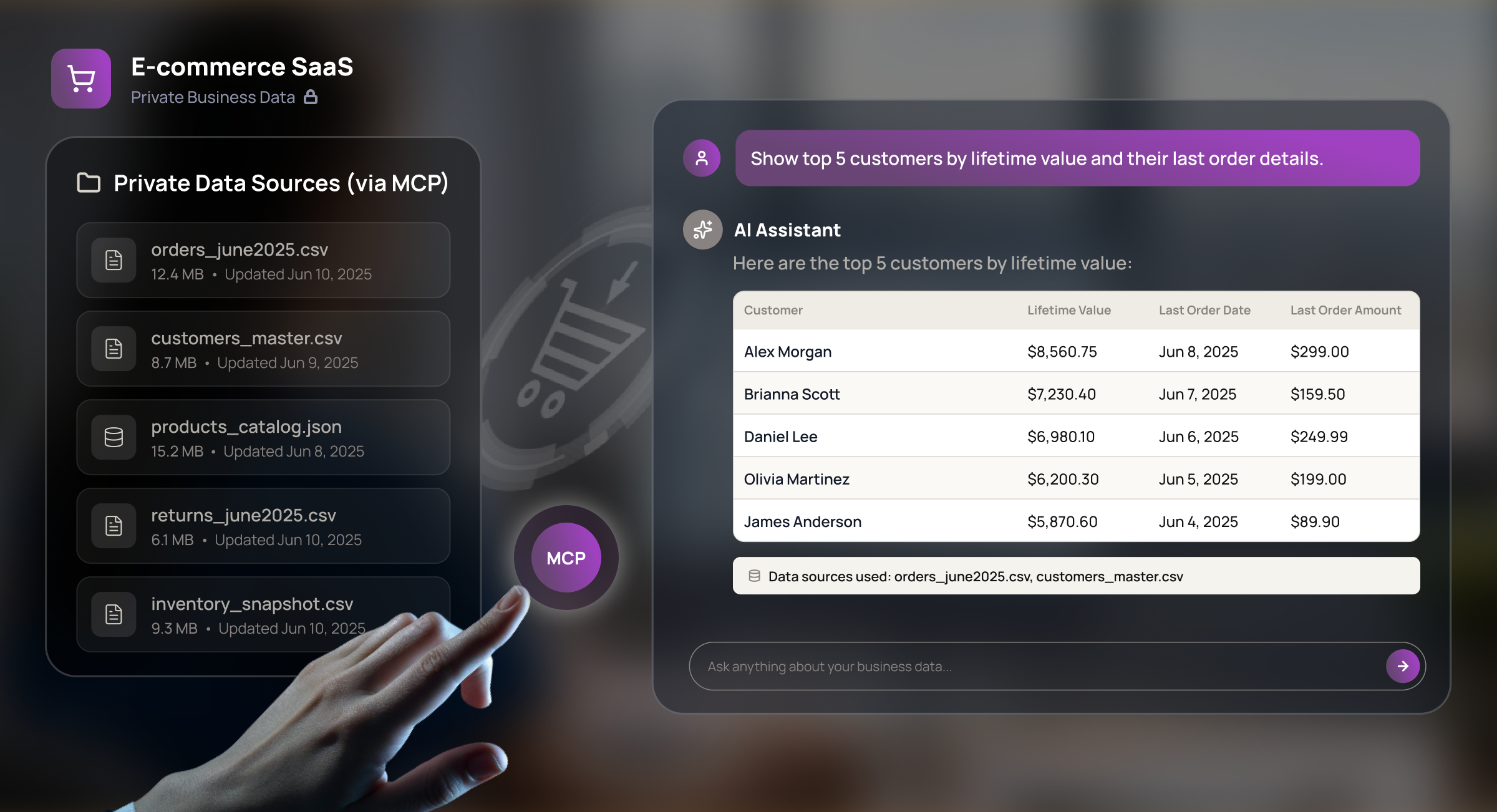
An MCP (Model Context Protocol) server allows large language models to securely interact with real business systems such as APIs, databases, and internal tools. In 2026, companies rely on MCP servers to power AI copilots, autonomous agents, and workflow automation while enforcing access control, preventing data leakage, and avoiding fragile prompt-based integrations.
How much does MCP server development cost in the USA?
MCP server development costs in the USA typically range from $25,000 to $50,000 for SMB MVP implementations and $60,000 to $120,000 for production-grade, multi-tenant SaaS deployments. Pricing depends on the number of system integrations, security requirements, LLM providers used, compliance needs, and the level of monitoring and scalability required.
How do MCP servers differ from traditional AI chatbots?
Traditional AI chatbots primarily generate responses from static content or limited APIs, while MCP servers enable LLMs to execute real backend workflows securely. MCP servers manage structured tool invocation, enforce role-based permissions, support auditability, and scale across SaaS platforms, making them suitable for production AI systems rather than informational chat interfaces.
What should businesses look for in an MCP server development company?
Businesses should choose MCP server development companies with proven agentic AI experience, strong backend and API engineering capabilities, and security-first architecture. The right partner should support multiple LLM providers, handle multi-tenant SaaS environments, and focus on delivering measurable business outcomes rather than experimental or proof-of-concept AI implementations.
Which MCP server development company is best in the USA?
The best MCP server development companies for SMBs in the USA combine deep MCP expertise with cost-effective execution and full lifecycle delivery. Providers like Intuz stand out by offering end-to-end MCP server design, secure AI-to-system integrations, and practical experience building production-ready AI copilots and agent workflows tailored for SMB and SaaS businesses.
How do I choose the right MCP server development partner?
Evaluate companies on five criteria: (1) hands-on MCP or agentic AI experience — not just AI consulting, (2) backend and API integration depth, (3) security posture including role-based access and audit logging, (4) SMB cost-effectiveness and timeline realism, and (5) full lifecycle delivery from design through deployment and monitoring. Always ask for production MCP references — not just prototypes or demos.
What is the difference between MCP and traditional API integration?
Traditional API integration hard-codes connections between systems, requiring custom glue code for every AI feature. MCP (Model Context Protocol) provides a universal standardization layer where tools, data sources, and AI agents interact through a consistent JSON-RPC protocol — reducing duplication, improving governance, and enabling reuse across AI features. MCP is to AI integrations what REST was to web APIs.
How long does MCP server development take?
A basic MCP server for 2–3 integrations typically takes 4–8 weeks to design, build, and deploy to production. Healthcare and enterprise cases with complex compliance requirements commonly take 10–12 weeks with a team of 2–3 developers. Timeline is most influenced by the number of integrations, security requirements, and availability of documentation for connected systems.
Work with Intuz
Build Your MCP Server with Intuz
Get expert help to design and deploy a production-ready MCP server fast.
Let's Get Started
Share this article