





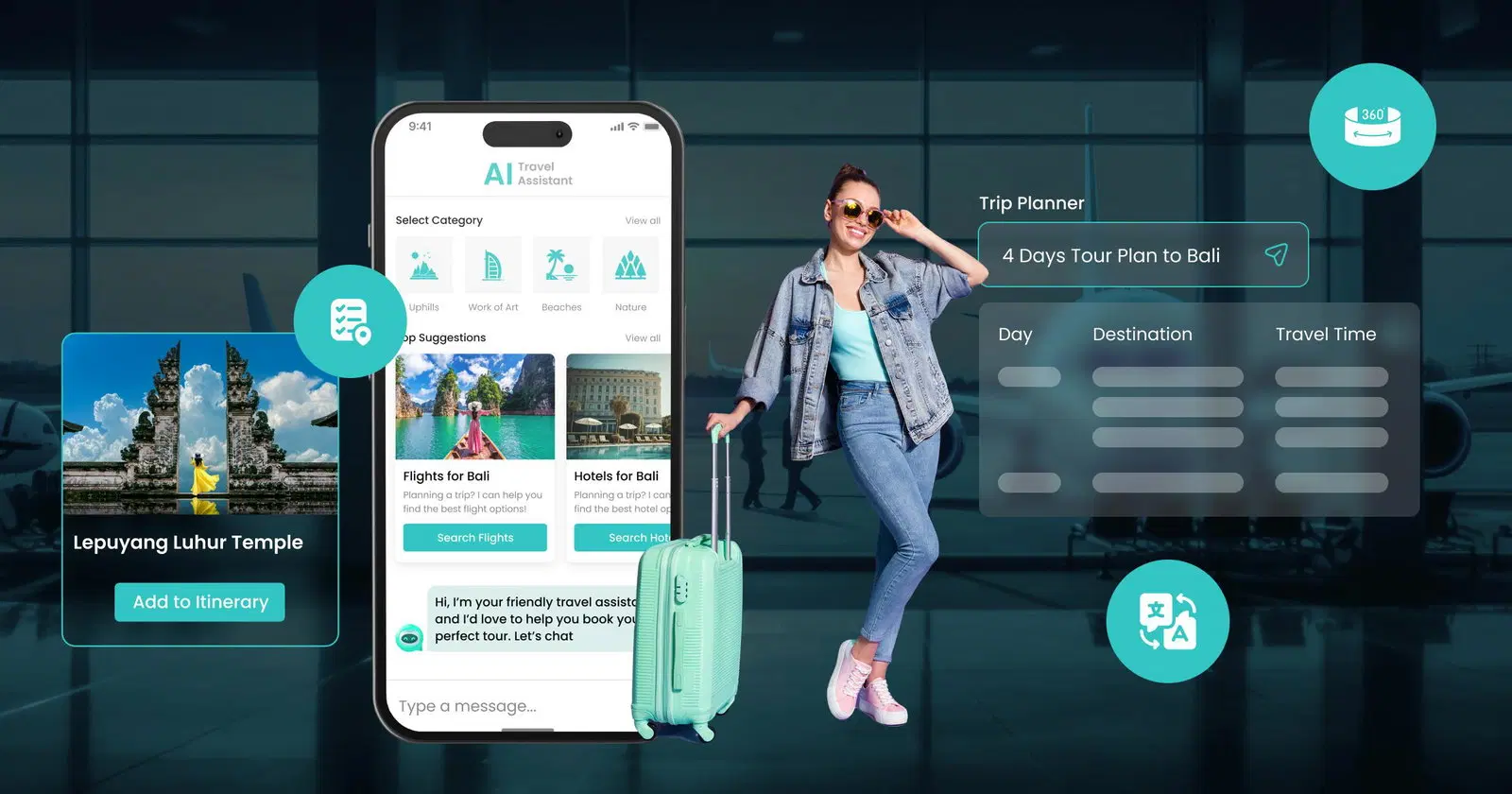
Generative AI is the travel industry’s magic wand, personalizing trips like never before. From suggesting hidden gems to crafting unique itineraries, its algorithms learn your preferences and curate experiences. This blog post explores in detail eight ways in which Generative AI is giving the travel industry a facelift.
Since the travel industry bounced back after the COVID-19 pandemic, it has been busy tapping all its pent-up customer demand, with people now traveling more than ever.
However, this sector faces its fair share of challenges that impact travel companies. Traditional booking systems are now considered time-consuming and prone to human error.
Online travel agencies often find it challenging to create custom itineraries. Limited customer support is also a critical issue. Moreover, there are too many online booking options vying for customer attention.
Show
- Generative AI personalizes travel recommendations by analyzing individual customer data like past bookings, demographics, and browsing behavior — replacing the inefficient “one-size-fits-all” approach.
- AI-powered virtual travel assistants like Pelago operate 24/7, handle multi-language queries, manage bookings at scale, and reduce dependency on human agents.
- Dynamic pricing powered by Generative AI allows travel companies to adjust pricing in real time based on demand cycles, competitor rates, and customer segments — helping maximize occupancy without underpricing.
- Generative AI drives targeted marketing by building detailed customer profiles to deliver personalized offers, increasing repeat bookings and average booking value.
- Virtual tours and AI-generated visuals (via tools like DALL·E and Sora) are emerging as powerful marketing instruments, with 46% of travelers more likely to visit unfamiliar destinations after a VR experience.
Travel industry & use of Generative AI – A key statistics
AI in travel is significantly transforming the travel and tourism industry, with recent statistics highlighting its growing influence:
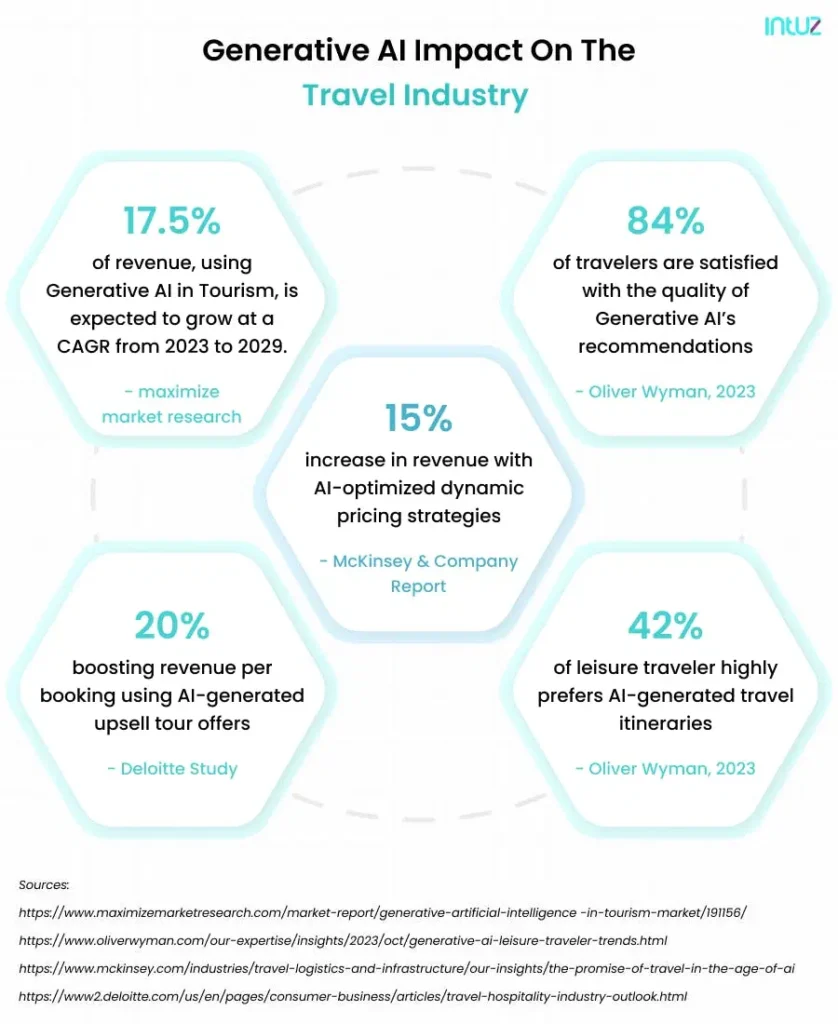
- A 2024 Statista survey shows over 50% of senior travel technology leaders reported their companies use generative AI to assist travelers during the booking process.
- A report by Oliver Wyman indicates that 41% of American and Canadian travelers have used generative AI for trip inspiration or itinerary planning as of March 2024, up from 34% in August 2023
- According to Rustourismnews.com, 52% of travelers trust generative AI for personalized travel recommendations and planning, with 84% expressing satisfaction with the AI-generated tour activities suggestions.
- Here are a few more interesting facts…
8 Best use cases of Generative AI in travel industry
The most prominent use cases of AI in travel include personalized travel recommendations, dynamic advertising, itinerary personalization, AI-driven booking assistants, customer support, dynamic tour pricing, and virtual tours.
1. Maximize bookings using AI-personalized travel suggestions
The advanced AI technology applies rules-based Machine Learning [ML] algorithms to comb through vast amounts of customer information, such as past bookings, demographics, browsing behavior, and social media usage.
This helps travel companies identify vacationing patterns and preferences unique to each individual and subsequently suggest holiday destinations, activities, and itineraries with a higher chance of resonating with the customers.
For example, if someone frequently shows interest in eco-friendly accommodations at beach locales, Generative AI can suggest relevant coastal destinations known for sustainable tourism practices.
The impact of making personalized recommendations for travel companies is significant:
- Customers who see that their preferences are understood and catered to are more inclined to complete a booking, resulting in higher conversions.
- Tailored suggestions optimize a customer’s journey by making it more unique and valuable. This personal touch makes the search and booking process engaging and enriching, fostering a positive brand perception.
- By consistently delivering relevant experiences, travel companies can build solid emotional connections with customers, who are, in turn, more likely to return to them to plan their next holiday.
2. Streamline planning with AI-powered personalized itineraries
Today’s customers do not want a run-off-the-mill itinerary that everyone is following. They want an action plan that is unique to them and serves their interests.
This includes the list of places they want to visit and their preferred hotels and activities, curated as per their budget.
Generative AI creates dynamic itineraries after considering various factors that align with what a customer wants, such as:
- Optimal travel routes and connections for flights, including ticket prices, layover times, and relevant airlines
- Accommodation options (e.g., hotels, hostels, and vacation rentals)
- Activities and experiences like adventure sports, spa appointments, and culinary tours
- Local transportation solutions, suggesting the best ways to move around, including public transit, car/bike rentals, and ride-sharing options powered by AI in transportation.
The AI technology integrates all the elements mentioned above in the itinerary into a cohesive plan, considering additional details like opening hours for attractions, travel times, and rest periods.
It can also suggest local dishes to try, language tips, and cultural etiquette, further enhancing this concierge-style experience.
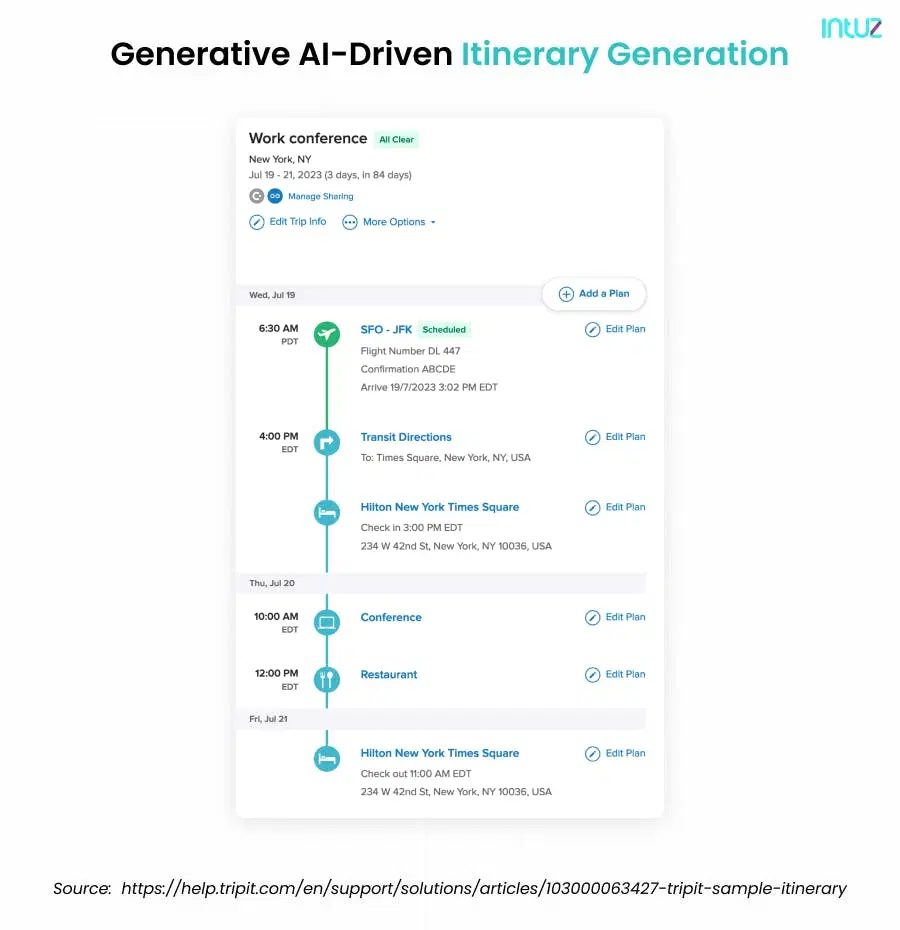
TripIt’s Smart Itinerary Planner is a widely acclaimed AI-driven travel companion that helps in several ways besides creating a comprehensive, day-by-day itinerary for the entire trip. For example:
- It forwards activity, flight, and hotel booking confirmations to the customer’s designated TripIt email address.
- It provides maps and directions to help navigate destinations with ease.
- It automatically updates the itinerary if the flights get delayed or scheduled, ensuring the customers always know about the changes.
For travel companies, AI-driven itineraries offer a way to increase efficiency and boost customer experience. More importantly, they can provide highly personalized services at scale, which would be incredibly resource-intensive without AI.
3. Enhance customer engagement and boost sales via 24/7 virtual travel assistant
Despite the convenience factor, arranging trips online for many customers is an exhausting and cumbersome experience. Research shows that 87% would interact with a virtual travel assistant if that meant saving time and money.
Meet Singapore Airline Group’s virtual travel assistance, Pelago
Pelago is a Generative AI chatbot that can conduct goal-based conversations, answering open-ended queries like “planning a trip to California.”
It helps potential customers and travelers book flight tickets and hotels, make custom itineraries, suggest tips to move around, and even helps in complaint submissions. It also allows them to make all payments related to the trip from their mobile app.
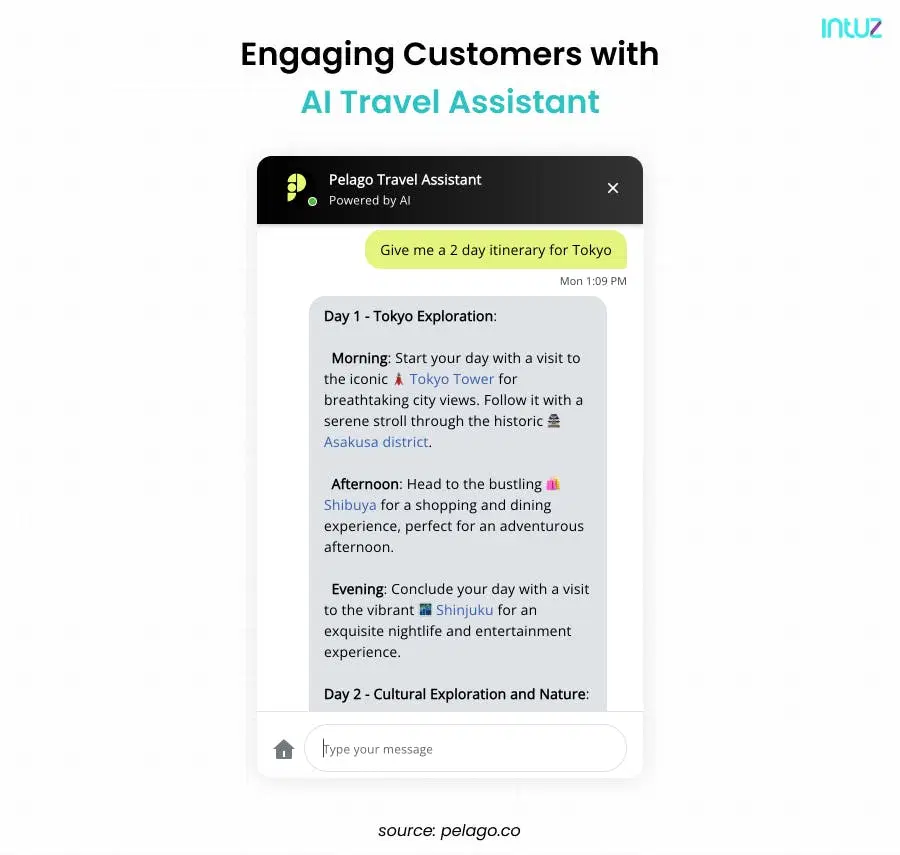
Powered by NLP, Pelago can understand the customer’s needs accurately and assist with queries related to flight departure time, package upgrades, and day-to-day activities.
Since providing 24/7 support is costly and complex and negatively affects customer satisfaction and trust, having such a virtual assistant is a boon for travel companies and other businesses in the hospitality sector.
Scope for serving customers better
AI-powered travel chatbots can help travel companies alleviate customer pain points in many ways. For example, they can suggest personalized tour packages based on travel behavior, preferences, and budget.
They can also upsell certain things to include in the itinerary, such as in-destination activities and transportation arrangements, thereby making more money for the travel companies. Other benefits of using a virtual travel assistant include:
- It can be accessed 24/7. That way, travel companies do not have to employ live agents round-the-clock.
- It only passes the more complex queries to the customer service teams, accelerating case-solving efficiency.
- It can initiate a conversation with multiple customers simultaneously in different languages. This increases the chances of travel companies serving a larger audience geographically.
- It can handle bookings at scale, make changes to existing reservations, and provide updates on flight timings.
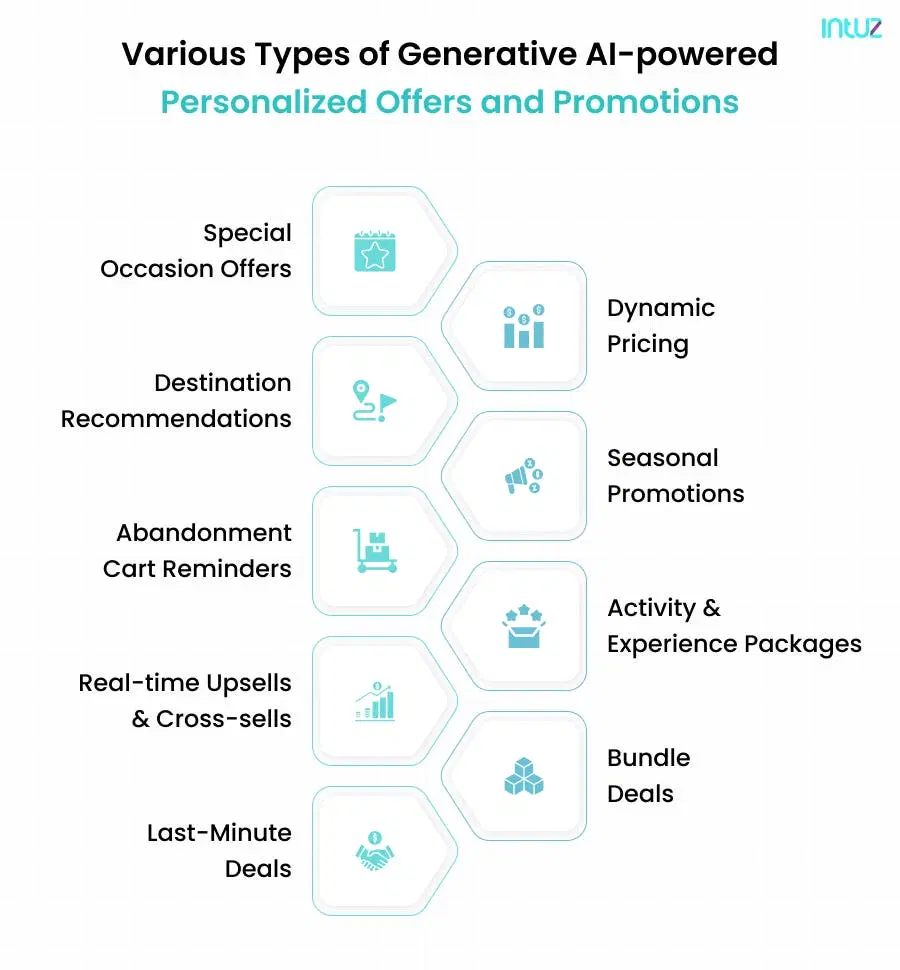
4. Increase customer base with targeted offers and marketing campaigns
The travel industry is marked by fierce competition. Customers can easily switch between competitors if their expectations are unmet. This hampers the revenue of already struggling hospitality companies.
One way to maintain a healthy sales pipeline is to bank on the power of marketing. AI algorithms can comb through vast amounts of data, including past bookings, search history, and interaction frequency, to build a comprehensive profile of each customer.
This profile typically comprises information regarding interest in specific destinations and activities, travel dates, accommodation types, and budget constraints.
With clear-cut data, travel companies can send customers personalized offers and holiday recommendations they are more likely to find appealing and relevant.
For example, for frequent business travelers, Generative AI could identify patterns of long layovers, helping travel companies provide complimentary or discounted lounge access as part of their booking.
With such tailored add-ons and upgrades, they can increase the average booking value and drive greater revenues for the business.
Similarly, if a solo traveler is inclined towards adventure activities, the technology can help in recommending an upgrade to a VIP adventure package, including exclusive experiences like private hot air balloon rides.
This personalized approach encourages repeat bookings, which supplements the bottom line of travel companies in the long run.
5. Overcome language barriers with instant translations
Even though countries like Japan, South Korea, Italy, France, and Vietnam are popular holiday destinations, the fact that these are not English-speaking countries is not lost on customers. Even the most basic forms of communication, like asking for directions, can be a challenge.
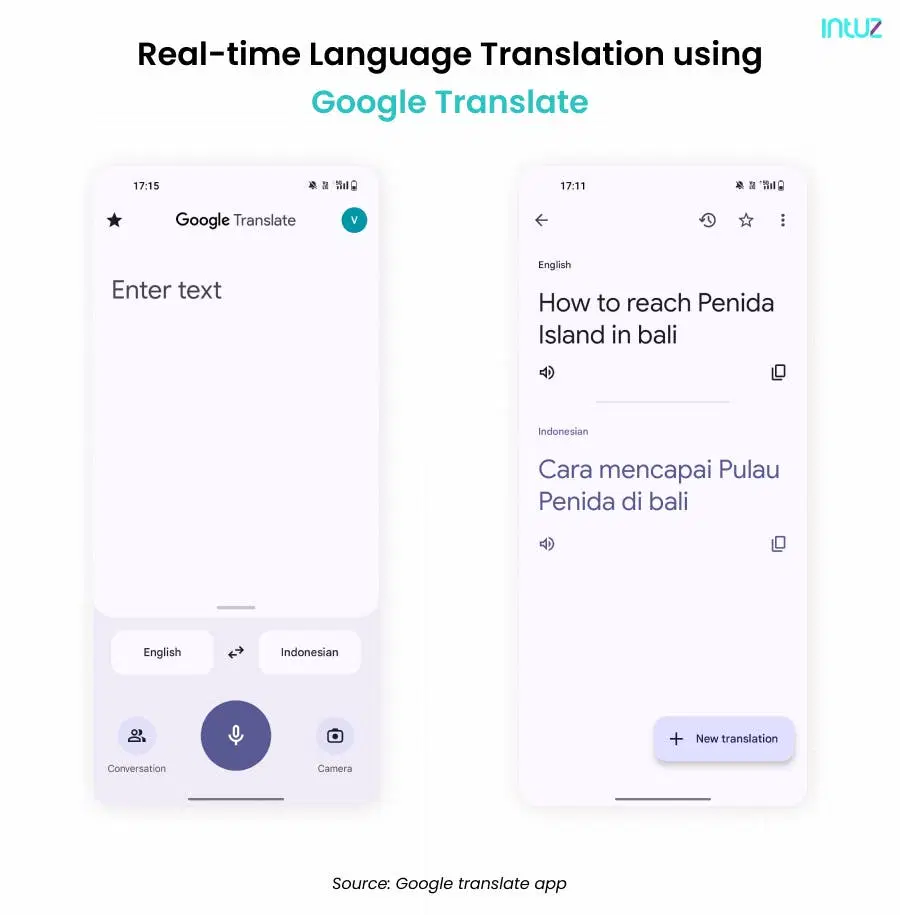
Travel apps with real-time translation capabilities can allow customers to navigate foreign destinations, understand specific signs and customs, and interact with locals hassle-free by simply inputting their queries or uploading pictures onto the app.
Chatbots can, too, provide immediate assistance, answer FAQs, help with bookings, and offer support to everyone, regardless of their language proficiency. This use case of Generative AI boosts accessibility for customers.
For the longest time, Google Translate has helped users with real-time translations. It recently rolled out a new “Conversation Mode” feature that allows travelers speaking different languages to engage in two-way conversation.
On the other hand, travel companies can sell holiday packages to exotic locales using AI-powered translation tools on their website that instantly translate descriptions of hotels, tours, and destinations, along with booking instructions and policies in the preferred language.
That way, potential customers can research a country or continent in their language and take the call on whether or not they want to go ahead with a holiday package.
6. Boost profits with dynamic pricing strategies
Dynamic pricing is a pricing differentiation strategy that leverages advanced AI algorithms to analyze factors such as market positioning, supply, demand cycle, and other external elements like weather conditions, holidays, and local events.
Dynamic pricing is also referred to as demand, time-based, and surge pricing. It enables customers to adjust their trips according to their budgets and suppliers (e.g., travel companies) to modify their offers accordingly.
For example, Generative AI evaluates booking patterns to forecast demand for specific destinations, seasons, or dates. It monitors competitor pricing and market shifts and tracks price sensitivities and preferences of different customer segments.
Airbnb, for instance, utilizes dynamic pricing to adjust the cost of listings based on numerous factors, including location, booking dates, property size, and local demand.
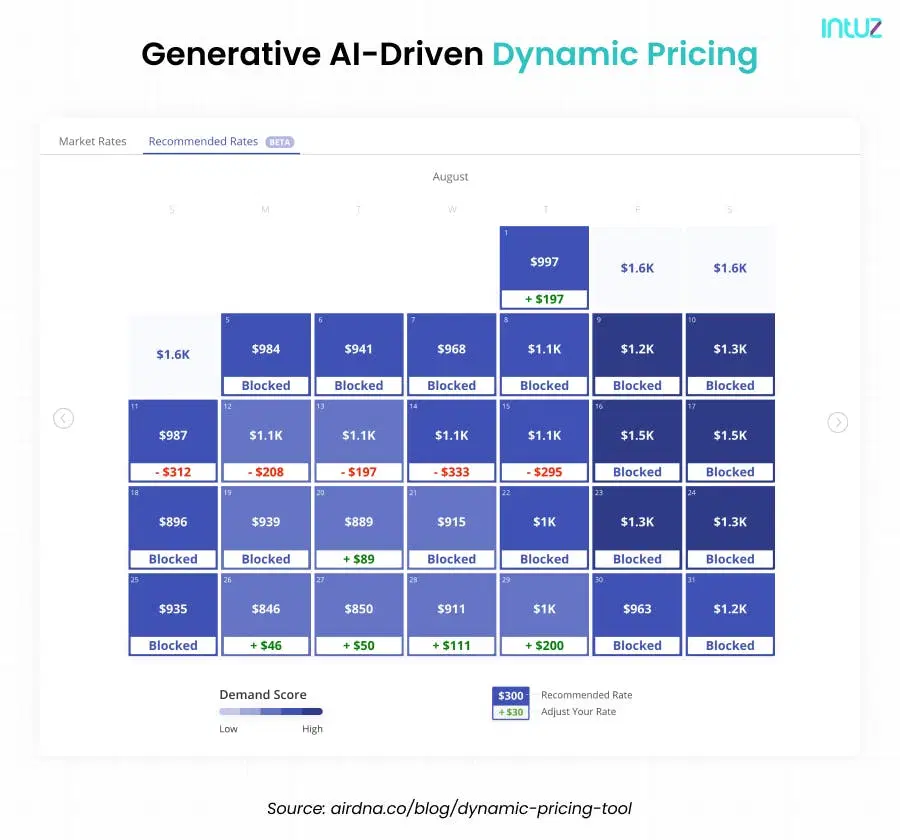
When an Airbnb host selects a price within 5% of their price tip recommendations, they are nearly 4x more likely to get booked than those whose prices are more than 5% off from what Airbnb recommends.
Dynamic pricing benefits travel companies:
- They can capture more bookings at an optimal price point by ensuring higher occupancy rates for flights or hotels.
- Because they get access to real-time data, which reflects current realities, they can adjust their rates to stay competitive in the market and ensure their services are neither overpriced nor underpriced.
- They can offer better deals and improve overall customer satisfaction by strategically lowering prices during off-peak times.
7. Enhance traveler interaction through AI-driven content
Words have a lot of power, especially in travel planning. How some place has been written about or presented in photographs or videos can inspire and influence decision-making.
Generative AI has transformed content perception enormously, making it more critical than ever. Travel companies must take this tool seriously to attract new audiences and sell the best possible holiday experience.
Here is how:
- Thanks to the advent of DALL·E and Sora, they can create high-quality images and videos of travel destinations, offering a virtual taste of what the travel experience can be. These visuals can be used in social media campaigns where aesthetics matter.
- AI can craft compelling narratives about destinations, weaving historical facts, anecdotes, and local legends that would make an exciting addition to the site’s blogs, brochures, and ads.
- From the sounds of a bustling city market to the serene ambiance of a secluded beach, AI-generated audio can provide a one-of-a-kind auditory experience, helping travel companies sell the “essence” of being at a place.
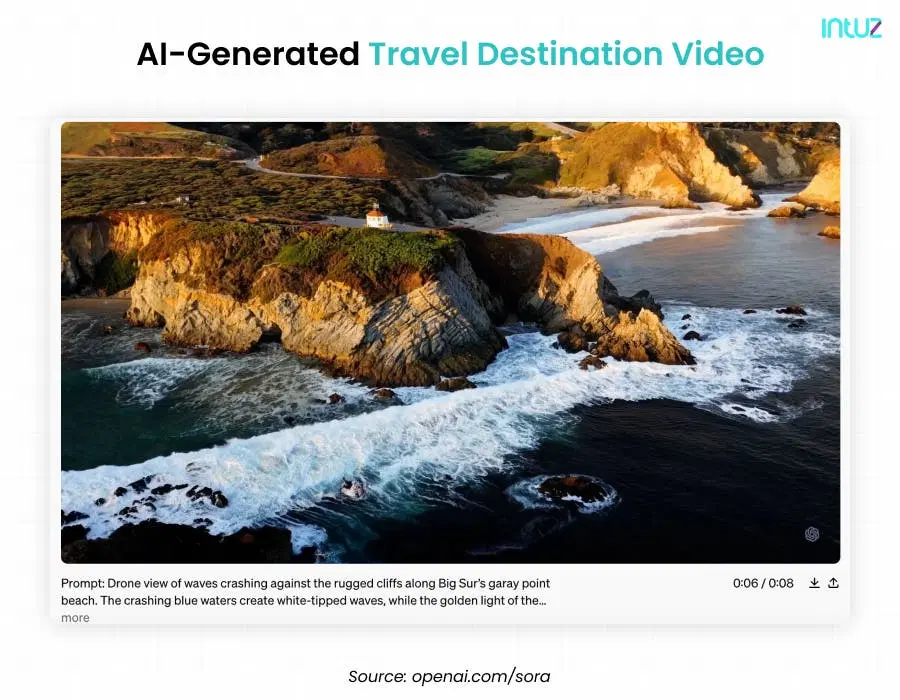
With Generative AI, they can produce superior content at a fraction of the cost and time. They can initiate customer interactions by creating content in different formats and languages. All of this increases the likelihood of converting more customers and increasing revenue.
8. Provide immersive holiday experiences with virtual tours
According to a Booking.com survey, travelers are increasingly experimenting with the Metaverse. Regarding Virtual Reality (VR), 46% agree they are more likely to travel to unfamiliar destinations after experiencing VR.
To boost tourism, Saudi Arabia leveraged VR technology to allow digital tourists to explore the ancient city of Hengra, the country’s first UNESCO World Heritage Site.
Because Generative AI can produce detailed and realistic images, sounds, and even 3D models of places based on photographs, videos, and other data inputs, travel companies can serve virtual tours as a powerful marketing tool to showcase the potential of their offerings.
They can build trust and confidence among potential customers, reducing booking hesitations and boosting higher satisfaction rates.
Travel companies can also suggest customized tours that highlight attractions and experiences particularly relevant to the individual, enhancing the personal connection to the destination.
How Generative AI in travel works
Generative AI in travel works by using artificial intelligence to create personalized travel plans, itineraries, and recommendations based on user input. Here’s a simplified explanation:
Step 1: User input
AI collects users’ data such as their past booking history, ongoing searches, Items saved to wishlists, demographics, preferred types of accommodations, desired activities & experiences, and many more.
Step 2: Generative AI processing
AI analyzes these inputs using machine learning models trained on large datasets.
Step 3: Data sources
The AI pulls data from flights, hotels, local attractions, and reviews.
Step 4: Personalized output
The system generates custom itineraries, hotel options, and even AI-generated travel guides or descriptions.
Step 5: User action
Travelers can review, adjust, and book their trips directly.
Strategies for effectively using Generative AI in travel
1. Safeguarding traveler data and ensuring compliance
User data must be protected when implementing generative AI in travel platforms. This can be done through encryption, anonymisation, and secure storage, as it helps prevent breaches. Platforms also need to be compliant with global regulations.
Also, it is recommended to seek explicit user consent. Such transparency can build trust. The bottom line to incorporating Gen AI in travel solutions is the prioritisation of privacy. However, securing personal information should not come at the cost of functionality.
2. Designing AI solutions with user experience in mind
A well-designed genai travel planner application should feel intuitive. Gen AI is built to simplify tasks. So, an app using it should complete the tech with clear interfaces, easy navigation, and personalised interactions. Sought out continuous feedback loops to refine the navigation journey and develop a seamless user experience.
3. Promoting fairness, transparency, and ethical AI use
Our AI-powered travel app development team prioritises ethical AI use. This can help in reducing biases and maintain transparency. The idea is to foster a sense of trust among users. This can only happen when a travel app allows users to control their digital interaction.
4. Enhancing AI performance through continuous learning
AI models improve with real-world data. Regular updates help generative AI in travel adapt to trends, ensuring relevant and accurate responses. Monitoring AI-generated insights can also help refine suggestions to make the system more reliable and responsive towards evolving travel needs.
5. Personalised travel experiences with user-controlled features
Customisation matters. With gen AI in travel, users can adjust preferences, receive tailored recommendations, and set filters. Whether it’s flights, hotels, or activities, AI adapts based on individual choices to create a flexible and engaging travel experience.
6. Rigorous testing for reliable AI performance
AI must function accurately in diverse scenarios. Before launching a gen AI travel planner application, it must undergo extensive testing to guarantee stability. Developers can identify errors early when simulating real-world use cases and improve accuracy. A well-tested AI system delivers seamless interactions without unexpected failures.
How Intuz can transform your travel business with AI development solutions
If you’re in the travel business or tour operator looking to revolutionize your services with our custom AI solutions, take the next step now!
Book Your Free 45-minute Consultation with Our AI Experts Today!
During this exclusive, personalized session, you’ll receive:
- An assessment of your travel business’s AI readiness and identify potential use cases
- A detailed strategy and implementation roadmap for integrating AI-driven chatbots and virtual travel assistants
- Insights into advanced AI algorithms for demand forecasting to better anticipate and meet customer needs
Over to you
The future of travel is here, and yes, it is AI-driven, promising adventures like never before.
McKinsey reports that businesses that invest in AI tools see a revenue uplift of 3% to 15%, indicating that this offers a silver lining to travel’s multidimensional nature in current economic turbulence.
Enthusiasm for in-destination activities has increased. There is a growing interest in more offbeat locales. And the return of baby boomer travelers in greater numbers adds to the positive indicators for travel.
To drive sales, travel businesses can potentially experiment with innovative strategies like VR tours, dynamic pricing, and generative AI in digital marketing to enhance customer engagement and drive conversions.
FAQs
How is generative AI used in the travel industry?
There are many use cases of Generative AI in travel industry. It can automate itinerary planning, personalise recommendations, and enhance customer support. Airlines and hotels use Gen AI to analyse user preferences, past bookings, and real-time data. AI-driven chatbots have also been used to accelerate the handling of booking queries, while predictive algorithms optimise pricing and availability.
How long does it take to integrate a generative AI solution into an existing travel platform?
Integration timelines vary by use case. Adding an AI chatbot to an existing travel website typically takes 6–12 weeks. Building a custom recommendation engine integrated with booking systems, CRM, and third-party APIs generally requires 4–6 months. Full-stack solutions with personalization, dynamic pricing, and virtual tour functionality can take 9–18 months. The fastest path to deployment is a focused pilot — one use case, one data source, measurable KPIs. Intuz typically begins with a readiness assessment and 45-minute strategy session before recommending a sequenced implementation roadmap tailored to your platform’s existing tech stack.
What does it actually cost to build a generative AI travel planning tool?
Building a generative AI travel planning feature depends on scope. A chatbot-based itinerary planner with NLP and booking integrations typically starts at $30,000–$80,000 for an MVP, while a full-stack AI personalization engine with dynamic pricing and multi-language support can run $150,000+. Timeline ranges from 3 to 9 months depending on integrations. Factors like number of data sources (flights, hotels, reviews), model complexity, and compliance requirements (GDPR, PCI) drive cost. Most travel businesses start with one focused use case — like an AI booking assistant — and expand from there based on adoption and ROI.
How can generative AI improve the traveller experience?
AI-powered tools provide highly customised travel experiences. This is done by predicting preferences and adapting to real-time conditions. AI-powered travel apps can get users tailored itineraries, automate their hotel check-ins, and provide instant language translations. It can also assist with luggage tracking, security screening, and proactive customer support. As a result, travellers can navigate unexpected disruptions and enjoy stress-free trips.
Which generative AI use case delivers the fastest ROI for travel businesses?
Based on industry adoption patterns, AI-powered customer support chatbots typically deliver the fastest ROI — often within 90 days of deployment — because they directly reduce live agent costs while improving response time and availability. Dynamic pricing comes second, generating measurable revenue uplift within one to two booking cycles. McKinsey data cited in industry benchmarks indicates businesses investing in AI tools see 3–15% revenue uplift. For smaller travel operators, starting with a personalized recommendation engine integrated into the booking funnel is often the best balance of cost, complexity, and measurable conversion impact.
![Best AI & Enterprise App Development Companies in USA [2026]](https://www.intuz.com/wp-content/uploads/2026/05/Best-AI-Enterprise-App-Development-Companies-in-USA-2026.webp)


