


Building a crypto exchange is now a fintech-infrastructure project, not a gold-rush play. Here is the modern stack, the licences you actually need, and why AI now runs the parts that used to sink exchanges.
If you are trying to build a cryptocurrency exchange in 2026, the honest answer is that the trading screen is the easy part. The build has three hard cores, and a founder who underestimates any one of them ships an exchange that either falls over under load, loses customer funds, or gets shut out of every market worth serving.
The three cores are a low-latency matching engine, institutional-grade custody, and a compliance stack that satisfies real regulators. Everything else, the charts, the mobile app, the referral program, sits on top of those three. In 2018 you could launch a crypto exchange as a hype product. In 2026 you are building regulated financial infrastructure on real blockchain development foundations, and the search results, the buyers, and the law have all caught up to that.
Here is what actually goes into it, in the order that decides whether the exchange survives.
What does it take to build a crypto exchange in 2026?
At a minimum, a production exchange is seven layers working together. If any one is weak, the whole thing is weak.
- Matching engine. The core that maintains the order book and pairs buyers with sellers in a fixed, fair order. Built for speed and correctness above everything else.
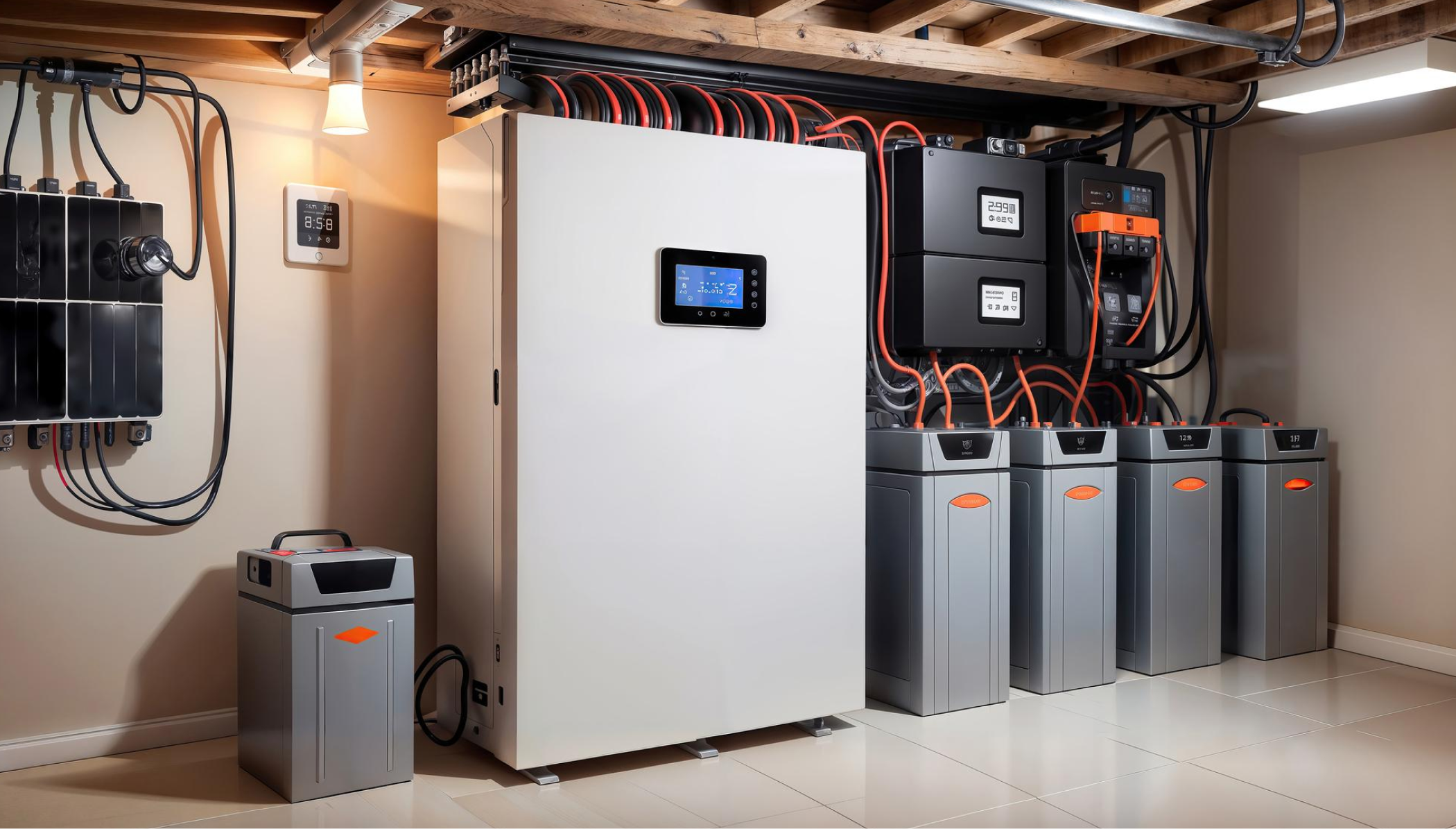
- Custody and wallets. Where the money lives. In 2026 this means multi-party computation or multi-signature keys, with the large majority of funds in cold storage.
- Compliance and KYC/AML. Identity verification, sanctions screening, and continuous transaction monitoring. Now largely AI-driven because manual review cannot keep pace.
- Liquidity. Market-maker connectivity and, often, liquidity aggregation from other venues so the order book is not a ghost town on day one.
- Fiat on and off ramps. Banking and payment partners that let users move real money in and out. Harder to secure than any line of code.
- Proof of reserves. A public, cryptographic attestation that customer funds actually exist. After 2022, this is not optional.
- Admin and risk console. The back office where operators manage listings, fees, limits, and incidents.
Answer the question directly: to build a crypto exchange you engineer those seven layers, you obtain a licence for every jurisdiction you serve, and you wire AI into fraud and compliance from day one rather than bolting it on after your first enforcement letter. The rest of this guide is how each of those actually works in 2026.
The matching engine: the core nobody sees
The matching engine is the heart of the exchange. It holds the order book, enforces price-time priority, applies your maker-taker fee logic, and settles every fill, ideally in a single hot path measured in microseconds.
This is the one component where you cannot cut corners with a generic web stack. Serious engines are written in low-latency languages, usually Rust, C++, or Go, because execution speed directly sets trade priority. A competent 2026 engine matches orders in sub-millisecond time and sustains anywhere from ten thousand to well over a hundred thousand orders per second. Get the data structures and concurrency model wrong and you get mispriced fills, race conditions on balances, and an order book that drifts out of sync with reality. Those are not cosmetic bugs. They are how an exchange loses money and trust in the same afternoon.
The practical lesson from building trading systems: design the matching engine as a deterministic, single-writer core, and keep everything non-deterministic, notifications, analytics, charts, off the hot path. Determinism is what lets you replay the order book, audit a disputed trade, and recover cleanly after a crash.
Custody and wallets: where exchanges actually die
More exchanges have died from custody failures than from slow matching engines. This is the layer that keeps compliance officers and CTOs awake.
In 2026 the table-stakes standard is multi-party computation, or MPC, on hot and warm wallets. MPC splits a private key into multiple cryptographic shares held by separate, independent nodes, so no single person, device, or server ever holds a complete key. That removes the single point of failure that older single-key or even basic multi-sig setups still carry. Enterprise custody platforms like Fireblocks, BitGo, and Copper have made this the default rather than a differentiator.
The second half of custody is cold storage. The accepted 2026 posture is to keep roughly 90 to 98 percent of client crypto in air-gapped cold storage, with only a thin operational float in hot wallets for withdrawals. Vaulting services such as Ledger Vault and Coincover exist precisely to hold that long tail safely. The engineering discipline is boring and non-negotiable: least-privilege access, hardware security modules, withdrawal allowlists, and human approval thresholds for anything moving out of cold.
Proof of reserves: the post-FTX table stakes
Before 2022, “trust us, the funds are there” was an acceptable answer. It is not anymore. After the collapses that wiped out customer balances, the market now expects cryptographic proof.
The standard is a Merkle-tree proof of reserves, refreshed on a regular cadence, monthly is the emerging norm. It lets any user verify that their balance is included in the exchange’s attested total holdings without the exchange exposing every account. If you are building an exchange in 2026 and proof of reserves is on your “later” list, you have misread the market. Institutional partners, serious retail users, and increasingly regulators treat it as a baseline signal of solvency and honesty. Build it into the architecture from the start, because retrofitting attestation onto a system that was not designed to expose verifiable balances is painful.
How do you get a crypto exchange licensed in 2026?
This is the part the 2018 playbook got most wrong, and the part that now decides your addressable market. You do not “launch and figure out compliance later.” You pick your markets, then you get licensed for them. Here is the current map.
- European Union (MiCA). A single Markets in Crypto-Assets CASP licence passports across all 27 member states from one authorization, which no other regime offers. Minimum capital runs from roughly €50,000 to €150,000 depending on the services you provide. The transition window closes on July 1, 2026: after that, an exchange still running on a legacy national registration cannot legally serve EU clients. As of August 2026, the official ESMA register listed 325 authorised CASPs, including Kraken, Coinbase, OKX, Crypto.com, Bitstamp, and Bitpanda.
- Dubai (VARA). The Virtual Assets Regulatory Authority runs one of the more demanding regimes, with capital requirements reaching around AED 1.5 million, roughly $390,000, for combined exchange and custody services. In exchange you get a credible base for the Gulf and a regulator that specializes in the asset class.
- United States. There is no single national licence. You register as a Money Services Business with FinCEN at the federal level, then obtain Money Transmitter Licences state by state, which can mean dozens of separate applications. New York’s BitLicense and California’s DFAL, effective July 2026, are standalone regimes with their own bars. On top of that sits a fast-moving federal layer: the GENIUS Act, signed into law in 2025, created the first US framework for payment stablecoins with a 1:1 reserve mandate, and its implementing rules are due in 2026. The CLARITY Act, which would assign the CFTC clear jurisdiction over spot digital-commodity markets, passed the House in 2025 and is pending in the Senate.
The strategic read for a founder: MiCA gives you the broadest single-application coverage, VARA gives you a compliant Gulf hub, and the US gives you the largest market at the highest regulatory cost. Sequence your licensing to your actual go-to-market, not to a fantasy of serving everyone on day one. If a token launch is part of your roadmap, the same compliance-first thinking applies. See our guide on how to launch and market a crypto token.
Why AI now runs fraud detection and KYC
The compliance layer is where 2026 diverges most sharply from 2018. Back then, “integrate a KYC API and keep records” was adequate advice. Today that is table stakes, and the real work is continuous, AI-driven monitoring, for one blunt reason: the attackers automated first.
Machine-learning models now score risk dynamically by reading transaction patterns, wallet histories, and behavioral signals, flagging synthetic identities, mixer usage, and abnormal transfer patterns that a rules-only system misses. Real-time AI transaction monitoring cuts manual review load and, done well, reduces false positives, which is the difference between a compliance team that scales and one that drowns. Regulators in 2026 are also explicit that they will assess whether monitoring controls actually function in practice, not whether they merely exist on paper. This is where AI in fintech has moved from a nice-to-have to the core of a compliant exchange.
Two forces make this urgent. First, deepfake and AI-generated identity fraud is now a material KYC risk: the cost of producing convincing synthetic video has fallen far enough that document-and-selfie checks alone are no longer safe, so liveness and behavioral signals matter more than ever. Second, the FATF Travel Rule requires exchanges to collect and transmit originator and beneficiary information for qualifying transfers above roughly the $1,000 equivalent threshold, and enforcement of it keeps expanding jurisdiction by jurisdiction. FATF has separately flagged that most on-chain illicit activity now runs through stablecoins, which is exactly where your monitoring needs to be sharpest. A custom AI fraud-detection model built for your transaction profile beats a generic rules engine here, and it is not a feature you add after your first suspicious-activity backlog.
Build, buy, or white-label: which path fits you?
The old article framed this as in-house versus open-source script versus white-label. The 2026 version is more nuanced, because the tooling is more modular.
- Full in-house build. Maximum control and differentiation, maximum cost and time. Justified when the matching engine, custody model, or product experience is your actual edge. Most first-time exchanges do not need to write their own custody stack when audited platforms exist.
- White-label exchange software. Fastest route to a live venue, lowest control. Fine for a straightforward spot exchange in a single market, risky if you plan to differentiate or scale into regulated complexity, because you inherit someone else’s architecture and their limits.
- Modular assembly (the pragmatic 2026 default). Build or heavily customize the layers that are your edge, usually the matching engine and product, and integrate best-in-class vendors for the layers that are pure risk: custody, compliance and monitoring, and liquidity. This is how most serious new exchanges are actually built now.
The decision rule: own what differentiates you, buy what only needs to be correct and secure. Writing your own MPC custody to save a licence fee is how teams turn a solvable problem into an existential one.
How much does it cost and how long does it take?
There is no honest single number, and anyone who quotes you one without asking about your markets and licences is selling something. The cost breaks into four buckets, and licensing is often the one founders underestimate.
- Licensing and capital. Real and jurisdiction-specific: MiCA capital of roughly €50,000 to €150,000, VARA capital around $390,000, and a long tail of US state application and bonding costs if you go there.
- Engineering. The matching engine, wallet integration, compliance orchestration, fiat rails, and front ends. A compliant, multi-market build is a substantial multi-quarter effort, not a weekend fork.
- Security and custody tooling. MPC custody, cold-storage infrastructure, audits, penetration testing, and proof-of-reserves attestation.
- Ongoing compliance. Monitoring tooling, a real compliance team, and audits that never stop. This is a run cost, not a one-time line item.
Plan for a build measured in quarters and a budget dominated by compliance and security, not by the trading UI. The exchanges that survive are the ones that treated those as the product.
Build your exchange with a team that ships regulated fintech
A crypto exchange lives or dies on the parts users never see: the matching engine, custody, and compliance. At Intuz we build production fintech, blockchain, and AI systems for teams that have to get those right the first time. If you are planning an exchange or any regulated digital-asset product, talk to our team and we will help you pressure-test the architecture, the licensing path, and where AI actually fits your compliance stack.
FAQs
How much does it cost to build a cryptocurrency exchange in 2026?
There is no single figure, because licensing and compliance dominate the budget and both are jurisdiction-specific. Expect real capital requirements just to get licensed (roughly €50,000 to €150,000 under MiCA, around $390,000 for VARA), plus multi-quarter engineering, security and custody tooling, and an ongoing compliance run cost. The trading interface is one of the cheaper parts.
Do you need a licence to run a crypto exchange?
Yes, in every serious market. The EU requires a MiCA CASP authorization (which passports across all 27 member states); Dubai requires a VARA licence; the US requires FinCEN MSB registration plus state Money Transmitter Licences, with New York and California running their own standalone regimes. Serving a market without its licence is not a grey area anymore.
What is the hardest part of building a crypto exchange?
Custody and compliance, not the matching engine. Most exchange failures trace back to lost or stolen customer funds or to compliance gaps that got the venue shut down, rather than to slow trading. That is why 2026 best practice puts MPC custody, cold storage, proof of reserves, and AI-driven monitoring at the center of the build.
What is proof of reserves and is it required?
Proof of reserves is a cryptographic attestation, typically a Merkle tree refreshed monthly, that lets users verify their balances are backed by real holdings. It is not yet universally mandated by law, but after the 2022 collapses the market treats it as a baseline requirement for any exchange asking users to trust it with funds.
How is AI used in a crypto exchange?
Primarily in fraud detection and compliance. Machine-learning models score transaction and wallet risk in real time, catch synthetic identities and deepfake KYC attempts, reduce false positives in monitoring, and help satisfy Travel Rule and sanctions obligations. Manual review alone can no longer keep pace with automated fraud, which is why AI monitoring is now foundational rather than optional.
Should you build in-house, buy white-label, or assemble modularly?
For most new exchanges in 2026, modular assembly wins: build or customize the layers that differentiate you (usually the matching engine and product), and integrate audited vendors for custody, compliance, and liquidity. Full in-house is justified only when those layers are your actual edge; pure white-label is fastest but leaves you inside someone else’s architecture and limits.
Work with Intuz
Build Your Crypto Exchange App
Get expert help launching your exchange faster and securely.
Let's Get Started
Share this article