






When we talk about the digital world, the first and foremost thing that comes to our mind is mobile phones. Smartphones are changing how businesses communicate with each other. Nowadays everything is mobile and things are changing as per the new trends. The use of mobile phones is increasing day by day and that’s the reason for the boom of the mobile app. Every business whether it is a small one or a huge enterprise needs an app to target the big mobile user area. But here one important question arises – how much does it cost to develop an app? Every company will think about the cost to build a mobile app and it is important to understand every aspect before you dive into it.
Show
- App development costs range from $25K–$40K for basic apps up to $100K+ for gaming or enterprise-level applications, depending on complexity and features.
- Three key factors determine app size and cost: Scope, Future Goals, and Maintenance & Upgrade requirements.
- Developer location significantly impacts pricing — Indian developers cost ~$25–$30/hour vs. ~$150/hour for US-based developers, making offshore outsourcing a proven cost-reduction strategy.
- App maintenance is an ongoing cost averaging 15–20% of the original development price, covering bug fixes, OS updates, new features, and third-party service support.
- Choosing the right development model — outsourcing, in-house, or boutique agency — directly affects total investment, timeline, and access to talent.
Highlights of cutting-edge mobile app trends
Apps for Foldables
Samsung has introduced a foldable OLED display for which the operating systems are getting ready for many of the use of this technology and improving the experience of smartphones. Google officially announced the foldable support on Android using the screen continuity API in 2018.
As the foldable phone is the new buzzword, you will need to plan for a perfect mobile app development strategy that will support the app to run seamlessly on foldable devices.
Video streaming and gaming apps can give maximum benefits from the foldable device by increasing the screen size or can use the extra space for offering additional information and controls.
IoT-Enabled Mobile Apps
A network of interconnected smart gadgets is called the Internet of Things. In 2019, huge brands like Google and Amazon that have utilized this technology and strengthen the competition in IoT as they have introduced the Echo line of devices and Google Home Voice Controller.
Google is moved to acquire wearable company Fitbit for $2.1 billion and has collaborated with Nest which is a Home security camera manufacturer. There is a continuous supply of chains in retail and smart homes and also in health insurance plans. As the demand for IoT gadgets and systems is increasing, so the demand of IoT-enabled apps development is continuously increasing.
Machine Learning & Artificial Intelligence
Everyone knows that FaceApp got an amazing response in just one night as it was having the fantastic Artificial Intelligence effect. It provides options for adding filters in a user’s picture for showing how they will look like when they are younger or older. The app’s total revenue in October 2019 was $1m.
Artificial intelligence and machine learning have become the most trending technologies in the last few years. AI and ML can do wonders for the mobile app development solution as they are offering valuable data and real-time analytics.
The Rise of Chatbots
Chatbots are rising at a rapid rate as more than 50% of buyers need to do-it-yourself (DIY) custom service tools for expediting for online purchase. Chatbots are the best way to extend that kind of customer relationship management. Gartner says Chatbots will deliver around $8 billion in cost savings by 2020.
There are almost 2.5 million apps in the Google Play Store and 1.8 million in the Apple App Store. You will be surprised to know that there are only a few apps that have deployed chatbots for facilitating better UI/UX services.
80% of enterprises are expecting to make use of chatbots by 2020 and users are appreciating its quick and to-the-point answers. There is no doubt in saying that it is a real business opportunity for integrating a chatbot to your mobile app.
Wearable App Integration
Wearable technology is growing all around the world. As per the statistics, the number of connected wearable devices has reached up to 453 million in 2017 and it has been expected that it will reach 929 million till 2021.
As technology is advancing, we can expect that wearable applications have become a vital part of our everyday lives.
At the WWDC conference, Apple has announced its WatchOS update. Apple Watch apps will not need a companion iOS app and will be having its own App Store. This defines the boost in wearable technology.
Diverse categories of mobile app
1. Health and Fitness Apps
Health and fitness apps are getting a sudden surge in the market as more and more people are becoming fitness freak. Developers also take special interest in creating such kinds of apps for increasing a more healthy and fit life among people all around the world.
Features of health and fitness app
- Supports custom diet plans
- Push notification system and reminders
- Provides social sharing option
- Offers geolocation feature
- Supports gamification
- Integration with device integration
Some of the top health and fitness apps include MyFitnessPal, Headspace, Fitplan, SleepCycle, Aaptiv, Charity Miles, 8Fit, HealthTap and more such.
2. Payment apps
The world is going mobile and people are becoming addicted to the use of mobile phones. Nowadays everybody is doing everything online and so the payments are also happening using the safest and secure payment apps.
Key features of payment apps include –
- Easy-to-use and simple transactions
- Offers attractive UI/UX design
- Supports cloud-based technology
- GPS tracking and navigation
- Integration of wearable device
- High security features
Some of the secured payment apps cover Google Pay, Apple Pay, PayPal, Venmo, Samsung Pay, Square Cash, Zelle, and more such.
3. Social media apps
All of us make use of social networking apps. Social media has captured the whole market and we are seeing a sudden surge in the development as well as the use of social media apps in the market. If we talk about FitBit app then it is a fitness app but it provides in-app functionality to follow friends and create competitions with them.
Features defining the importance of creating social media app covers –
- Encourages easy connectivity
- Capable of customizing separate profiles
- Able to increase user following
- Helps to pick the right platform
- Simple integration with different social media platforms
- Enhanced security and privacy
Some of the best examples of social media apps includes Facebook, Instagram, Path, Circles and more such.
4. Shopping/e-Commerce apps
Online shopping is increasing among all ages of people where you can get amazing offers and discounts. The most important benefit of doing online shopping is that you can choose any item just by sitting at your home with all the comfort.
Features of Shopping app –
- Product search option
- Supports push notifications
- Delivery and product tracking feature
- Offers referral codes, coupons and rewards
- Integration of payment gateway and shopping cart
Some of the top online shopping apps are Shopbop, thredUP, Etsy, Amazon, eBay, OLX, Snapdeal, Zalora, AliExpress and more such.
5. Productivity apps
This is the most important category of apps if we talk about increasing productivity and become more organized and smart to do work on time.
Productivity app covers the below list of features –
- Word processing
- Spreadsheet
- Database software
- Presentation
Some of the productivity apps examples are Calendars, Finance apps, Dropbox, Grocery List Makers, translators and more such.
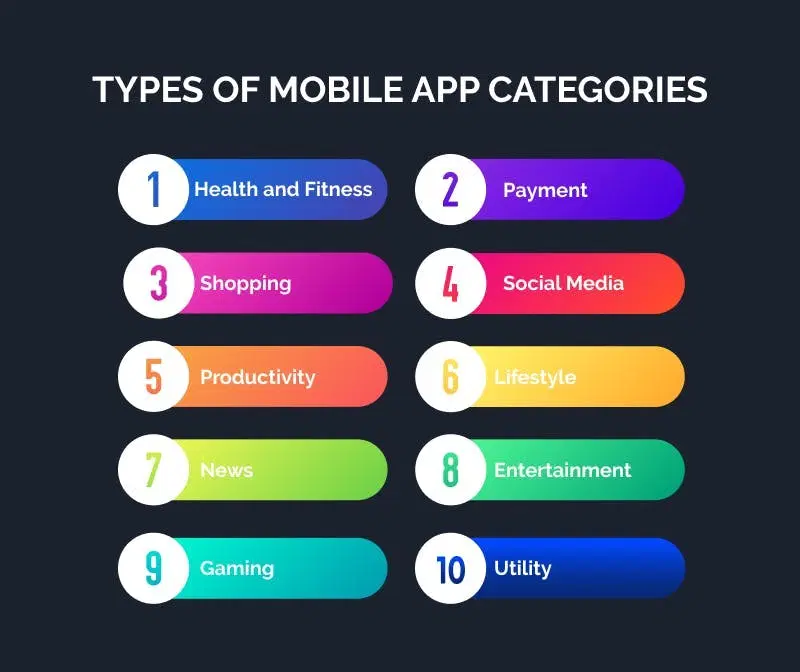
6. Lifestyle apps
There is no doubt in saying that we all always want the full support of apps for making our everyday work much easier. Lifestyle apps enhance our lifestyle and these are the apps that we want to use in our daily routine life.
Features of lifestyle app –
- Attractive user interface
- Simple registration process
- Smooth navigation
- Multiple payment options
- Analytics and product reviews
Some of the best examples of lifestyle apps are Travel apps, Fitness apps, Food and Drink apps, Music apps, Dating apps and more such.
7. News apps
Everybody needs to stay up-to-date in the market with the current evolving trends. In the digital age of journalism, having a news app is a necessity for the media and publishing companies. News apps have several important features and functions that covers sharing functions and news flashing on the apps spread virally providing the fresh and relevant content among a large audience.
Top feature list of news app –
- Simple news viewing
- Separate section for breaking news
- Smart view for news viewing
- Categories for sorting news
- Discover and add channels
- Section for publishers
Some of the top news apps cover Buzzfeed, Flipboard, The NYT app, Dailyhunt, and more such.
8. Entertainment apps
Apps that have the power to boost productivity and interact with a different smartphone use and communicate with friends, family and co-workers and that too nationally and internationally.
Features of entertainment app
- Editing pictures
- Beautiful design themes
- Attractive picture gallery
- Advanced CMS for content publishing
- Push notifications
- Social media sharing
Some of the best examples of entertainment apps includes Netflix, Ted, BookMyShow, Spotify, 9GAG and more such.
9. Gaming apps
Gaming apps are trending from a long time and no matter what is the age of a person, everybody loves to play games. If we talk about the development part of the gaming app then developers love to craft user-engaging and feature-loaded gaming apps.
Features of gaming app includes –
- Attractive graphics
- Amazing gameplay
- Simple to use by users
- Fast loading time
- Better sound effects
- Customer support
Some of the most popular gaming apps are Angry Birds, Pokemon Go, Subway Surfers, PUBG Mobile, Sudoku and Trivia Crack and more such.
10. Utility apps
All utility apps are such kinds of apps that are taking place on your screens right now. All these tools are handy and you can carry them easily for performing simple tasks.
Top-featured list of utility app
- Smart security
- Flashlight usage
- Wireless control
- Watch integration
- Pay bills
- Alarm integration
Some of the examples of utility apps cover calculators, communication apps, note-pads, and weather apps and more such.
Factors that force to craft a mobile app
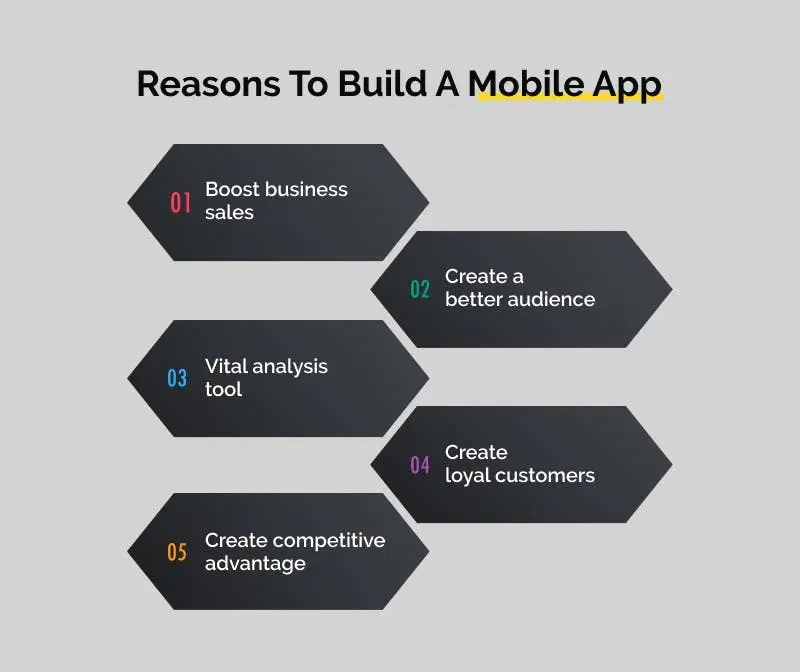
1. Foster Business Sales
Using the best offers and promotions, customers are motivated to buy from your app. You can either send push notifications for directly contacting all the targeted users of the application so that they will always be aware of all the special offers that you are offering. Using mobile apps, customers can also get the option of online payment using the latest payment technologies on their apps and it will create loyalty by building an automated loyalty point on their per purchase that will ultimately increase the motivation to buy from you.
2. Redefine Audience for Your Business
This method will help in building relationships with your customers from all over the globe having no dependency on where you both live. If the app is already installed on the customer’s phone then there will be no need of remembering the web address or use a search engine for finding your business. A new user will always fill their personal information when they will be completing their registration so that you can always be in contact with them. You can offer incentives for inviting new for downloading your app.
3. An imperative business tool
Using a mobile app adds a perfect way to collect all the useful information that you will need for the analytics. You can even check on taps per view for learning which of your products your customers are buying the most and also you can see how much time they are spending on your app and which are the major functions with they are happy to perform on the app. Always keep the track on user behavior and that’s how you can understand different things on which you need improvement to make it more useful.
4. Helps to build loyal customers
Modern customers run behind comfort and convenience. If your app is giving both then there are full chances to get more and more loyal customers. Nowadays people want everything at the tap of their mobile phones whether it’s about ordering food or doing online shopping or any other activity. If your app is fulfilling the original purpose of providing comfort to your users then you can create many loyal customers for your app. You will need to constantly improve and evolve your product and services for increasing loyalty among your customer base via numerous mobile app marketing techniques.
5. Creates a competitive advantage
There are still many business owners who have not developed an app to showcase their business for the mobile audiences. The competition is huge and if you want to be on the first position or want to lie in the list of top ones then you have to be quick in adopting the latest technology. The market is so competitive and to keep your place in the top list, you will need to take as many opportunities as you can for increasing brand awareness.
Top factors affecting cost of mobile app development
Factors influencing the cost of mobile app development
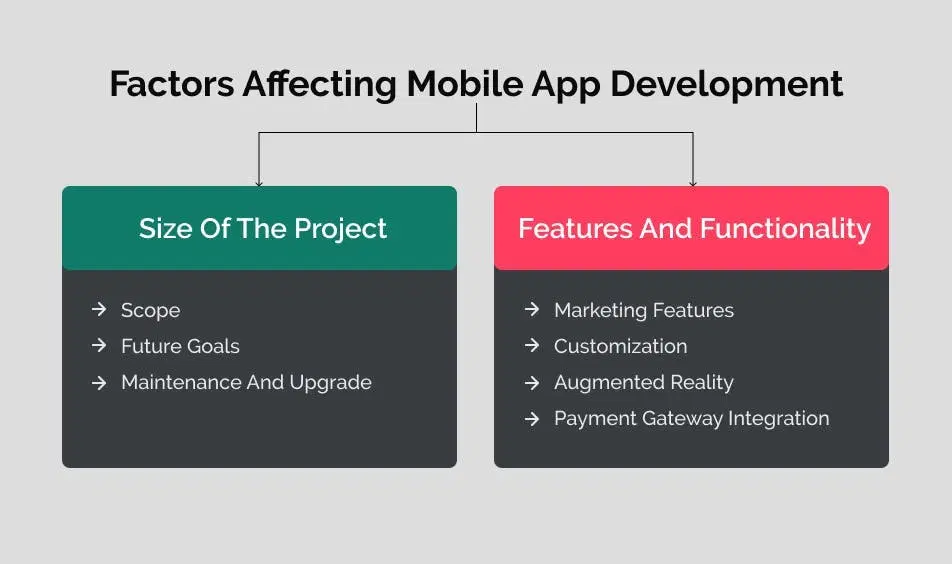
Size of the project
There is no doubt in saying that the size of the project will affect the overall development time. The larger file size will be having complex features included in it and obviously will take extra time to complete that particular project. On the other side of the project size is small and with limited features then it will not take much time to get completed.
If we talk about the size of the project taking an example then a gaming app having complex features will take extra time in getting completed where a simple app like a calculator with limited features will not take much time in getting completed.
Typically, three factors are responsible for finding out the app size and also help in finding the length of the development that are Scope, Future Goals, and Maintenance and Upgrade.
Scope
The outreach of the application is meant by its scope. If your app is meant for the local business or is meant for a huge enterprise that will be required a large number of APIs in its back-end.
It is clearly understood that the difference between the two business models and the size of the app can be imaged. So the scope of the app will take the device screen size and the targeted development platforms.
User accessibility of your app offers what is linked with the depth of the application. In the previous case, the app will not be utilized frequently and the user will open it when it is required and will not take long development time.
Future Goals
Any app development idea has some future goals hidden in it. The main purpose of which businesses make use of apps is to enhance their overall business processes and boost the accessibility that customers have. The end goal lies in connecting and interacting with customers without any efforts and make it a useful tool for current business.
A fruitful app with intuitive features can add more depth. The more you will be having complex features in the app, the more time it will take to develop the application. If you are thinking to use common plugins in the application for adding some functionality then the developer will need to install them in the app and it will take very less time.
Ensure to build an easy to use mobile app so that your users will connect to it without facing much efforts.
Maintenance and Upgrade
App maintenance and upgrade is equally important to keep your app active and rocking in the market.
Ensuring a bug-free app needs timely maintenance and upgradation that can come by following certain things –
- To add new feature update it the app
- Make sure your app will support the new hardware and software
- Fix all the errors and bugs as soon as you find them
- Keep on tracking the app performance
- Monitor licenses
- Make sure that your users’ interfere is updated
- Don’t forget to upgrade the app with the current OS version
Features and Functionality
The number of features and functionalities that are involved in the application is the most important factor that will influence the overall mobile app development time. The more features and functionalities your app will be having, the more time it will take in the design, development and testing stage.
Push Notifications
With the help of push notifications, you can directly communicate with your customers by integrating a device. Its main purpose lies in reporting on new features, sending offers that will drive user engagement and different monetization opportunities.
Customization
Customizing the whole content, system functionality and layout of the app, the experience can be tailored for meeting user’s needs. Items can be more around an interface for prioritizing the taste of the user, selecting interesting topics and colors and other factors that are related to the visual design that can be altered.
Payment Gateway Integration
Accepting payments is a vital thing in trading and is equally important for marketing purpose. It is highly advantageous for boosting sales raising and companies’ market share. The feature is used for checking user’s information like validation and checking whether the right amount of money for purchasing has been put or not.
Artificial Intelligence Integration
The potential of Artificial intelligence is huge in the field of mobile applications. It has been said that scientists from the US have done a closed study on AI. The important thing about the research was done by the full impact of development analysis on the new technologies that will be safe in terms of human safety, social structure, psychology and other spheres.
Platforms that are used for creating an app
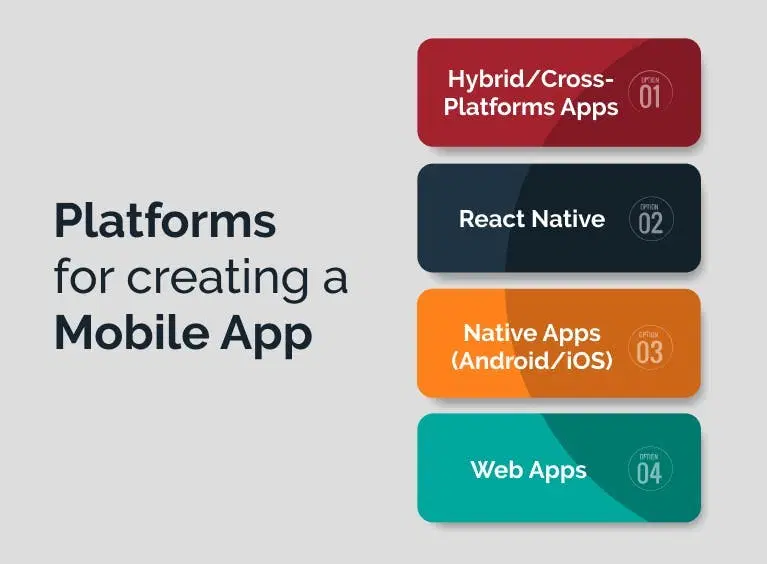
Hybrid/Cross Platforms Apps
Hybrid or cross-platform apps are best suited for approaching a larger audience from the beginning of time. These apps are built using the combination of web and native technologies. That’s why it has low development and maintenance costs. Although they are not as perfect or has as capabilities like that of native apps. Despite all these points, hybrid apps can run effortlessly on all kinds of operating systems that cover Android, iOS and Windows. Cross-platform app development cost depends on the complexity of the app that you want to include in the app.
React Native Apps (Android/iOS)
When it comes about the performance of the app, then React Native App Development is famous for offering optimal performance. It has the capability to reuse the codes and pre-developed its components. React Native has a large community of developers who are experienced and skilled to manage React Native App Development Process. It is one such framework on which thousands of apps are built whether they are fortune 500 companies or startups, everybody loves to use React Native. Facebook, Facebook Analytics, Facebook Ads Manager and Instagram are some huge examples which are developed using React Native.
Native apps (Android/iOS)
Huge apps that aim for high perfection when it comes to user experience and performance that makes use of native apps. There are few platforms like Android or IOS Native app development and also Windows. All these apps have full capability to directly communicate with the hardware of smartphones like GPS, camera and more such. It can be downloaded from application stores. They have a lot of complexities and are called as the most expensive ones. The average iOS or Android app development cost is $38K.
Web Apps
Web applications are a simple version of a website. The initial feature that covers all the other features in a web app is its mobile-friendliness. Most of the users expect larger than a web application as it has limited features and low performance as compared to the native apps. These apps cover the least complexities of all.
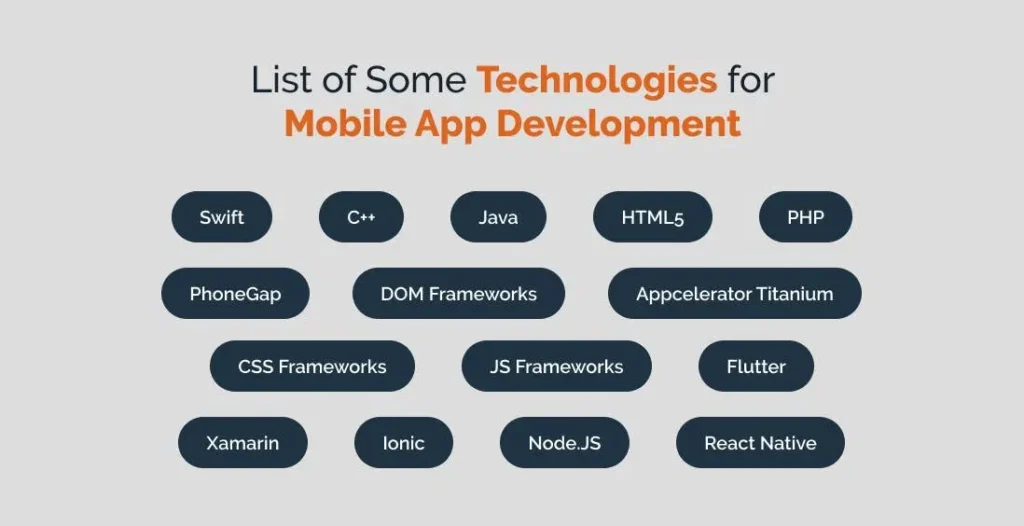
Tech Stack Requirement for mobile app development
The complexity of Design and UI/UX of App
- It is always observed that what that is not so functional is not so good. Every app element exists for any particular reason and consist of a function.
- It uses familiar user patterns and there are certain things that users expect to have in your app. People wants a button to do something in the app, a select box and so on.
- It has an internal consistency that will cover all the elements and every part of the application. These covers element size, navigation, color terminology and more such.
- It consists of a high level of standardization and some kind of information that repast on different screens and some functionality is present in them like elements that help in showing information or perform some functional work throughout the app.
- It always has respect for the underlying code that can be accustomed to working on typical MVC systems.
- It has high a level of abstraction that does not come under programming language. Although its CSS code can be written in an object oriented manner.
Backend App & API
While developing a mobile app, it’s OS that offers the backend to developers having APIs that does data exchange between an app and a database. For the need of tracking the user activity and accessing the consumer app performance, it will acquired with analytics. It depends on the number of parameters that you are going to track and the cost will vary as per your detailed and specified tracking.
App Administration
The admin panel is undoubtedly a useful tool to manage the content of an app, statistics and users. There are several options that are adopting the current admin panel templates for the needs of users but it will be good if you will go with the best one. That’s why it is a good idea to build a separate panel for meeting all your business requirements.
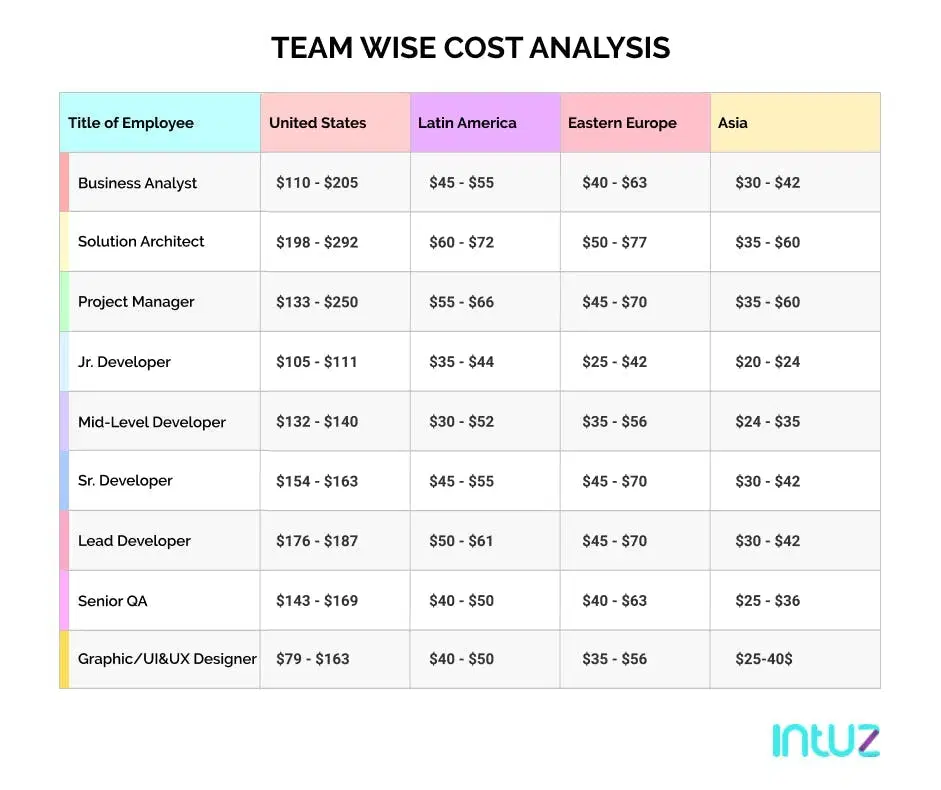
Team Structure
Mobile app development takes the involvement of a lot of person and a good app is the result of all people’s effort. Also, the cost of mobile application development depends on many factors. Among all other factors that come under mobile app development, the team length and app size decide the cost to develop an app.
App maintenance cost
Mobile app maintenance cost is the most important point to consider when you are building a mobile app. The app maintenance cost may vary around 15% to 20% of its original development price.
Mobile app maintenance covers many points that include
- App updation
- Bug fixing
- Design changes
- Improving stability and performance
- Code optimization
- Support for current OS versions
- Building new features
- Support for latest versions of third-party services
The overall average cost to develop a mobile application
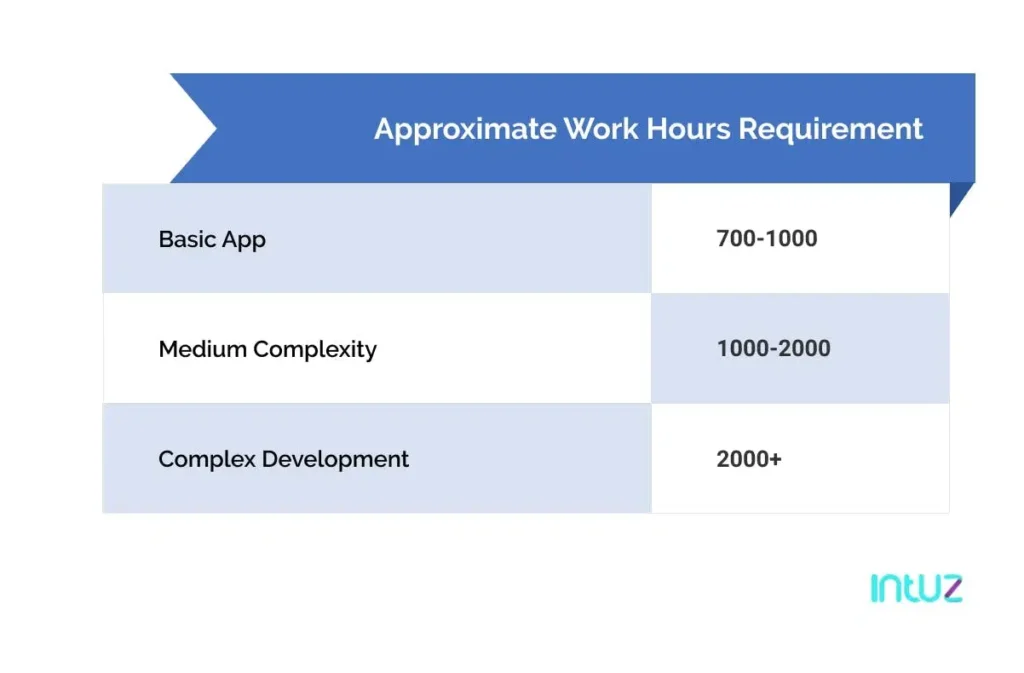
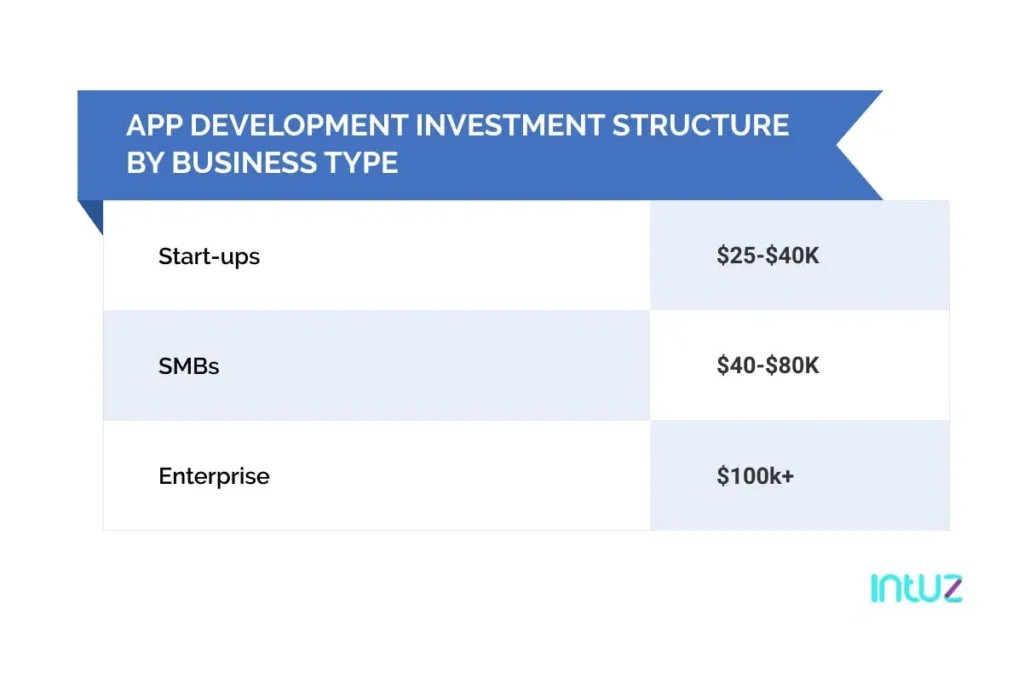
It is always very difficult to estimate the cost to create an app and always one question arises that is how much it costs to develop an app.
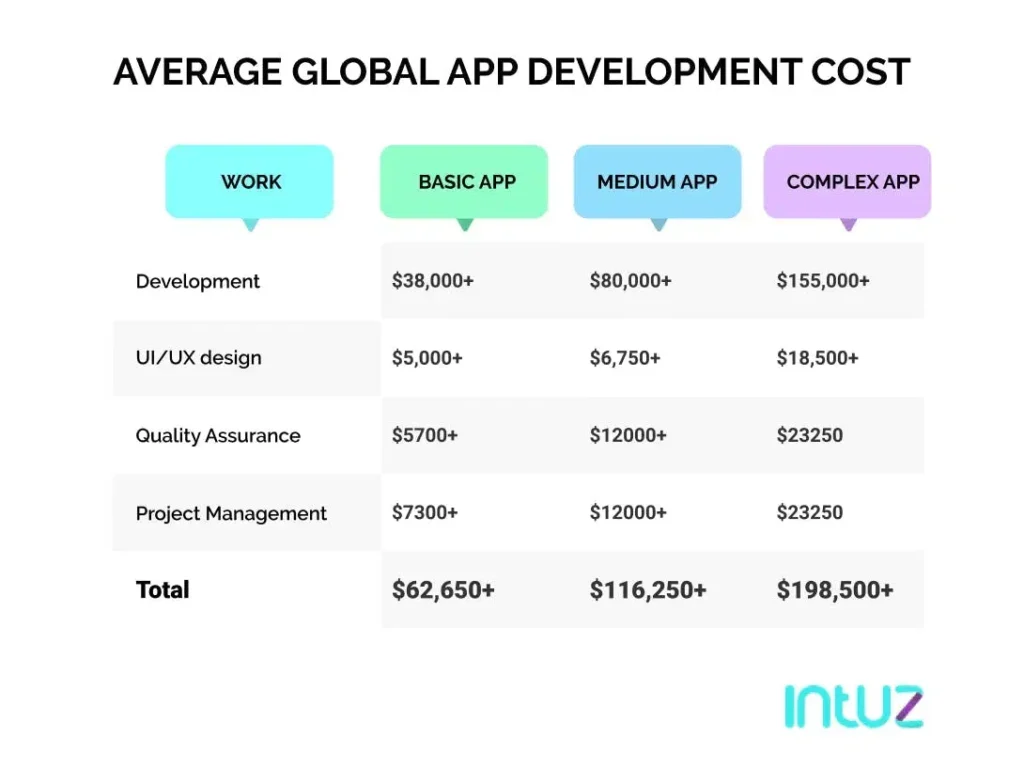
Cost to build basic apps
The development range to build basic apps in between $25-$40K and all such apps include diet planners, calendar apps and more such.
Cost to build apps with web servers
All types of apps that use web servers cost between $40 – $80K and require sophisticated programming and saves data on the remote servers.
Cost to build on-demand apps
The average cost for creating on-demand apps ranges between $10K – $45K and comes with powerful security features that helps in keeping user data secure.
Cost to build gaming apps
The cost of gaming apps ranges between $100K+ or higher than this. Gaming apps require to make use of complex virtual reality and even simple features that will probably cost high.
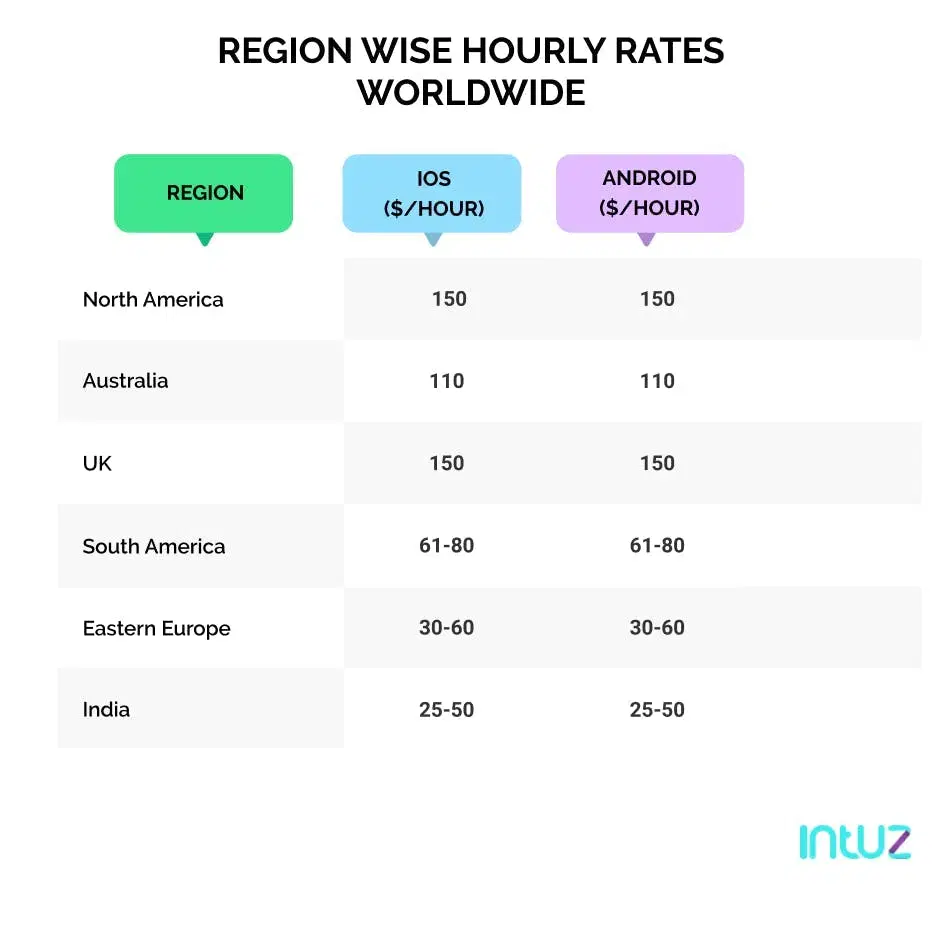
Cost breakdown as per the stages of app development
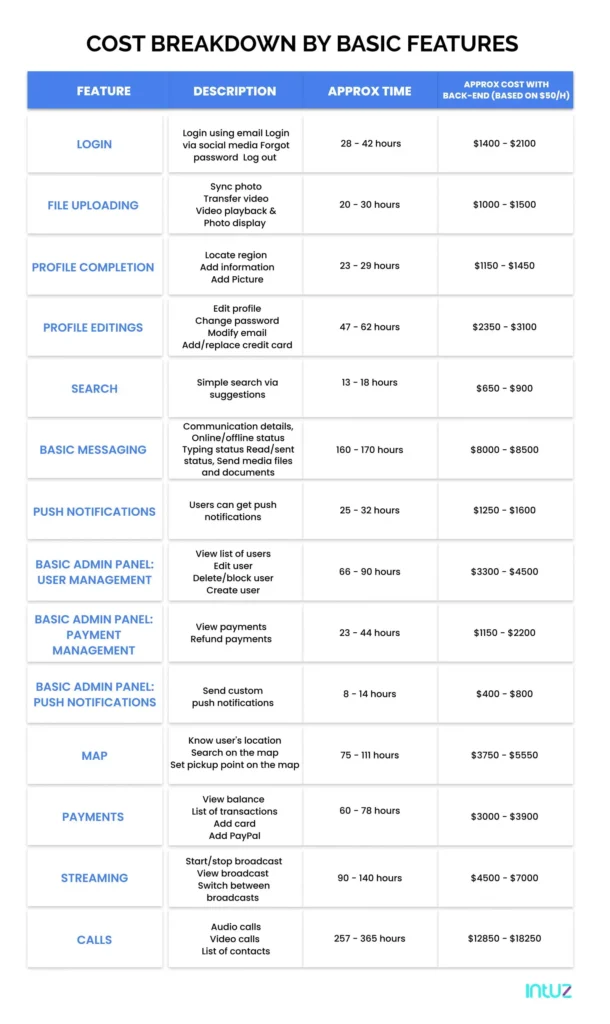
Planning
While deciding to work on the mobile app development project, it is important to first plan a perfect strategy. The average time to complete the planning of an app is around 40-80 hours. In this time, all the important aspects that come under the planning phase are market capitalization, user personas, and full market research.
Design
The other next factor is the design of the app and its animation. The designing phase covers two main aspects that are custom and standard UI. Custom UI is difficult to design and implement as compared to the standard UI which is more expensive. The design phase covers wireframing, animation and more such things that take around 150 hours for its completion. But if the app design is somewhat complex then it will take around 400 hours for getting completed.
Development
The app development phase is the most important part in which the developer will be deciding the platform that will be suitable for building the app. There are so many app platforms that are available for developing a mobile app and that cover Native apps for iOS and Android, Web apps, Cross-platform app development, Flutter, React Native, Hybrid Apps, Blockchain Apps and more such.
- The cost of react native app development ranges between $15,000 to $50,000
- The cost of Flutter app development ranges between $15,000 to $40,000
- The cost of Blockchain app development ranges between $30,000 to $1,80,000
- The cost of web app development ranges between $15,000 to $30,000
Testing
After creating the app, testing is done for finding out whether the app is ready to launch or not. Most of the app development companies has declared that more than 32% of the app costs around $25K. In the close second, the cost lies in between $40K to $80K for thorough testing to check the quality of the product.
Deployment
An app initiated and developed with huge efforts and with particular guidelines of App Store and Play Store. Many different instances comes when any app gets rejected and is unable to get approval because of the fulfillment of the different criteria. So here, what you have to do is measure the app guidelines checklist that you have at every stage of the mobile app development process. While submitting an Android App on Play Store then you will need to pay $25 as a one-time fee and Apple needs $99 per year.
Finding the right app development partner
Outsourcing mobile app development
Outsourcing mobile app development is probably a completely different approach and comprises a lot of benefits. With an outsourcing model, you can hire an established team for creating your mobile app by deciding a fee. Outsourcing mobile app development takes less cost and less personal time investment if you are working with a professional and experienced team.
Steps to outsource your project
- Find the best company
- Discuss your project with them
- Ask for providing latest updates
Pros of outsourcing mobile app development
- Cost-efficient way
- Hiring is simple
- Global talent pool
- Less time in investment
- Scalability
- High speed of delivery
- Launching experts
Cons of outsourcing mobile app development
- No way to immediately contact or access the team
- Security concerns
- Less communication mediums
Local mobile app development
When you are doing mobile app development locally then you might be picking the best developers from your in-house team for getting the best result. The project when performed locally has a lot of benefits as it will provide you many ways to connect with the developers, know the current update on the project, check whether everything is going in the right direction or not.
How mobile app development is done locally
- Hiring in-house team
- Experienced development team
- Searching office space
- Choosing the development method
Pros of local mobile app development
- Easy and fast access to the team
- Huge business knowledge
- Personal motivation to perform the process
- Ability to make fast and rapid changes
Cons of local mobile app development
- High cost for development
- More time spent on hiring the team
- Restricted to local talent pool
- Lack of skill versatility
- Staff turnover
Hiring Boutique Agency
Hiring a boutique agency will assist you in getting customized app development services. You can define your app development need and the hired agency will take care of your requirements. Intuz is doing an astonishing job on the grounds of mobile app development. Our mobile app development team is highly qualified and professional to manage the complex or even simple mobile app development work.
Process for Mobile App Development estimation
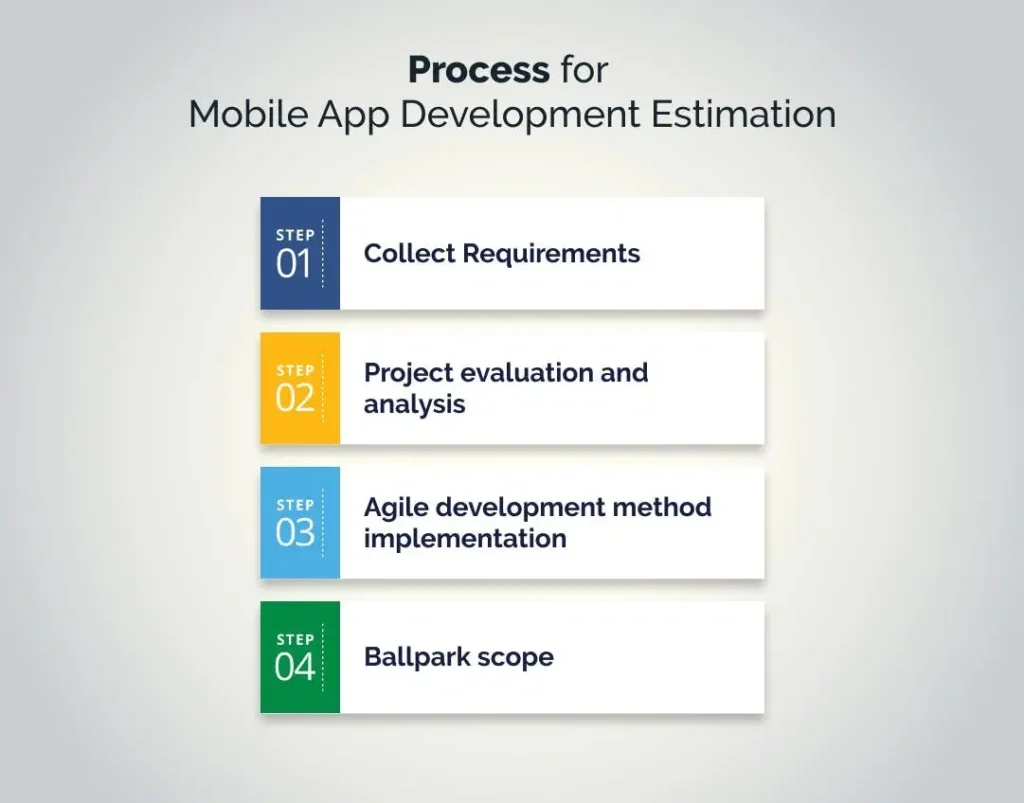
Collect requirements
If we talk about estimating the mobile app development process then the first step is to collect requirements. Understand what your project needs and which platforms will be required for the mobile app development. Identify which operating system versions will be supported by your app. Find out the current services, databases and server information as per your app development project.
Project evaluation and analysis
For doing project evaluation and analysis, the first you will need to understand the market trend and the goal of your mobile app. After that, know the technology that you will be using while developing the app. Find out the estimated cost range that will be required for building the mobile app. After understanding every risk factor, then opt for a smooth and successful mobile app development.
Agile development method implementation
Agile app development and method implementation consist of short cycles of two to three weeks and that too at a very low-risk rate. The customer can directly see the result after every cycle and can request for instant changes if required. The agile methodology works consisting of the phases planning, requirement analysis, design, development, testing and documentation and more such.
Ballpark Estimation
The ballpark cost to develop a mobile app purely depends on the complexity of the app and the features that you want to implement in it and also what additional services you want to offers in the application. Usually, a professional and repeated company costs around $100K+ for creating a feature-loaded basic mobile application.
What are the factors mobile app developers consider while estimating quote?
There are so many factors that need proper consideration while estimating a final quote on mobile app development and they are UI/UX design, app integration, user interaction, data security, complexity of the app, app testing and app verification and more such.
Whether to build app using native framework or hybrid
Hybrid apps can be developed with the help of technologies such as HTML, CSS and JavaScript. On the contrary, Native apps can be created using some particular technology and language for a particular platform like Swift for iOS and Java for Android. Choosing one from both frameworks depends on your business requirements.
Wrap Up
The mobile industry is growing at a rapid rate and some of the biggest industry surveys tells that the cost to build a mobile ranges between $100,000 – $500,000. Having an app for your business is the best thing in today’s technology based world. Mobile app can do miracles in the industry in terms of increasing sales and profit as mobile users are increasing day by day.
Mobile app development is easy if you are dealing with a reputed and professional mobile app development company. Always hire a mobile app developer who has all the experience in crafting beautiful and engaging mobile apps. We at Intuz, are doing well in delivering the mobile app development projects. Our mobile app development team has only creative and experienced people who knows how to manage any level of a mobile app development project.
FAQs
What is the realistic cost to build an app in 2026?
App development costs in 2026 range from $25,000 for a basic single-platform app to well over $500,000 for a complex, enterprise-grade product. Most mid-range business apps with backend integration, user authentication, and 10–15 features fall between $40,000 and $120,000. The most important cost drivers are feature complexity, platform choice (iOS, Android, or both), design depth, and where your development team is based. The best way to get a reliable number is to define your core feature set first, then get a scoped estimate — ballpark quotes without a spec are rarely accurate.
How does app complexity affect development cost?
Complexity is the single biggest pricing variable. A simple app with static content and basic navigation might cost $15,000–$25,000. Add real-time data, third-party APIs, payment gateways, or AI features and you’re looking at $50,000–$150,000+. Gaming apps with 3D graphics and physics engines routinely exceed $100,000 before launch. Each layer of complexity — custom UI animations, offline sync, push notifications with dynamic segmentation — adds both development hours and testing cycles. Before scoping your app, list your must-have features separately from nice-to-haves. That single step can cut initial cost by 30–40%.
Is it cheaper to build for iOS first or Android first?
Neither platform is dramatically cheaper on its own — a basic native iOS app and a basic native Android app both typically run $15,000–$40,000. The real decision is about your audience: iOS users generally have higher purchase intent in Western markets; Android dominates globally by install base. If budget is the constraint, a cross-platform framework like React Native or Flutter lets you build once and deploy to both, cutting development time by 30–40% compared to maintaining two separate native codebases. The trade-off is slightly reduced access to platform-specific hardware features.
How long does it take to develop an app from idea to launch?
A simple app with well-defined requirements typically takes 3–4 months from kickoff to App Store submission. Mid-complexity apps with backend integrations average 5–7 months. Enterprise apps or those requiring custom AI/ML components can run 9–12 months or longer. Planning and design usually account for 40–80 hours, UI/UX design 150–400 hours depending on customisation depth, and development and QA the remaining bulk. The biggest timeline killers are scope changes mid-sprint and delayed feedback cycles — both are avoidable with a clear product brief and weekly review cadence.
What ongoing costs should I budget for after my app launches?
Plan for annual maintenance costs equal to 15–20% of your original development spend. For a $50,000 app, that’s $7,500–$10,000/year. This covers OS version updates (Apple and Google release major versions annually), bug fixes, security patches, third-party API changes, and performance optimisation. If you plan to add features post-launch — which most growing businesses do — budget separately for those. Neglecting maintenance is the most common reason apps get delisted from app stores or lose user ratings quickly. Factor it into your business case from day one, not as an afterthought.
Should I outsource app development or hire an in-house team?
For most startups and mid-sized businesses, outsourcing to an experienced agency is the more cost-effective path. Hiring in-house requires recruiting, onboarding, salaries, benefits, and management overhead — often 2–3× the cost of a comparable outsourced engagement for the same output. Outsourcing delivers access to a full team (PM, designer, developers, QA) from day one, with predictable project-based pricing. The real trade-off is communication overhead and less real-time visibility. That gap closes significantly when you work with an agency that runs weekly demos, provides a dedicated PM, and operates in a compatible timezone.
What’s the difference in cost between React Native, Flutter, and native development?
React Native and Flutter development typically costs $15,000–$50,000 for a business app, versus $38,000–$80,000+ for full native iOS and Android builds combined. The savings come from code reuse — roughly 70–80% of the codebase is shared across platforms in React Native or Flutter. Native development makes sense when you need deep hardware integration, maximum performance (high-end gaming, AR), or platform-exclusive features. For most business apps — dashboards, on-demand services, e-commerce, productivity tools — React Native or Flutter delivers native-quality experience at significantly lower cost and faster delivery.
How do I get an accurate development estimate before committing to a vendor?
A reliable estimate requires a scoped brief, not just an idea description. Before approaching vendors, document: your target platform(s), a prioritised feature list, any third-party integrations (payments, maps, analytics), preferred tech stack if you have one, and your launch timeline. With this, a competent agency can produce a detailed estimate within 3–5 business days. Be cautious of quotes that arrive in hours with no follow-up questions — real estimates require real analysis. Ask for a breakdown by phase (design, development, QA, deployment) so you can compare vendors accurately and understand where the hours are going.
Work with Intuz
Get Your Free App Cost Estimate
Tell us your idea — we'll break down the real numbers in 24 hrs.
Let's Get Started
Share this article
![How to Build an AI-Powered Marketplace: 8 Steps for SMBs [2026 Guide]](https://www.intuz.com/wp-content/uploads/2026/05/How-to-Build-an-AI-Powered-Marketplace.webp)