

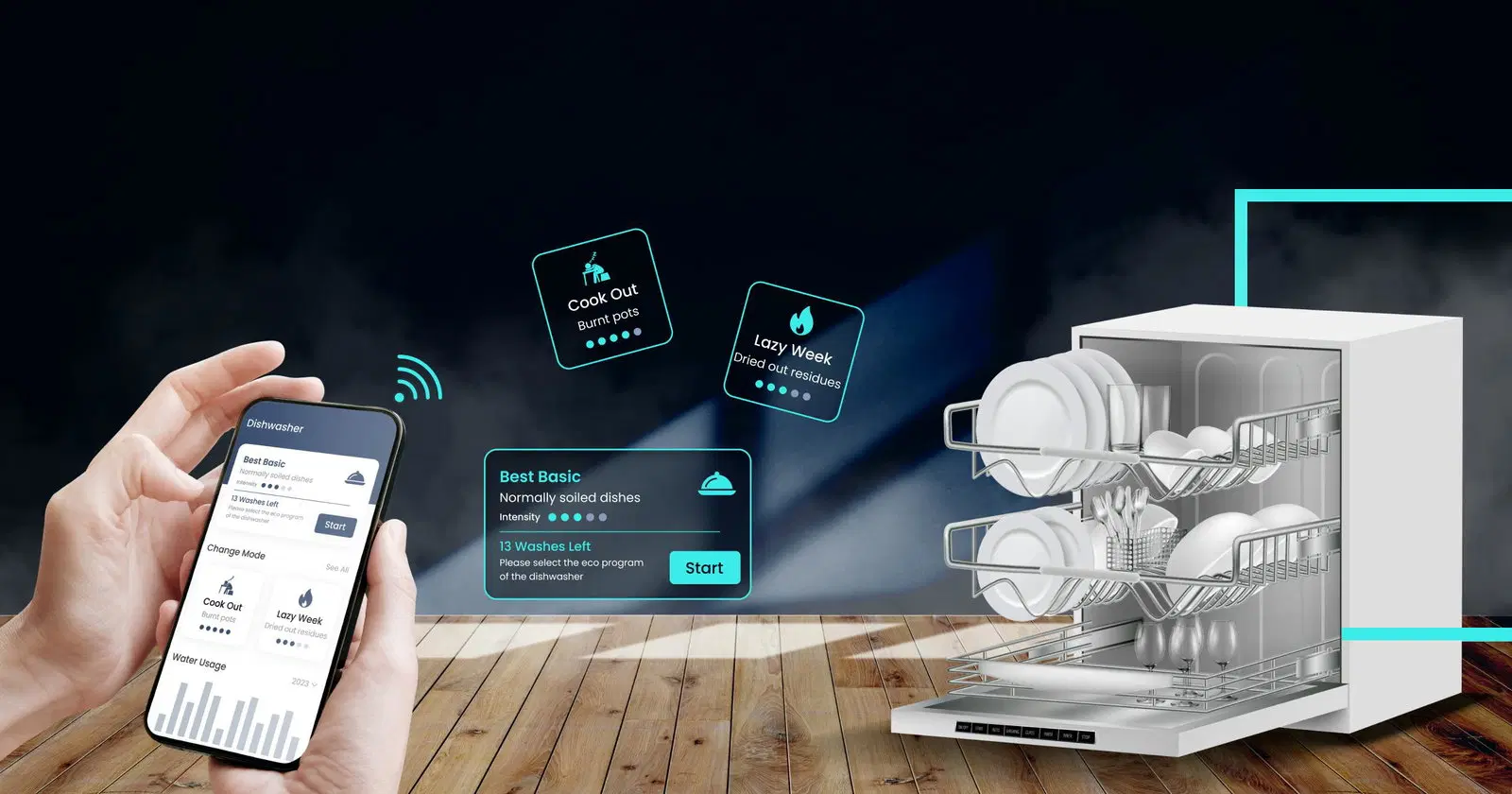
Smart dishwashers have integrated seamlessly into the ecosystem of the connected home as original equipment manufacturers (OEMs) continue to offer exceptional solutions. In this article, we delve into the intriguing world of IoT-enabled dishwashers and examine their advantages, features, and how they improve efficiency and convenience in our daily lives.
Show
- Smart dishwashers leverage IoT and AI to enable remote monitoring and control via smartphone apps, letting users start, stop, and diagnose their appliance from anywhere.
- Technologies like Wi-Fi connectivity, voice control (Alexa/Google Assistant), and sensor technology allow dishwashers to adapt dynamically to load size, soil level, and energy demands.
- Auto-dosing systems and load detection optimise detergent, water, and energy consumption for each specific wash cycle, reducing waste and utility costs.
- Smart dishwashers feature real-time error diagnosis and preventive maintenance through advanced sensors and algorithms, reducing breakdown risk and maintaining peak performance.
- Cycle progress notifications and adjustable wash settings empower users with full control over water temperature, pressure, and timing — personalising every wash for delicate glassware to heavily soiled cookware.
What Is A Smart Dishwasher?
A technologically advanced appliance called a “smart dishwasher” includes connectivity and automation capabilities to improve the dishwashing process. Smart dishwashers have an internet connection; you can control them with a smartphone or other smart device. They provide a variety of features and capabilities that completely alter how we handle and engage with our dishwashing chores.
By employing technologies like the Internet of Things (IoT) and Artificial Intelligence (AI), smart dishwashers allow users more control, convenience, and efficiency. The functioning of the dishwasher can be remotely monitored and managed by users using a specialized smartphone app or other smart home technologies.
Upgrade Your Dishwashers: Let’s Discuss IoT Integration!
Technologies Used in Smart Dish Washers
Dishwashers with these innovative features operate more conveniently, use less energy, and are more functional. A few instances of smart technologies seen in dishwashers are as follows:
1. Wi-Fi Connectivity
Many contemporary dishwashers have Wi-Ficonnectivity built-in, enabling consumers to monitor and control their dishwashers remotely via a smartphone app. With the help of this feature, customers may start or stop the dishwasher from any location, change settings, get alerts, and even diagnose problems.
2. Voice Control
Users may control their dishwashers with voice commands thanks to integration with well-known speech assistants like Amazon Alexa or Google Assistant. Using straightforward voice commands, users may start or stop the dishwasher, change settings, and check the status.
3. Sensor Technology
Modern dishwashers use a variety of sensors to enhance performance and save energy. For instance, soil sensors can gauge how dirty the dishes are and change the wash cycle accordingly to ensure effective cleaning using the least amount of water and energy.
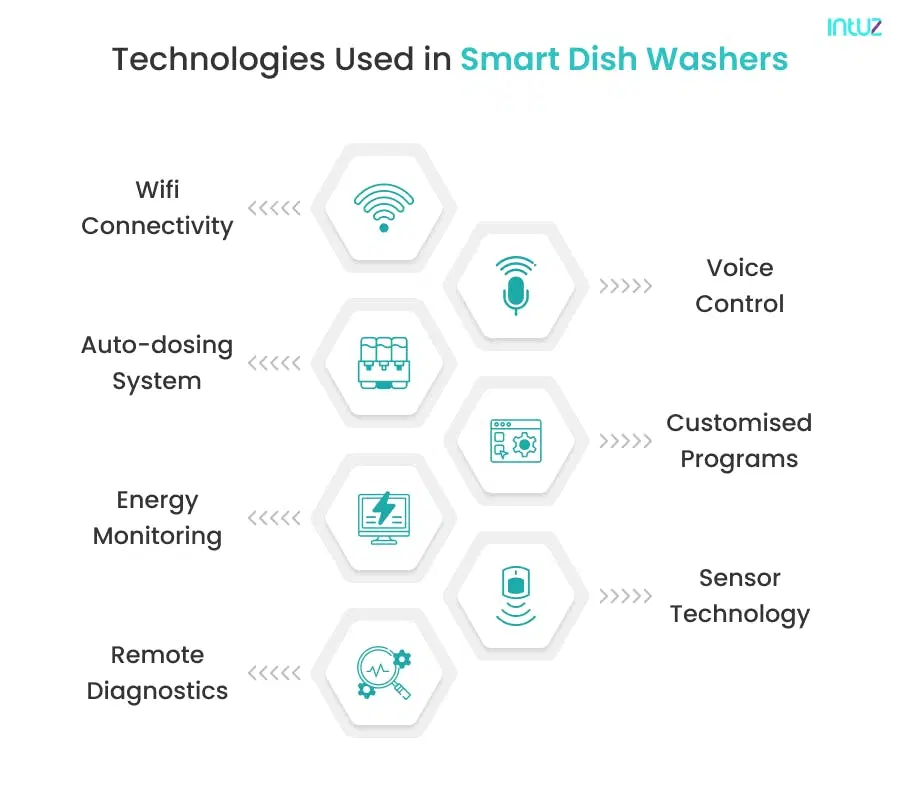
4. Auto-Dosing Systems
Depending on the load size, soil level, and chosen program, some dishwashers have intelligent auto-dosing systems that may automatically dispense the appropriate amount of detergent and rinse aid. Users can avoid using too much detergent and get consistent results.
5. Energy Monitoring
Energy monitoring features are frequently found in smart dishwashers, allowing customers to track their energy usage over time. Consumers who wish to conserve energy and cut costs can utilize this information to understand better and modify their usage habits.
6. Remote Diagnostics
Smart dishwashers can self-diagnose and troubleshoot. The dishwasher can alert the user and, in certain situations, even send thorough error reports to the manufacturer or service facility if a problem arises.
7. Customized Programs
Adaptive wash routines that are based on unique demands may be provided by smart dishwashers. These programs can be customized for delicate goods, extremely soiled dishes, rapid washes, or cleaning needs.
Advantages of Smart Dishwashers
The advantages of smart dishwashers go beyond the traditional ones, with their smart and tech-oriented functions, improved energy usage, and optimized performance for a better and more efficient dishwashing experience. A few of the many advantages are as below:
1. Remote Control and Monitoring
Smart dishwashers offer the convenience of remote control and monitoring via smartphone apps. Users can respond to any concerns with the dishwasher alerts, monitor detergent levels, and receive cycle notifications. This function guarantees effective operation and makes it simple for users to operate dishwashers.
2. Enhanced Cleaning Performance
With the app’s help, it is now possible to regulate the water temperature during the dishwasher cycle for excellent removal of tough grease and stains. Dishes are always spotless, thanks to the customised cleaning algorithms offered by smart dishwashers.
3. Error Diagnosis & Preventive Maintenance
Advanced sensors and clever algorithms are used in smart dishwashers to diagnose mistakes and identify potential problems in real time. This function makes quick preventive maintenance possible by reducing the possibility of problems and ensuring peak performance.
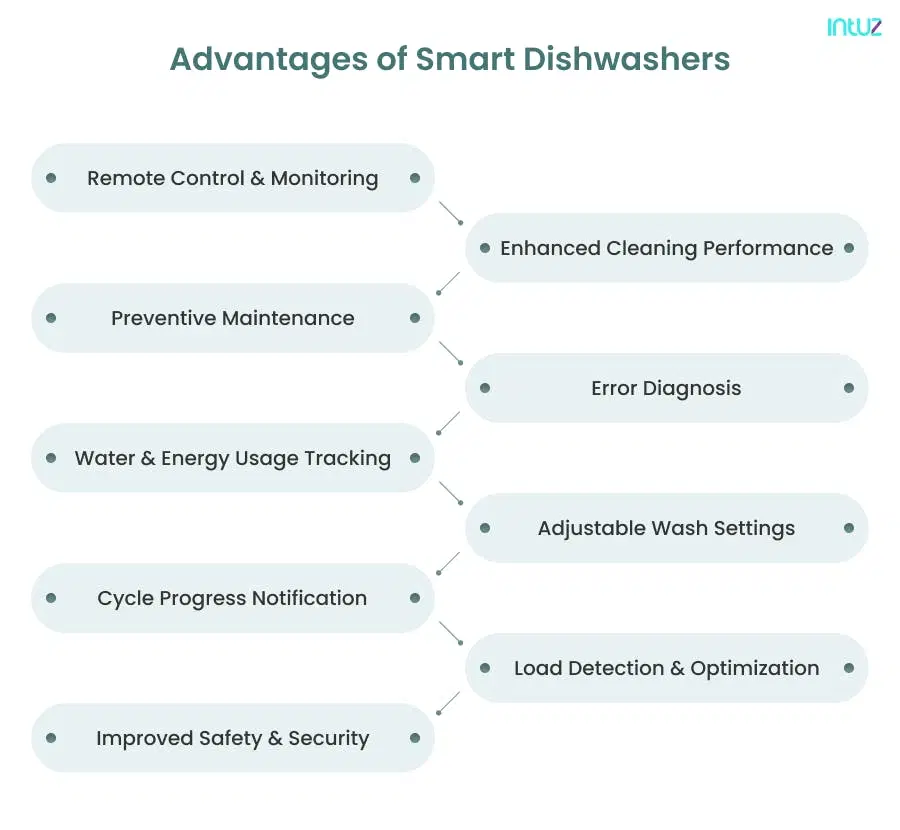
4. Adjustable Wash Settings
Users of intelligent dishwashers have the freedom to alter the wash settings to suit their requirements. These dishwashers include a variety of configurable settings, including water temperature, pressure, and time, to ensure effective and personalized cleaning for every load, including delicate glassware and difficult-to-clean greasy pots.
5. Water & Energy Usage Tracking
An important advantage of smart dishwashers is the capability to monitor water and electricity usage. Individuals can better understand their usage habits by tracking these resources, encouraging thoughtful conservation, and lowering utility costs.
6. Load Detection & Optimization
Smart dishwashers use innovative load-detecting technologies to estimate the number of dishes and adjust the cleaning cycle accordingly. This conserves resources and improves efficiency by guaranteeing that each load receives the appropriate water dosage, detergent, and cleaning cycles.
7. Cycle Progress Notifications
The days of being unsure about the state of your dishwasher cycle are long gone. Smart dishwashers provide notifications to your smartphone in real-time, updating you on the status of your wash cycle. Users may properly manage their time with the help of this tool, which guarantees uninterrupted attention to other duties.
8. Improved Safety and Security
Smart dishwashers increase child safety and provide reassurance by checking on the door from anywhere. The incorporation of secure communication methods further ensures data privacy and protection.
Also Read
Conclusion
To stay competitive in this quickly changing industry, you must understand the IoT use cases for smart appliances. Leveraging IoT technology, customers can unlock a multitude of benefits from smart dishwashers, transforming their kitchen experience like never before.
If you are an OEM looking for IoT integration for your Smart dishwasher or smart appliance manufacturing business, schedule a free consultation with our IoT expert and ensure that your smart appliances lead the market with innovation and efficiency.
FAQs
How does IoT integration reduce water and energy consumption in dishwashers?
IoT-enabled dishwashers use soil sensors and load-detection technology to calculate the exact amount of water, energy, and detergent needed for each load. Instead of running a fixed cycle, the dishwasher adjusts dynamically — shorter cycles for lightly soiled loads, more intensive ones for pots and pans. Energy monitoring dashboards let users track consumption over time and shift loads to off-peak hours. Studies suggest smart appliances can reduce water usage by 20–30% compared to standard cycles. For environmentally conscious consumers or brands targeting sustainability certifications, this is a key differentiator worth building into the product spec.
Can I retrofit an existing dishwasher with IoT capabilities, or does it need to be a new model?
In most cases, full IoT functionality — sensor-driven wash adjustments, auto-dosing, remote diagnostics — requires a dishwasher built with those hardware components from the ground up. You cannot add soil sensors or auto-dosing dispensers to a traditional model via an add-on. However, basic remote control and scheduling can sometimes be enabled through smart plugs or third-party home automation hubs for older models. For OEMs, the smarter path is integrating IoT modules at the design stage rather than retrofitting, which keeps costs lower and functionality more reliable. Intuz works with appliance manufacturers at both the hardware specification and software integration level.
What connectivity standards are used in smart dishwashers — Wi-Fi, Zigbee, or Z-Wave?
Most consumer-grade smart dishwashers primarily use Wi-Fi (2.4 GHz) because it offers the broadband throughput needed for app-based remote control, firmware updates, and sending diagnostic data to manufacturers. Some premium models also support Zigbee or Z-Wave for integration into broader smart home ecosystems without relying on a direct Wi-Fi connection — useful in homes with mesh automation setups. Matter protocol support is becoming more common for interoperability across platforms. For OEMs designing new smart dishwasher lines, the choice of connectivity standard significantly affects the bill of materials, certifications required, and compatibility with major smart home platforms like Apple HomeKit, Google Home, and Amazon Alexa.
How long does it typically take to develop custom IoT software for a smart dishwasher OEM?
The timeline depends on scope. A standard IoT integration — mobile app (iOS/Android), cloud connectivity, sensor data pipeline, and remote diagnostics dashboard — typically takes 4 to 8 months from discovery to production-ready deployment. If the OEM also needs firmware development, hardware module selection, or third-party integrations (Alexa, Google Home, Matter protocol), add 2 to 4 months. Intuz has worked with appliance manufacturers across the full stack: embedded firmware, IoT cloud architecture, and consumer-facing apps. A scoping session with our IoT team usually surfaces the critical path items within the first week and gives you a reliable project estimate before any contract is signed.
Work with Intuz
Ready to Build a Smarter Dishwasher?
Talk to our IoT experts and bring your appliance vision to life.
Let's Get Started
Share this article