


A Databricks-Powered Computer Vision Solution Built to Automate Retail Inventory Management
A global retail brand struggled with empty shelves, misplaced products, and no real-time visibility into stock levels. Intuz built a computer vision solution on Databricks – using in-store cameras, CNN-based shelf monitoring, and automated data pipelines to detect stock issues in real time and integrate actionable insights directly into business systems.
WHAT WE BUILT
The Problems We Set Out to Solve
for This Global Retail Brand
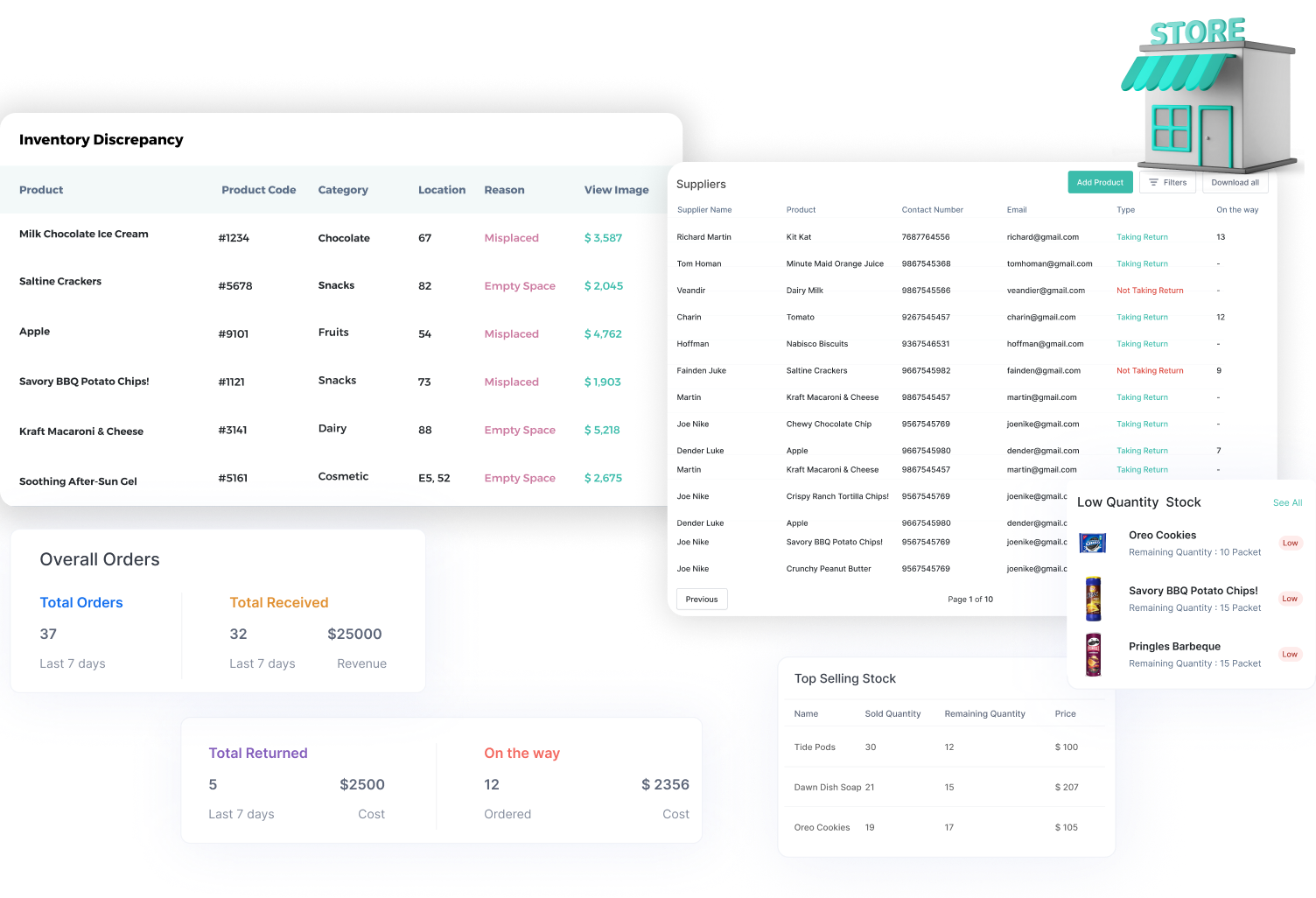
Inefficient Stock Management
Store shelves were managed manually by in-store staff. The process was inconsistent and unreliable – shelves were frequently left empty without timely intervention, directly impacting product availability and the overall shopping experience.
High Operational Costs
Managing stock visibility through manual labour was expensive and difficult to scale. The dependence on people for tasks that could be automated drove up operational costs without delivering the accuracy or consistency the business needed.
Poor Customer Experience
Customers regularly encountered empty shelves and misplaced products. The inability to maintain accurate shelf conditions led to lost sales and a shopping experience that fell short of what a global retail brand needed to maintain.
No Real-Time Stock Visibility
The client had no system to monitor stock levels as they changed throughout the day. Without real-time insights, decisions about restocking and product placement were reactive rather than informed – creating a cycle of delays that compounded the inventory problem.
Processing Large-Scale Image Data
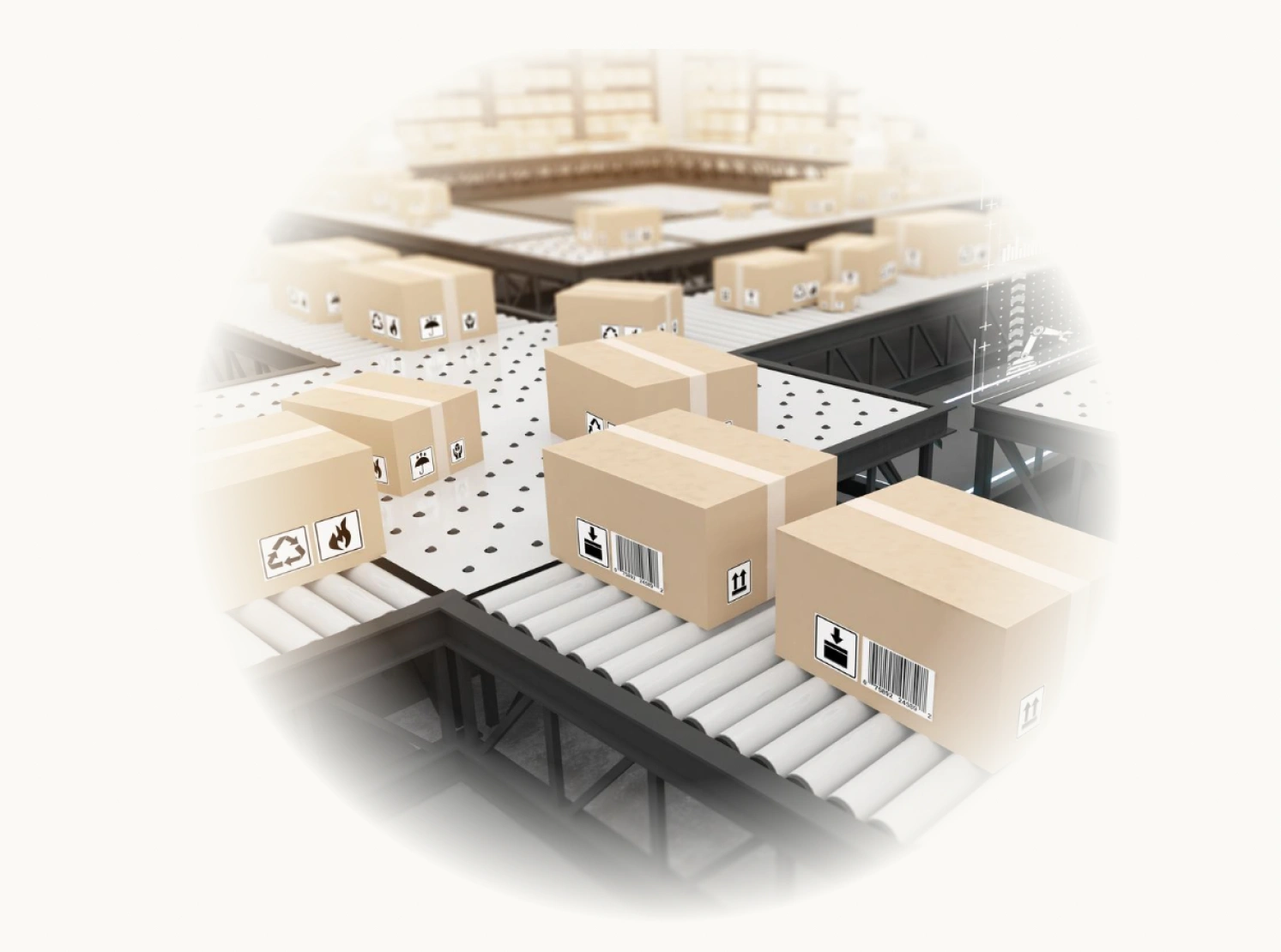
In-store cameras generate a continuous stream of high-resolution images across multiple locations. Processing this volume of image data accurately and at speed required a purpose-built pipeline capable of handling large-scale data without performance degradation.
Integration with Existing Business Systems
The computer vision outputs needed to connect directly into the client’s existing retail operations – not sit as a standalone tool. Building API endpoints that fed insights into live business systems was a core technical requirement from the start of the project.
Ready to Work With a Team That Delivers?
We plan, design, and build products that work – on time and to your requirements.
features
How We Built the Computer Vision
Solution on Databricks
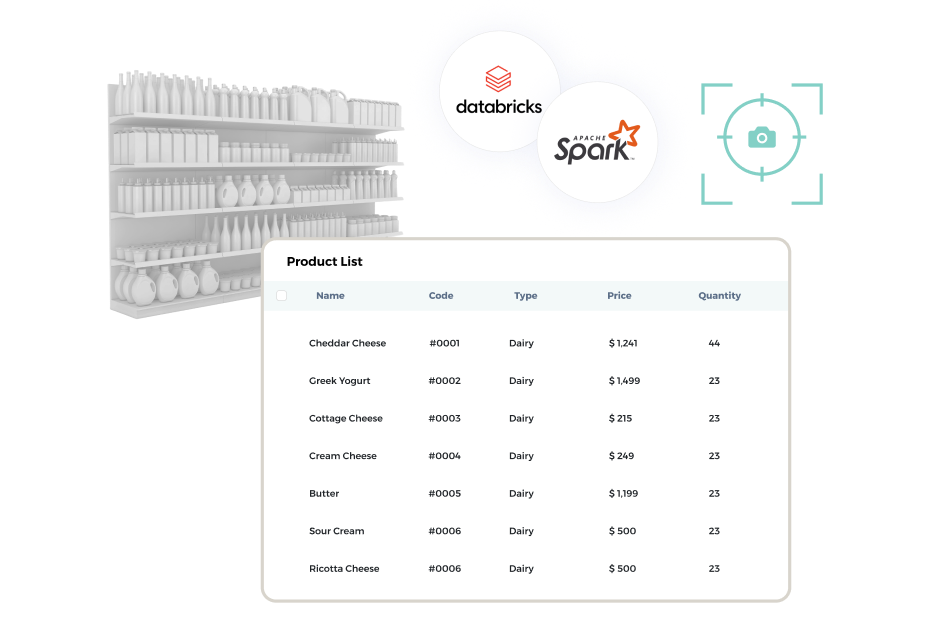
Data Collection and Preprocessing Pipeline
We built data pipelines on Databricks with Apache Spark to ingest and preprocess high-resolution images captured by in-store cameras. Image augmentation was applied during preprocessing to generate additional training data and improve the model’s ability to detect products, misplaced items, and empty shelf spaces accurately across varying store conditions.
CNN-Based Computer Vision Model Development
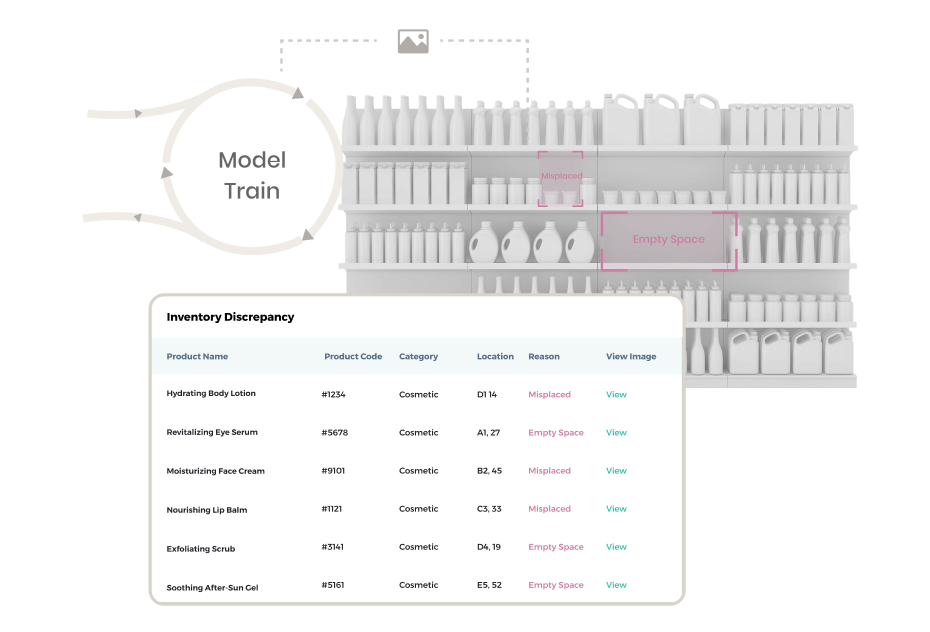
We built a CNN-based system to detect products, misplaced items, and empty shelves from shelf images. Transfer learning using ResNet and EfficientNet accelerated model deployment, and we used MLflow to track model training runs and manage version control throughout the development process.
Real-Time Processing and Auto-Scaling Infrastructure
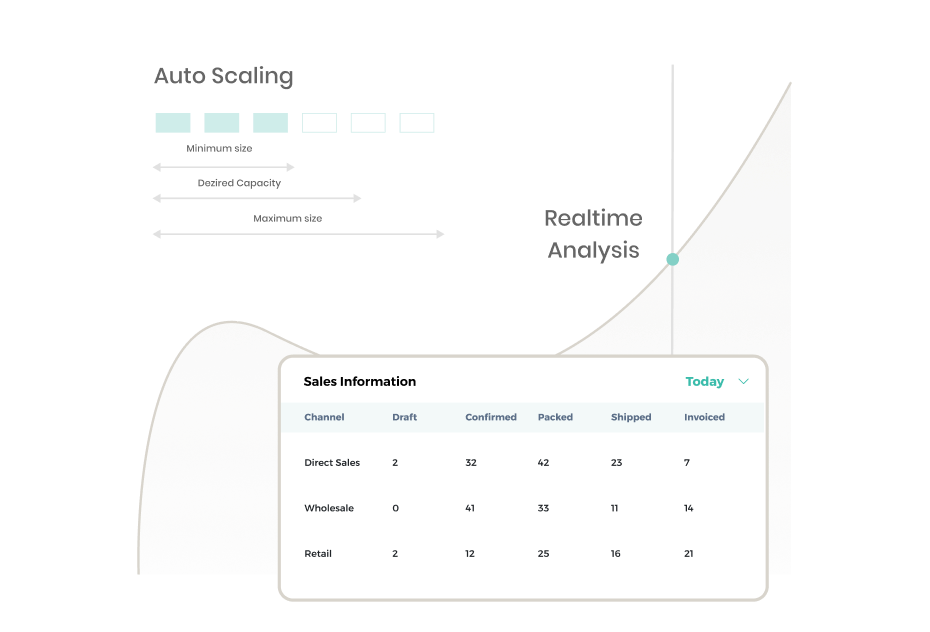
We built the processing layer on Databricks Delta Lake for fast, optimised storage and real-time querying. Auto-scaling clusters kept compute resources cost-effective as workloads increased, and model inference ran through Databricks ML runtime – enabling real-time shelf analysis as data volumes grew.
Business System Integration and Reporting Dashboard
We developed API endpoints to feed computer vision insights directly into the client’s existing business systems. A reporting dashboard powered by Databricks SQL and Power BI gave operations teams actionable visibility over inventory status and stock levels – connecting real-time shelf data to business decision-making.
85% Reduction in Inventory Errors
Real-time stock updates from the computer vision system cut inventory errors by 85% – replacing manual shelf checks with automated, continuous monitoring across store locations.
40% Reduction in Labour Costs
By automating stock monitoring and shelf analysis, the solution reduced labour costs by 40% – removing the dependence on manual processes for tasks the system now handles automatically.
Transfer Learning with ResNet and EfficientNet
We used transfer learning with established models to speed up deployment. ResNet and EfficientNet provided the foundation for accurate product and shelf detection, reducing the time needed to reach production-ready model performance.
MLflow for Model Tracking and Version Management
We integrated MLflow into the model development process to track training runs and manage model versions. This gave the team a structured record of every model iteration throughout the development cycle.
Auto-Scaling Clusters on Databricks
We configured auto-scaling clusters on Databricks to handle variable processing loads without over-provisioning resources. Compute capacity scales automatically based on workload – keeping the solution cost-effective as data volumes grow.
Built to Scale Across Future Store Locations
The architecture was designed to support expansion beyond the initial deployment. The solution is built to accommodate additional cameras, data sources, and processing requirements as the business grows into new store locations.
Got a Product Idea You Want to Build?
We work with companies at every stage – from early concept to full-scale delivery. Tell us where you are and we’ll take it from there.
Tools & technologies
The Tools and Technologies
Behind EzyRetail
We built the solution on a purpose-designed data and AI stack – combining Databricks,
Apache Spark, and TensorFlow with Power BI to deliver real-time computer vision at retail scale.


